Save or print this page by clicking on “Download” below:
August 30, Sunday——————ACCOUNTABILITY REMINDER
Reading B242 — Isaiah 36 — Assyria Threatens Jerusalem Audio: Isaiah 36 (ESV)
An audio recording of the following comments is available below:
Trusting for Deliverance — This is Isaiah’s account of the story we already read in 2 Kings 18. It was true that Judah was disappointed after having asked for help from Egypt, sending them a large tribute of gold and goods. They had also sent a great amount of money to Assyria to appease them, but they were attacking Judah anyway. Assyria could not be trusted. They had already taken “all the fortified cities of Judah” (v. 1) except Jerusalem. Now they had come to surround Jerusalem so that they would surrender or starve. The Assyrian military officer challenged Jerusalem about the basis of their trust for rescue. Seven times in his arrogant argument, he used the word “trust,” emphasizing the futility of their trust in Yahweh. It is dangerous to challenge God! He even lied by saying that Yahweh had told him, “Go up against this land and destroy it” (v. 10). He then used the word “deliver” seven times to claim that since the pagan gods of other nations couldn’t deliver them from Assyria, neither could Yahweh deliver Judah (vv. 14-20). King Hezekiah was holding his ground in faith, however, after having publicly proclaimed, “We trust in the LORD our God” (v. 7). Isaiah will review in later chapters how God did miraculously deliver Jerusalem from Assyria. God honors trust, so when we get into seemingly impossible difficulties, we should remember the tenacious faith of Hezekiah and copy him.
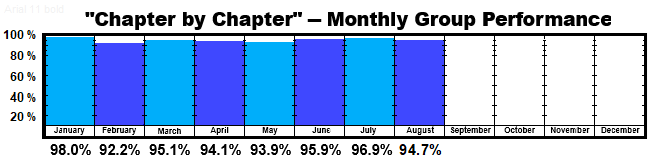
ACCOUNTABILITY REMINDER. If you are up to date in your reading as of today,
but did not report yesterday, please let me know at accbibleread@gmail.com
XXX
August 31, Monday——————–ACCOUNTABILITY FINAL DAY
Reading B243 — Isaiah 37 — Sennacherib’s End (A) Audio: Isaiah 37 (ESV)
An audio recording of the following comments is available below:
Humility and Faith — I was impressed by the humility and faith of King Hezekiah in this story. He showed his humbleness by symbolically tearing his clothes and wearing sackcloth, and he showed his faith by going to “the house of the LORD” (v. 1). He then demonstrated both qualities again by seeking help from God’s prophet, Isaiah (v. 2), asking him to pray for Jerusalem (v. 4). After receiving a mocking and threatening letter from the Assyrians, Hezekiah spread it out before God in the temple and prayed (vv. 14-15). God’s response was not only a promised rescue for Jerusalem, but a thorough defeat for Assyria and its king, Sennacherib. Whereas verse 1 says that King Hezekiah went into “the house of the LORD” to find rescue, the last verse says that King Sennacherib later went into “the house of Nisroch his god” and was murdered by his sons (v. 38). God honored Hezekiah’s humble faith and punished Sennacherib’s blasphemous pride.
ACCOUNTABILITY FINAL DAY! If you have not yet reported this month, please copy accbibleread@gmail.com to your email program to report your reading status.
XX
September 1, Tuesday
Reading B244 — 2 Kings 19 — Sennacherib’s End (B) Audio: 2 Kings 19 (ESV)
An audio recording of the following comments is available below:
Proud Mocking — The Assyrian King Sennacherib was incredibly proud, and he blasphemed the God of Israel, which was a dangerous combination, and it would lead to his violent end. He put Yahweh on the same level as the gods of the nations the Assyrians had already conquered, saying that if their gods could not save those nations, neither could Judah’s God save them (vv. 12-13). He ignorantly overlooked several important things, however. First, it was Yahweh who gave Assyria the power to conquer those nations, Israel in particular, because of their sins. Second, the gods of those nations were not supernatural at all; they were invented deities represented by carved images, just like Assyria’s own gods. Third, Yahweh was the creator of the universe and was above all criticism, yet Sennacherib and his officers mocked the only true God. Assyria’s king received his judgment from God after he arrived home in Nineveh, being killed by his own sons. Many people around us also ignorantly and proudly mock God, but we need to pray for God to soften their hearts, and we need to speak to them about our assurance of the reality of who God is.
September 2, Wednesday
Reading B245 — Isaiah 38-39 — Hezekiah’s Illness Audio: Isaiah 38-39 (ESV)
An audio recording of the following comments is available below:
Measuring Selfishness — Hezekiah was a great king and a good man, but we see in these two chapters that he was also weak and selfish. Had he deteriorated, or was his deeper self just being exposed? When he prayed earlier for God to deliver Jerusalem from the Assyrian threat, he based his prayer on the character of God. When he prayed for his own physical recovery, however, his prayer was focused on his own worth: “Please, O LORD, remember how I have walked before you in faithfulness and with a whole heart, and have done what is good in your sight” (38:3). His self-centeredness is obvious in his 12-verse composition (vv. 9-20), which he wrote following his recovery, mentioning himself 35 times, using “I … me … [and] my” words. Then, Isaiah revealed Hezekiah’s foolishness in showing off his wealth and predicted Judah’s exile to Babylon. The king’s selfish conclusion was that “There will be peace and security in my days” (39:8). Do we tend to become more selfish as we get older? We shouldn’t. Infants and toddlers are obviously very selfish, but that is because of our sinful nature. When we give our lives to Christ and have the Holy Spirit dwelling in us, we should become increasingly less selfish. Whatever our age, it is good to check our selfishness level. Don’t deteriorate like Hezekiah!
September 3, Thursday
Reading B246 — Psalm 76 — God Defends Zion Audio: Psalm 76 (ESV)
An audio recording of the following comments is available below:
Fearing God — This is a psalm of praise to God for delivering His people from an enemy like the Assyrian army that surrounded Jerusalem (also called “Salem” and “Zion” in verse 2). The divine judgment was severe: “he broke the … weapons of war” (v. 3), they “were stripped of their spoil” (v. 5), and “both rider and horse lay stunned” (v. 6). The Assyrians had come in power and arrogance, but this psalm shows that God would ultimately get the glory: “Surely the wrath of man shall praise you” (v. 10). It is normal to fear the wrath of man, but four times in the final six verses of this psalm, we are reminded to fear God: “…you are to be feared” (v. 7). God is the ultimate Judge of all mankind’s actions. Are we to fear Him, too? After all, “God arose … to save all the humble of the earth” (v. 9). Yes, in a sense, we are to fear Him. We are to fear Him primarily in reverence because of who He is—our Savior and Lord. We are also to fear Him as the Judge who disciplines those He loves.
September 4, Friday
Reading B247 — Isaiah 40 — Comfort My People Audio: Isaiah 40 (ESV)
An audio recording of the following comments is available below:
Waiting for Glory — Two days ago, we read at the end of Isaiah’s previous chapter that God predicted Judah’s exile to Babylon (39:6), which would be fulfilled 139 years later. Today’s chapter jumps ahead in time to the empty feeling of God’s people when they would be in Babylon. At the end of that 70-year punishment period, a comforting God would declare that Judah “has received from the LORD’s hand double for all her sins” (40:2) and that they should “prepare the way of the LORD” (v. 3) to return to Jerusalem. This is the same passage John the Baptist quoted (Matt. 3:3) as he started his ministry of introducing the Messiah, over 500 years after the end of the Babylonian captivity. Judah would experience partial fulfillment of God’s prophecy that “the glory of the LORD shall be revealed” (Isa. 40:5), and we Christians are also now “beholding the glory of the Lord … [while] being transformed into the same image from one degree of glory to another” (2 Cor. 3:18). The final fulfillment of seeing His glory will come at Christ’s return. In the meantime, we will experience Isaiah’s final promise that “they who wait for the LORD shall renew their strength” (Isa. 40:31).
September 5, Saturday
Reading B248 — Isaiah 41 — Declared from the Start Audio: Isaiah 41 (ESV)
An audio recording of the following comments is available below:
The Trustworthy Guide — God challenges “the peoples” (v. 1a), i.e., the idolatrous Gentile nations, to “draw near for judgment” (v. 1b). It was time for evaluation. He later charged them to “bring your proofs … and tell us what is to happen … or declare to us the things to come” (vv. 21-23). That is something that only God can do, so He judged their gods: “Behold, you are nothing” (v. 24). To demonstrate that God does know the future, He predicted that “one from the east” (v. 2), representing the Medes, and “one from the north” (v. 25), meaning the Persians, would come to rescue God’s people from their captivity in Babylon. Who was that “one”? The leader of those armies was Cyrus the Great, that God even named in Isaiah 45:1. Who was the one who knew and “declared it from the beginning?” (v. 26). It was, “I, the LORD … I am he” (v. 4). No human wisdom or idolatrous hope can accurately predict the future. Only God can do that. So, how foolish and futile it is for us to trust in human wisdom, astrology, or palm reading for guidance. The only truly trusted direction one can trust is what God has said. That is why we are reading our Bibles every day; it alone has the information we need to guide us in a perfect way to our eternal end.

