Save or print this page by clicking on “Download” below:
April 19, Sunday
Reading B109 — Eccl. 3 — A Time for Everything Audio: Eccl. 3 (ESV)
An audio recording of the following comments is available below:
Everything Beautiful — Although God “has made everything beautiful in its time” (v. 11a), not everything is understood. God also arranged mystery for us (“…he has put eternity into man’s heart, yet so that he cannot find out”—v. 11b). We know that we will die, and we know some things about what lies beyond that, but much of that future is still a mystery. God has designed it all so that we will live by faith regarding eternity. In the meantime, each person is not to worry but to “eat and drink and take pleasure in all his toil—this is God’s gift to man” (v. 13). Enjoy life on earth! It is a gift from God. He has placed His Spirit in the heart of every Christian, which is the guarantee of our heavenly future. Everything there will be even more “beautiful in its time.” Wait for it!
April 20, Monday
Reading B110 — Eccl. 4 — Vanity in Work Audio: Eccl. 4 (ESV)
An audio recording of the following comments is available below:
Alone or Together? — There are three different attitudes toward work presented in this chapter. The first one is negative: working competitively, as seen in the statement, “work … from a man’s envy of his neighbor” (v. 4). This is not just working to have a little more than you did last year, but it is working to have a little bit more than your neighbor. It is a selfish goal, not a godly one. Another variation of this self-centered attitude is seen in the person who has no one to leave his wealth to when he dies, yet he strives to accumulate and is “never satisfied with riches” (v. 8). In contrast to that person is the attitude of one who is working contentedly: “Better is a handful of quietness than two hands full of toil and a striving after wind” (v. 6). This is a person who is satisfied more with working for what is needed than for what is wanted. John the Baptist told soldiers to “be content with your wages” (Luke 3:14) and Paul said that while not being in need, “I have learned, in whatever situation I am, to be content” (Phil. 4:11). Many of us need to work on being content. A third attitude about work in today’s text is that it is good to be working cooperatively: “Two are better than one, because they have a good reward for their toil” (v. 9). That speaks of efficiency, support, and strength: “a threefold cord is not quickly broken” (v. 12). With what attitude are you working?
April 21, Tuesday
Reading B111 — Eccl. 5 — The Sacrifice of Fools Audio: Eccl. 5 (ESV)
An audio recording of the following comments is available below:
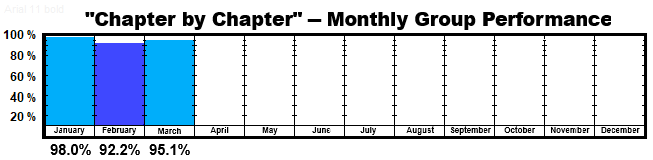
Dreams vs. Destiny — There is a major contrast in this chapter regarding what one wants (dreams) and what one gets (destiny or “lot”). We are warned to be careful about what we want, especially when we promise God that we will do something good if He will give us what we want. The Preacher calls this “the sacrifice of fools” (v. 1) and being “rash with your mouth” (v. 2). Be careful about what you promise God! When we began this Bible-reading program, we promised God to be faithful, and most of you have; yet at the beginning of 2026, 10 of the 14 new people who signed up, proved by the end of February that they were not serious about commitment. In making promises to God, “It is better that you should not vow than that you should vow and not pay” (v. 5). Those are dreams without commitment. The other side of this contrast is being willing to accept what we get. The Bible calls this “his lot” (vv. 18, 19), which comes from the idea of casting of lots. It is accepting what comes to you as your destiny. God made some of us with more ability, strength, or brains than others, but our dream often extends beyond our destiny. We want what others have, but God warns us about that in this powerful statement: “He who loves money will not be satisfied with money” (v. 10). One is “to accept his lot and rejoice in his toil—this is the gift of God” (v. 19).
April 22, Wednesday
Reading B112 — Eccl. 6 — Who Knows What is Good? Audio: Eccl. 6 (ESV)
An audio recording of the following comments is available below:
The Greatest Satisfaction — The main theme of this chapter is satisfaction. Sometimes satisfaction is denied, like the man who was given wealth and honor by God but, perhaps because of an early death, “God does not give him power to enjoy them, but a stranger enjoys them” (v. 2). Another man might have many children and live to old age but is very poor, so that “his soul is not satisfied with life’s good things” (v. 3). The stillborn child enjoys neither good things nor life, “yet it finds rest” (v. 5) like the others who lived. That which is of greater value than wealth, children, and long life, awaits the believer on the other side of the grave. That is when what is most satisfying will be enjoyed by all for eternity. So, if you have wealth and honor now, enjoy it! If you have children and a long life, enjoy it! Most of all, since we have a personal relationship with Jesus during this life, we can concentrate on building and enjoying it. That is the best life.
April 23, Thursday
Reading B113 — Eccl. 7 — Better Answers Audio: Eccl. 7 (ESV)
An audio recording of the following comments is available below:
What is Better? — The previous chapter ended with this question: “For who knows what is good for man…?”, and the first 10 verses of today’s chapter provide some sample answers, using the comparison word, “better,” seven times. Having a good name is better than financial value (v. 1), which involves character. Grieving with someone is better than feasting with another (vv. 2-3) because it involves ministry. Being rebuked by a wise person is better than having a party with fools (v. 5) because we can grow from being corrected. One’s end is better than the beginning (v. 8a) because the full results can only be seen later. That verse ends with being “patient in spirit is better than the proud in spirit.” One who is patient realizes that the future is not known, but proud people think they already know it all. The final “better” might be kind of a slap in the face for older people: “Say not, ‘Why were the former days better than these?’” (v. 10). How many times do some of us talk approvingly about “the good old days”? I suppose that might reveal a certain amount of pessimism about the present days and our unwillingness to look for the good that we have now compared to those former years. It is better to be positive!
April 24, Friday
Reading B114 — Eccl. 8 — A Heart to Know Wisdom Audio: Eccl. 8 (ESV)
An audio recording of the following comments is available below:
Wisdom’s Limits — Having wisdom is good, but in this sinful world it is somewhat rare. Our wisdom is also good for others because they favorably recognize it: “A man’s wisdom makes his face shine” (v. 1). It is good to remember that wisdom comes from God and that we need to ask Him for it: “If any of you lacks wisdom, let him ask God, who gives generously to all without reproach, and it will be given him” (James 1:5). Knowledge can be gained by study, but wisdom comes more from Whom we trust than from what we do. We are also told in today’s reading that wisdom is valuable for guiding us in choices we make: “the wise heart will know the proper time and the just way” (v. 5). On the other hand, it will not provide information about what lies ahead: “… he does not know what is to be” (v. 7). Wisdom has its limits. We just have to be careful that we do not become one who is “wise in his own eyes” (Prov. 26:5). Why not stop right now and ask God to increase wisdom in you? Then, when others see it and mention it to you, don’t become proud about it, because it is a gift from God.
April 25, Saturday
Reading B115 — Eccl. 9 — Being in the Hand of God Audio: Eccl. 9 (ESV)
An audio recording of the following comments is available below:
Life’s Uncertainties — Three times in this chapter, the word “happens” is used in the context of the apparent randomness of life. The Preacher says that “the same event happens to the righteous and the wicked … [and] the same event happens to all” (vv. 2-3; cf. v. 11). The only difference mentioned here is that “the righteous and the wise and their deeds are in the hand of God” (v. 1). One earthquake or landslide may kill hundreds of people, but the ones who are believers find themselves even more “in the hand of God.” From our limited perspective, life sometimes seems to be unfair, but we don’t see the whole picture from God’s viewpoint. So, what should we do in this often-unpredictable world? Three things are suggested here: eat and drink with joy, enjoy life with your mate, and work hard (vv. 7, 9, 10). These are things that “God has already approved” for us to do (v. 7). Live wisely and live joyfully!

