Save or print this page by clicking on “Download” below:
October 25, Sunday
Reading B298 — Jeremiah 8 — Peace, Peace Audio: Jeremiah 8 (ESV)
An audio recording of the following comments is available below:
Rebellious and Deceived — Judgment was soon coming upon Judah. Already “the whole land quakes” (v. 16) with Babylonian horses coming through Dan in the north. Judah’s people had been rebellious and deceived. They were rebellious in that they had “turned away in perpetual backsliding … [and] they refuse to return” (v. 5). They had turned away from the way God set before them through the Mosaic Law and from the conviction of conscience God had placed in their hearts. They didn’t want to go God’s way. They were also deceived into thinking that God’s way was not right. When challenged by their wrongdoing, they asked defiantly, “What have I done?” (v. 6). They thought they were innocent for two reasons. One was that of ignorance: “my people know not the rules of the LORD” (v. 7). These people didn’t have their own private copies of the Torah, and their religious leaders had not been sharing the message with them. In fact, their so-called “wise men … have rejected the word of the LORD” (v. 9). The leaders who did have written copies of God’s Word didn’t like its message, so they modified it to fit their desires: “…the lying pen of the scribes has made it into a lie” (v. 8). They changed it to mean something that fit better with what they wanted. This happens today as well when liberal scholars and preachers bend the Bible to make it mean what the people would rather hear. This is why I believe it is important for us to stick more to word-for-word translations of the Bible (NKJV, NASB, ESV) than to more interpretive and paraphrased versions. We need to hear God’s words over man’s words.
October 26, Monday
Reading B299 — Jeremiah 9 — Who is Wise? Audio: Jeremiah 9 (ESV)
An audio recording of the following comments is available below:
Truly Wise — God was disturbed by Judah’s attitude and actions. In a sense, they forced God to punish them, as He said, “I will refine them and test them, for what else can I do…?” (v. 7). He would discipline them for two basic reasons. First, because “they do not know me” (v. 3). They had willingly become ignorant of God. That was the reason of ignorance. The second reason was defiance: “they refuse to know me” (v. 6). What they did know about God and His ways, they rejected. The same two reasons keep most people today from a personal relationship with God: they think they know better, and they consider believing in God to be superstitious. God puts proud humanity into three categories, “the wise man … the mighty man …[and] the rich man” (v. 23). These are also the three qualities most important to unsaved people today. The three qualities that God values, however, are shown by those who practice “love, justice, and righteousness” (v. 24). What a difference between these two lists! The first one is centered on self, and the second one focuses on others and on God. Our purpose in life should be to know God better and to let Him exhibit His characteristics through us.
October 27, Tuesday
Reading B300 — Jeremiah 10 — Idols Are but Wood Audio: Jeremiah 10 (ESV)
An audio recording of the following comments is available below:
Suffering Alone — The primary reason for Judah’s anticipated exile to Babylon was its idolatry. Throughout this chapter runs a contrast between the false idols (v. 14) and the true God (v. 10). The idols were formed from a tree (v. 3) and were “but wood” (v. 8). They could not speak, move, or do good or evil (v. 5). They did not make anything (v. 11), and they would perish (v. 15). On the other hand, Jeremiah said, “There is none like you, O LORD … [because] you are great, and your name is great in might” (v. 6). He is “the living God and the everlasting King” (v. 10). He created the earth with its rain and wind (vv. 12-13). So, “Who would not fear you, O King of the nations?” (v. 7). Although Yahweh would punish Judah, it would only be temporary, to teach them a lesson, “that they may feel it” (v. 18). Godly Jeremiah was in the middle of this turmoil, but he said, “I must bear it” (v. 19), even though he didn’t deserve it. Sometimes we also may find ourselves in very difficult situations that we feel we don’t deserve. If so, we don’t give up or turn away from God in disappointment, but we “bear it.” We can do that if we believe that a loving, good, and wise God has overall control of all that goes on around us.
October 28, Wednesday
Reading B301 — Jeremiah 11 — Breaking the Covenant Audio: Jeremiah 11 (ESV)
An audio recording of the following comments is available below:
Willing to Listen — Like Israel before them, Judah also violated God’s covenant, which said that if they continued to obey Him, they could stay in the land (Deut. 30:16). God’s command was straightforward: “Listen to my voice, and do all that I command you” (Jer. 11:4). They did not listen, however, which would bring upon them God’s punishing consequences (v. 8). Once the punishment began, God said, “Though they cry to me, I will not listen to them” (v. 12; cf. v. 14). A significant change had taken place: Since they had refused to listen to God, He refused to listen to their cries for help. God is patient and merciful, but He draws a line called “too much” because He is also perfectly just and must punish evil. Thankfully, Jesus has paid the penalty for our sins, but we are still held morally responsible. God still uses punishing discipline to bring us back to His righteous path when we go astray. Keep listening to Him and He will keep listening to you.
October 29, Thursday——————–ACCOUNTABILITY TIME!
Reading B302 — Jeremiah 12 — My Forsaken House Audio: Jeremiah 12 (ESV)
An audio recording of the following comments is available below:
Compassion and Mercy — Jeremiah fully recognized the sin of Judah but complained to God with this question: “Why does the way of the wicked prosper?” (v. 1). We have the same complaint today about God’s patience sometimes, especially His patience with others. On the other hand, we are very grateful that He is patient toward us, since we also sin. God had been patient with Judah and its political and religious leaders for many years, and His justice required that He judge them. He made some very harsh statements about Judah, saying, “I have abandoned my heritage … therefore I hate her” (vv. 7-8). This is the same kind of strong statement about withdrawing love that He said about Isaac’s two sons: “I have loved Jacob but Esau I have hated” (Mal. 1:2-3). He was temporarily withdrawing His love from sinning Judah to teach them a lesson. Following their exile to Babylon, however, God’s attitude would change toward them: “I will again have compassion on them” (Jer. 12:15), and He would restore them to their land. God would even extend the same compassion to Judah’s neighbors who had taunted and oppressed them (vv. 14-17). God’s patience and mercy are hard for us to comprehend because of our limited, sinful hearts and minds. Thank Him today for being merciful to you!
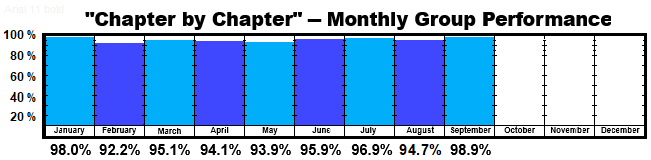
ACCOUNTABILITY TIME! If you are up to date in your reading as of today,
please let me know at this UNLINKED address: accbibleread@gmail.com
XX
October 30, Friday——————-ACCOUNTABILITY REMINDER
Reading B303 — Jeremiah 13 — Taken Captive Audio: Jeremiah 13 (ESV)
An audio recording of the following comments is available below:
Opposing Whispers — God had Jeremiah buy and bury a new loincloth to demonstrate how God’s chosen and loved people had become “good for nothing” (vv. 7, 10). Judah’s primary sins listed here were pride, refusing to listen to God’s words, and serving other gods (vv. 9-10). Because of their sinful stubbornness, judgment would come in the form of exile to Babylon: “the LORD’s flock has been taken captive” (v. 17) and “all Judah is taken into exile” (v. 19). Sin is deceitful. It promises what it cannot deliver and it hides its wrongness. Even going into exile, Judah cried, “Why have these things come upon me?” (v. 22). They had been led away by the attractiveness of sin, just as we are. It looks so good and it seems so harmless. We have two main safeguards to protect us from these temptations. The first one is the truth of God’s Word. It is our only standard, so we must listen to its words and obey them. The second is the conviction of the Holy Spirit who dwells within every believer. It is like the picture we have seen of the little devil and the little angel sitting on each shoulder, whispering into a person’s ears. The question is this: Who will you listen to?
ACCOUNTABILITY REMINDER. If you are up to date in your reading, but have not yet reported, please let me know at this UNLINKED address: accbibleread@gmail.com
XX
October 31, Saturday—————-ACCOUNTABILITY FINAL DAY
Reading B304 — Jeremiah 14 — The Drought Audio: Jeremiah 14 (ESV)
An audio recording of the following comments is available below:
Responsible Relationship — Not only were the Babylonians attacking Judah, but God’s people were also facing drought (v. 1) and they were mourning (v. 2). Jeremiah prayed in repentant humility for Judah, saying “we have sinned against you” (v. 7). He asked for help because God was the “hope of Israel” (v. 8) and His people were called by His name (v. 9). God refused to help, however, and would punish them for their sins (v. 10). He even told Jeremiah, “Do not pray for the welfare of this people” (v. 11). They had come to the point where even repentance would not save them. Jeremiah prayed for Judah nonetheless, perhaps suggesting (wrongly) that God had allowed other prophets to promise peace and rescue (v. 13-16). The chapter ends with another desperate plea for God’s mercy. Why does God not answer some of our prayers? As it was with Judah, sometimes it is our own fault. We take advantage of God’s grace. We consider ourselves forever safe because we belong to Him. The writer of Hebrews reminds us, however, that “the Lord disciplines the one he loves, and chastises every son whom he receives” (Heb. 12:6). A relationship does not exempt us from responsibility.
ACCOUNTABILITY FINAL DAY! If you have not yet reported for this month,
please let me know your reading status today at this UNLINKED address: accbibleread@gmail.com

