Save or print this page by clicking on “Download” below:
April 13, Sunday
Reading A103 — Exodus 23-24 — Approaching Sinai Audio: Exodus 23-24 (ESV)
An audio recording of the following comments is available below:
Reading and Doing — After reading five chapters filled with laws that God told Moses, we read today that “Moses came and told the people all the words of the LORD and all the rules” (24:3). Then, after Moses spoke those rules, he also “wrote down all the words of the LORD” (v. 4). He recorded them for posterity, even for us. How fortunate we are to have the very words of God written down and preserved for us today! What was the response of the people of Israel when they heard the commands of God? They were united in saying, “All the words that the LORD has spoken we will do” (v. 3). The next morning, Moses held a worship service with these people at the foot of Mount Sinai, and then “he took the Book of the Covenant and read it in the hearing of the people” (v. 7a). Again, the people heard the words of Yahweh, and their response was the same as before; they said, “All that the LORD has spoken we will do, and we will be obedient” (v. 7b). We know from Israel’s later history that they were often very unsuccessful at keeping their promise, but so are we. Our goal is to hear God’s Word and do it. Make that your ambition this year as you read His Word every day! Let’s learn it and determine to do it. Be receptive and be obedient!
April 14, Monday
Reading A104 — Exodus 25 — Tabernacle Furniture Audio: Exodus 25 (ESV)
An audio recording of the following comments is available below:
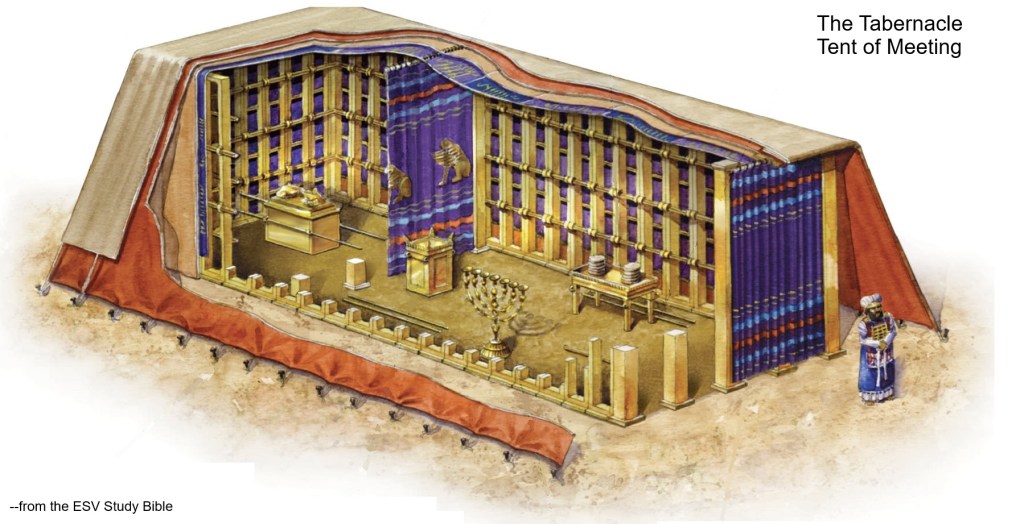
A Place to Dwell — It is interesting that most of the contents of the tabernacle are described before the tabernacle (also called the sanctuary or tent of meeting) is defined. God said that His purpose for the sanctuary was “that I may dwell in their midst” (v. 8). It would be a symbolic house of God. The tabernacle had two parts, the larger one being the Holy Place and the smaller one being the Holy of Holies, or the Most Holy Place. The Most Holy Place contained only one item, the gold-plated Ark, referred to here as “the ark of the testimony” (v. 16), because it contained the stone-carved Ten Commandments. The Mercy Seat provided the cover for the Ark, with two figures of cherubim as a part of the top. It was from between these cherubim that God would speak to Moses regarding many commandments to follow (v. 22). There were three pieces of “furniture” in the Holy Place, with two of them being described in this chapter. The Table for the Bread of Presence, covered with gold, was primarily used to present before God 12 loaves of bread representing the 12 tribes of Israel. Opposite it was the Golden Lampstand with seven lamps to give light to the room. There no longer needs to be a central, physical place to represent God’s presence because all of us Christians are now “a temple of the Holy Spirit” (1 Cor. 6:19). Wherever we are, God is there.

April 15, Tuesday
Reading A105 — Exodus 26 — The Tabernacle Audio: Exodus 26 (ESV)
An audio recording of the following comments is available below:
Guarding What is Holy — This chapter describes the tent that contains the two holy rooms of the tabernacle. Its overall dimensions were a length of 45 feet (13.7m) and a width and height of 15 feet (4.6m). As detailed as this description is, God seems to have given Moses more details, which were “shown on the mountain” (v. 30). It would be the most holy place on earth because it represented God’s presence. The cherubim of gold stretched over the Mercy Seat, the “cherubim skillfully worked into” the curtain that screened the Most Holy Place (v. 31), and the ten curtains surrounding the tabernacle (v. 1) were symbolic of protection of what is holy. That symbolism began when Adam and Eve were driven out of the Garden of Eden and God “placed the cherubim and a flaming sword that turned every way to guard the way to the tree of life” (Gen. 3:24). That tree of life will be in heaven, and we will be given access to it again: “To the one who conquers I will grant to eat of the tree of life, which is in the paradise of God” (Rev. 2:7).
April 16, Wednesday
Reading A106 — Exodus 27 — The Altar and Court Audio: Exodus 27 (ESV)
An audio recording of the following comments is available below:
Greater Value — The tabernacle enclosure was very large, 150 feet (46 m) by 75 feet (23 m), surrounded by a wall of curtains that were 7.5 feet (2.3 m) tall (v. 18). It was a gathering place for the people of God to worship. The gate for the court of the tabernacle faced to the east, toward the rising of the sun. Besides the tabernacle itself, its only furnishings were the large altar for burnt offerings and the large water basin (described in chapter 30). The bronze altar, described in today’s chapter, was 7.5 feet (2.3 m) square and 52 inches (132 cm) tall. Whereas every solid thing inside the tabernacle was covered with gold, further away in the court, the metals were much less valuable, mostly bronze and some silver. The constructed things closer to the presence of God were made of the costliest materials. It was symbolic and significant, reflecting the infinite worth of God. It was ordered by God, so it was important to Him that His people would honor Him.
April 17, Thursday
Reading A107 — Exodus 28 — Priestly Garments Audio: Exodus 28 (ESV)
An audio recording of the following comments is available below:
Garments that Honor — We transfer in this chapter from holy things to holy people, from things in the tabernacle that were close to God to the priests who ministered inside the tabernacle. The priests were holy because they were physically near the presence of God, they represented God, and they served God. These things continually emphasized the importance that God places on His people’s need to honor Him because He, the Creator, is so much greater than His creatures. He is holy, as the gold plate of the priest’s forehead said: “Holy to the LORD” (v. 36). Everything about this priestly garment (see diagram from the ESV Study Bible) points to the special wonder of the worth of God. The valuable gold that appeared in various places on the garment and the vivid colors of “gold, blue and purple and scarlet” (v. 5) all added to its “glory and beauty” (v. 2). We cannot overemphasize His holiness.

April 18, Friday
Reading A108 — Exodus 29 — Ordination and Duties Audio: Exodus 29 (ESV)
An audio recording of the following comments is available below:
Exact Obedience — The ordination of priests was a detailed procedure involving the sacrifice of a bull and two rams, and the making and eating of certain unleavened breads. Only certain parts of the meat sacrificed were to be eaten. There were so many things to be done in certain ways and at specific times that it seems like there would have to be a checklist to make sure everything was done correctly. Why is God so exacting? Why must His rules be so detailed and complicated? Perhaps part of it is because He wants to emphasize the importance of holiness and obedience. Obedience is not approximate; it is exact. God does not want only an effort toward obedience; He wants complete and wholehearted obedience. He doesn’t require obedience only on Sunday, but on every day of the week. We are not to tell the truth just most of the time but all of the time. We are to be holy as God is holy. Obedience should reflect our character. If we are holy, it will be seen in how we consistently act.
April 19, Saturday
Reading A109 — Exodus 30 — Holy Oil and Incense Audio: Exodus 30 (ESV)
An audio recording of the following comments is available below:
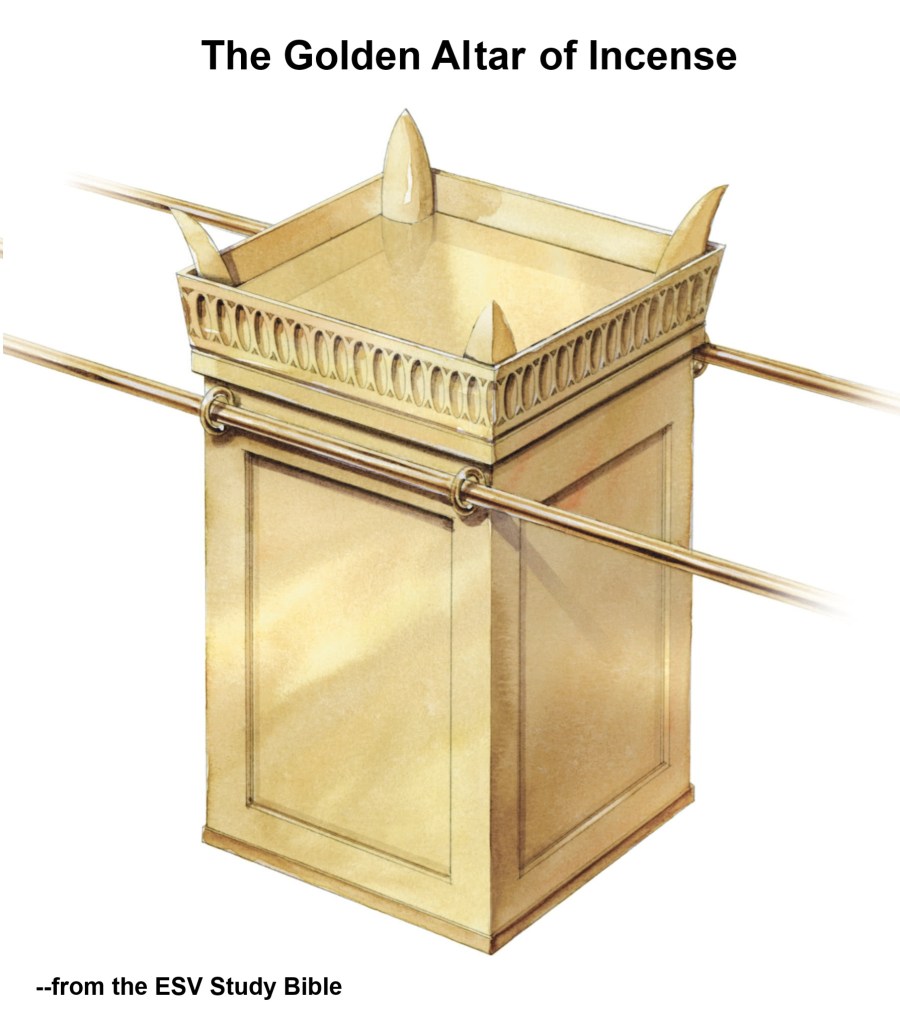
What God Calls Holy — Chapter 30 describes the final two major items in the tabernacle complex: the altar of incense in the Holy Place and the bronze basin near the altar for burning. The basin provided a reservoir for the purification of priests by washing their hands and feet with water before entering the Holy Place or offering burnt sacrifices on the outside altar. The altar of incense was given great honor. It stood right at the boundary between the Holy Place and the Most Holy Place in the tabernacle. It was said to be “most holy to the LORD” (v. 10) and “most holy for you” (v. 36). The special-formula incense that was burned on it was to be “for you holy to the LORD” (v. 37). Its formula was not to be used for any other purpose or by any other person than appointed priests. When God called something holy, as He does ten times in this chapter, it is unique and set apart for His chosen purpose. We Christians are now God’s chosen, holy people as Peter wrote: “you are a chosen race, a royal priesthood, a holy nation, a people for his own possession, that you may proclaim the excellencies of him who called you out of darkness into his marvelous light” (1 Pet. 2:9).


Christians should be holy because we’re set apart for his chosen purpose. Offer oneself holy and acceptable to God.
LikeLike