Save or print this page by clicking on “Download” below:
March 30, Sunday——————-ACCOUNTABILITY REMINDER
Reading A89 — Exodus 3-4 — God Calls Moses Audio: Exodus 3-4 (ESV)
An audio recording of the following comments is available below:
The Infinite and the Inadequate — What a contrast we see in these two chapters: the infinite ability of God and the inadequacy of man! The unlimited knowledge and power of Yahweh was shown when He appeared to Moses in a miraculous way, speaking out of a burning bush that wasn’t consumed (3:2). His miraculous power was also seen when Moses’ staff was turned into a snake and his hand became leprous, and then both were restored (4:3-7). God also guaranteed His power for the future, telling Moses, “I promise that I will bring you up out of the affliction of Egypt to … a land flowing with milk and honey” (3:17). In addition to God’s omnipotence (being all powerful), we see that He is also omniscient (being all knowing). What did He already know? He told Moses, “I have surely seen the affliction of my people who are in Egypt and have heard their cry because of their taskmasters. I know their sufferings” (3:17, emphasis added). That kind of ability is reserved for the Infinite One. On the other hand, we see the inadequacy of Moses. Like all of us would have responded to the kind of call Moses received from God, he asked, “Who am I…?” (3:11). He then complained in doubt that “they will not believe me or listen to my voice” (4:1). You would also have that hesitation, thinking that you cannot control the minds and will of other people. That is correct, but that is where the Almighty steps in; He can move the hearts of people. The next complaint of Moses was about his speech. He told God, “I am not eloquent … I am slow of speech” (4:10), which was apparently true. For this lack, God provided a surprising solution by having Aaron partner with Moses. Do you feel inadequate to take on significant tasks of ministry? You are! All of us are weak and inadequate “jars of clay,” but God uses that “to show that the surpassing power belongs to God and not to us” (2 Cor. 4:7). The Infinite is in us, inadequate humans.
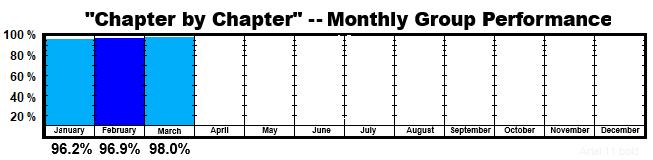
ACCOUNTABILITY REMINDER If you are up to date in your reading as
of today, but did not report yesterday, please click here to leave your
email address or let me know at accbibleread@gmail.com.
March 31, Monday——————–ACCOUNTABILITY FINAL DAY
Reading A90 — Exodus 5-6 — Adding Burdens Audio: Exodus 5-6 (ESV)
An audio recording of the following comments is available below:
Perspectives — Understanding God is often a challenging task. In many places in Scripture, God seems to only partially and gradually reveal Himself and what He is doing. Perhaps it was to build faith in His people. Pharaoh didn’t know God at all, and he resisted believing and obeying Him, saying, “Who is the LORD, that I should obey his voice and let Israel go? I do not know the LORD” (5:2). His perspective was that Israel’s request to worship in the wilderness was just their effort to get relief from work. He called their appeal, “lying words” (v. 9). Israel’s perspective was one of regret that they ever agreed to the plan of Moses and Aaron to approach Pharaoh with this request. Their foremen told Moses, “…you have made us stink” (v. 21). Moses’ perspective wasn’t much better, as he questioned God about why He had “done evil to this people” (v. 22), why He had sent Moses (v. 22), and why “you have not delivered your people” (v. 23). The problem was timing. God had promised that He would deliver Israel, but He didn’t tell them how long it would take or what they would have to go through before it would happen. Israel needed faith to wait, and we do, too. Jesus promised that He would return to earth, but He didn’t say when or what all would happen to His Church before that event. We Christians have been holding to that promise in faith for over 2,000 years. Just wait, and you will see. That is essentially what God told Moses: “Now you shall see what I will do to Pharaoh…” (6:1). He did not give Moses a timeline, only a promise, which is enough for those with faith.
ACCOUNTABILITY FINAL DAY! If you have not yet reported for this month,
please let me know your reading status today at accbibleread@gmail.com.
April 1, Tuesday
Reading A91 — Exodus 7 — The First Plague Audio: Exodus 7 (ESV)
An audio recording of the following comments is available below:
Prove It! — We saw in yesterday’s reading that there was significant doubt in Pharaoh’s mind that Yahweh, the God of the Hebrews, could be very powerful if His people were enslaved. So, when Moses and Aaron came to him again, he said, “Prove yourselves by working a miracle” (v. 9), which resulted in God’s demonstration through ten plagues against Pharaoh and his nation, and the destruction of his army in the Red Sea. Twice in this chapter, God said that by the punishing chaos of the plagues, Pharaoh and the Egyptians “shall know that I am the LORD” (vv. 5, 17), which is the overriding theme of chapters 6-14. It wouldn’t be an easy lesson to learn, however, because of the stubborn heart of Pharaoh. The following table from the ESV Study Bible shows that the hardening of Pharaoh’s heart was a combination of the actions of both God and Pharaoh. It began with God’s statement, “I will harden Pharaoh’s heart” (v. 3), and continued with three descriptions of the settled hardness of his heart (vv. 13, 14, 22). In tomorrow’s reading, we will see the direct action of Pharaoh in hardening his own heart. Our heart can become hard as well. It may also come with a “prove it” attitude. We might react negatively because God didn’t answer our prayer as we expected Him to do. We think that God should prove His love for us by providing everything we want, like the toddler at the grocery store. If you catch yourself thinking like that, remember Pharaoh’s demand to prove it, or it might result in a painful demonstration of God’s power.
| Hardening of Pharaoh’s Heart | |||
| Declarations | Hardenings | ||
| Yahweh will harden | Yahweh hardened | Was hardened | Pharaoh hardened |
| 4:21 | |||
| 7:3 | |||
| 7:13 | |||
| 7:14 | |||
| 7:22 | |||
| 8:15 | |||
| 8:19 | |||
| 8:32 | |||
| 9:7 | |||
| 9:12 | |||
| 9:34 | |||
| 9:35 | |||
| 10:1 | |||
| 10:20 | |||
| 10:27 | |||
| 11:10 | |||
| 14:4 | |||
| 14:5 | |||
| 14:8 | |||
April 2, Wednesday
Reading A92 — Exodus 8 — Frogs, Gnats, and Flies Audio: Exodus 8 (ESV)
An audio recording of the following comments is available below:
Growing Faith — We are not told how the magicians duplicated some of the signs that Moses and Aaron did, but their limitations are shown in this chapter when they could not produce gnats from dust (v. 18), and they attributed the miracle as coming from “the finger of God” (v. 19). Whatever means they were using for their imitating acts was of much less power than that of Yahweh. Pharaoh was also showing recognition of God’s superior power when he asked Moses to “Plead with the LORD to take away the frogs from me” (v. 8), and “Plead for me” regarding the flies (v. 28). In contrast to this increasing admission of weakness by others, Moses was growing in faith. When Pharaoh asked Moses to plead to Yahweh to remove the frogs, Moses asked him, “When am I to plead for you?” (v. 9), and Pharaoh answered, “Tomorrow” (v. 10). Moses’ faith in God’s answers gave him confidence to even let Pharaoh pick the time for the miracle to happen. The effectiveness of his faith is seen in the response that “the LORD did according to the word of Moses” (v. 13). Similar evidence of his faith was shown when he told Pharaoh that he would ask God to remove the flies “tomorrow” (v. 29), and “the LORD did as Moses asked” (v. 31). How about us? Have we seen enough of God’s answers to prayer, to see that our faith is growing? We should exercise faith when we pray so that it will grow.
April 3, Thursday
Reading A93 — Exodus 9 — Herds, Boils, and Hail Audio: Exodus 9 (ESV)
An audio recording of the following comments is available below:
Eternal Shelter — Like yesterday’s reading, this chapter covers three of the ten plagues, numbers 5, 6, and 7. The fifth plague was the first one to bring death, as God killed the livestock of the Egyptians, while sparing those of the Hebrews (v. 4). The sixth plague of boils came closer to the personal wellbeing of the people of Egypt, giving them physical pain. It was so bad that the previously opposing magicians “could not stand before Moses because of the boils” (v. 11). That plague was more personal and painful. The seventh plague of hail was the first one to offer conditional protection. If they brought their animals and servants into places of shelter, their lives would be spared. That gracious offer would be repeated much later in the message of the gospel: the offer of eternal shelter in heaven would depend on one’s willingness to surrender to God through faith in Christ. In introducing the plague of hail, God presented the overall purpose that applied to all the plagues. First, it was to show God’s uniqueness: “…so that you may know that there is none like me in all the earth” (v. 15). Second, it was “to show you my power” (v. 16a). Third, it was for worldwide evangelism: “…that my name may be proclaimed in all the earth” (v. 16b). Wake up! Give in!
April 4, Friday
Reading A94 — Exodus 10-11 — Locusts and Darkness Audio: Exodus 10-11 (ESV)
An audio recording of the following comments is available below:
Being Humbled — After seven plagues, God sent Moses to tell Pharaoh, “How long will you refuse to humble yourself before me?” (10:3). Even his servants told him, “Do you not yet understand that Egypt is ruined?” (v. 7). Disaster often follows stubbornness. Unwillingness to humble oneself before God is the heart condition of most of our world today. The disaster of hell awaits those who refuse until the end. Sadly, many Christians also struggle with unwillingness to be humble before God. They want to run their own lives and do what pleases them. Discipline is the disaster that awaits them. When we get proud, selfish, and excuse our sin, God spanks us to get our attention and to warn us. Voluntary humility avoids God’s discipline and opens the door to His blessing. As James instructs us, “Humble yourselves before the Lord, and he will exalt you” (James 4:10).
April 5, Saturday
Reading A95 — Exodus 12 — Plague of the Firstborn Audio: Exodus 12 (ESV)
An audio recording of the following comments is available below:
Hurry to Leave — The final plague in Egypt was a monumental, memorable, divinely orchestrated event. It defined the first Hebrew month of the year (v. 2), the forever memorial (v. 14) of the Feast of Unleavened Bread (v. 17), and the symbolic rite of applying blood on the doorway of their houses (v. 24). Jews still do these things annually, over 3,400 years later. Haste was a theme in this chapter. The people of Israel were to eat the Passover meal in haste, being ready to run (v. 11). After the disaster, Pharaoh didn’t even wait until morning, but “he summoned Moses and Aaron by night” to urge Israel to get out of Egypt (v. 31). Then, all the Egyptian people “were urgent … to send them out of the land in haste” (v. 33), giving them money and clothes. Beginning with only 70 Jews in Egypt, at least 2 million of them were freed from slavery and headed for the Promised Land. Sometimes it seems like God works too slowly, like leaving His people in slavery for 430 years. Even the period of the 10 plagues probably lasted 5-6 months. But it was only in a single day that God enabled Israel to flee Egypt with the encouragement of Pharoah and all the Egyptians. God works slowly partly to build faith in His people, and He works quickly to bring awe to His family and wonder to all others.
 accbibleread.com
Hi Ben!
Is there any speculation among scholars about how much time passed from the beginning of the plagues to the end? I’m curious because chapter 9 says all the Egyption livestock was wiped out, while the plague of hail indicates there was still livestock for the Egyptions. Maybe they purchased more livestock from the Israelites who were unaffected?
Patty M
LikeLike
The text doesn’t give any timeline for the Egyptian plagues, but I have read commentaries who have guessed a total of 6 to 9 months. All the Egyptian livestock died in the fifth plague. The time for the sixth plague of boils would have given them opportunity to purchase new cattle (likely from Israel) before the beginning of the seventh plague of boils.
LikeLike