Save or print this page by clicking on “Download” below:
March 29 , Sunday———————–ACCOUNTABILITY TIME!
Reading B88 — 2 Chron. 3 — Solomon’s Temple (B) Audio: 2 Chron. 3 (ESV)
An audio recording of the following comments is available below:
This, That, or Both? — This description of the inside of the temple is much briefer than the account we read in 1 Kings 6, and it presents several puzzling questions. Both accounts give the width of the vestibule in the front of the temple, but only 1 Kings 6:3 gives its length of 10 cubits. Its height is given as 30 cubits in 1 Kings 6:2; however, 1 Chron. 3:4 says it was 120 cubits, which seems to be inappropriately large. The Hebrew text doesn’t have the word for “cubits” for that large number, however, so it may have different unnamed units. The height of the two pillars within the vestibule were earlier said to be 18 cubits tall, but today’s passage speaks of “two pillars thirty-five cubits high,” perhaps roughly combining the total height of both pillars. Another puzzling question in today’s passage gives the weight of gold “nails,” whereas 1 Kings 6:7 says that the sound of a hammer was not “heard in the house while it was being built.” Since gold is a relatively soft metal, perhaps these nails were not pounded into wood but were dropped into pre-shaped holes to hold together adjacent pieces, like hinged doors. I have seen various artists’ renditions of the cherubim overshadowing the ark of the covenant in the Holy of Holies, and they were different in different OT temples; but in 2 Chron. 3:13, it clearly shows that these cherubim were “facing the nave,” or toward the front of the temple. A final puzzle in today’s reading is that, “the veil of blue and purple and crimson fabrics…” (v. 14) was described, but it was not even mentioned in 1 Kings 6:31, rather that there were “doors of olivewood” at the entrance to the inner sanctuary. The whole truth is that there were both doors and the curtain veil at that entrance. Not all questions about Scripture may be answered on this side of heaven.
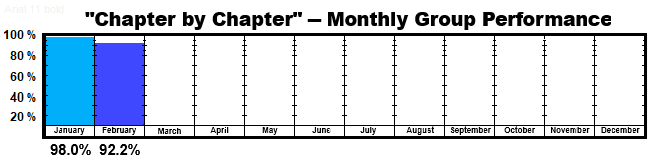
ACCOUNTABILITY TIME! If you are up to date in your reading as of today,
please let me know at accbibleread@gmail.com.
zzz
March 30 , Monday—————-ACCOUNTABILITY REMINDER
Reading B89 — 1 Kings 7 — Temple-Palace Complex Audio: 1 Kings 7 (ESV)
An audio recording of the following comments is available below:
Solomon’s Palace — As can be seen in the accompanying diagram of a birds’-eye view of the temple-palace complex, Solomon did not hold back in his enthusiasm for his own dwelling and ruling buildings. It was much bigger than the temple, and it took almost twice as long to build. The size of the temple, however, was ordered by God. The very skilled worker in bronze, Hiram from Tyre, was not the king of Tyre with the same name. Hiram, the craftsman, had a Jewish mother (v. 14). We are also given a description of “the sea” in this chapter (vv. 23-26), the very large stationary storage container for water used for purification in the sacrificial process. We are told here that its volume could contain “2,000 baths,” which is equal to 12,000 gallons (44,000 liters) of water. In addition to this central water-storage “sea” were 10 portable water basins on wheels, each containing 240 gallons (900 liters).
ACCOUNTABILITY REMINDER! If you are up to date in your reading as of today,
but you did not report yesterday, please let me know at accbibleread@gmail.com.
zzz
March 31 , Tuesday—————ACCOUNTABLILITY FINAL DAY
Reading B90 — 2 Chron. 4 — Temple Items Audio: 2 Chron. 4 (ESV)
An audio recording of the following comments is available below:
Priority of Purpose — The fact that the books of Chronicles are more concerned with the meaning of things than their description is illustrated in this chapter’s comments on the ten wash basins (see the illustration from the ESV Study Bible). The dimensions and description of these portable basins were carefully laid out in 13 verses in 1 Kings 7:27-39, without any mention of their purpose; whereas 2 Chron. 4 provides no description, except where they were located, but does state their purpose: “…they were to rinse off what was used for the burnt offering, and the sea was for the priests to wash in” (v. 6). The animal parts that were to be burned on the altar were first plunged into this water tank as an act of cleansing before being offered. This verse also tells the purpose for the much larger “sea,” which was “for the priests to wash in.” It was provided for the personal ceremonial cleansing of their own hands and feet before serving in the various activities of offering sacrifices. As representatives of the people before God, they symbolically became clean before serving. We Christians sometimes do things that we think are important, but we lose something in why we are doing it. We may attend our church services more because it is our tradition rather than our passion. We pray before meals but sometimes without grateful hearts. That we worship is not as important as how we worship. Make purpose the priority!
ACCOUNTABILITY FINAL DAY! If you have not reported for this month,
please let me know your reading status today at accbibleread@gmail.com.
zzz
April 1, Wednesday
Reading B91 — 1 Kings 8 — The Ark in the Temple (A) Audio: 1 Kings 8 (ESV)
An audio recording of the following comments is available below:
The Infinite God — This was a huge celebration at the time of the Feast of Booths when thousands of people gathered to celebrate the dedication of the temple when the ark of the covenant was finally brought into the Most Holy Place. Was this just a ceremony, or was God really there? He offered a dramatic demonstration of His real presence when He filled the temple with a supernatural cloud so dense and powerful “that the priests could not stand to minister because of the cloud, for the glory of the LORD filled the house of the LORD” (v. 11). Yes, God dwelt there, but He was not limited to that place. Solomon recognized that and declared, “Behold, heaven and the highest heaven cannot contain you; how much less this house that I have built!” (v. 27). God’s presence was in the inner sanctuary in a special, symbolic way, but He was also present everywhere else. He cannot be contained. So, how should we respond to that greatness? In Solomon’s following sevenfold prayer about future situations (vv. 31-53), four times he emphasized the need for repentance: “…and if they turn again to you…” (v. 33), “…and turn from their sin…” (v. 35), “…yet if they turn their heart … and repent…” (v. 47), and “if they repent with all their heart” (v. 48). Our response is to turn away from sins and other distracting things and turn to God for forgiveness to be realigned to His glory.
April 2, Thursday
Reading B92 — 2 Chron. 5 — The Ark in the Temple (B) Audio: 2 Chron. 5 (ESV)
An audio recording of the following comments is available below:
Elevated Presence — This is the second account we have read about the dedication of the temple, but this one adds some very interesting and significant information. We had read in 1 Kings 8:10 that “when the priests came out of the Holy Place, a cloud filled the house of the LORD.” Where the comma is placed in this verse, 1 Chron. 5:11-13 adds 99 words (in the ESV) of explanation. It tells us about many Levitical singers in fine linen playing musical instruments, plus 120 priests with trumpets who performed “in praise and thanksgiving to the LORD” (v. 13a). Then it says that “when the song was raised … the house of the LORD, was filled with a cloud” (v. 13b, emphasis added). Here we see that it was not at the time of the ark-carrying priests leaving the temple that the cloud appeared, but after the later collective worship of these people. Worship invites and experiences the presence of God in a special way. Think of that next weekend when you are worshiping God in your church with other believers. God is uniquely present in your midst. Jesus said that “where two or three are gathered in my name, there am I among them” (Matt. 18:20). He always dwells inside each of us Christians, but when we worship together, He elevates His presence.
April 3, Friday
Reading B93 — 2 Chron. 6 — Prayer of Dedication Audio: 2 Chron. 6 (ESV)
An audio recording of the following comments is available below:
Rejoicing in Goodness — This account of Solomon’s prayer of dedication for the temple closely follows what we read in the earlier version in 1 Kings 8. The big difference is how today’s reading ends, closing with a quote and paraphrase from Psa. 132:8-10. It acknowledged God’s symbolic presence in the new temple’s Most Holy Place — “your resting place” (v. 41). That was followed by a prayer for the priests to “be clothed with salvation” (or “…with righteousness” in Psa. 132:9) and for the saints to “rejoice in your goodness.” That is what we are to do as well. Too many Christians, instead, “complain in their circumstances.” God is good and He is good to us. We need to look for it, recognize it, and thank Him for it. Concentrate on your Provider instead of your problems! The final prayer request is about the continuing reign of the Davidic kingship, “your anointed one” (2 Chron. 6:42), which looks forward to the final King in that line, Jesus Christ, the King of Kings.
April 4, Saturday
Reading B94 — 2 Chron. 7 — Fire from Heaven Audio: 2 Chron. 7 (ESV)
An audio recording of the following comments is available below:
Proper Response to God — At the end of Solomon’s prayer, “fire came down from heaven and consumed the burnt offering” (v. 1). What a dramatic and powerful proof of the reality of God and His approval of this temple! The amazed people appropriately responded in worship and giving thanks to God (v. 3). One wouldn’t think that anyone who had seen that display of divine power would ever go astray, yet God warned them about their future in probably the most recognizable verse in this book: “… if my people who are called by my name humble themselves, and pray and seek my face and turn from their wicked ways, then I will hear from heaven and will forgive their sin and heal their land” (v. 14). They would go astray, and so do we. We are not Jews, but we are His people. We are saved by the blood of Jesus, but we still have a sinful nature. When we do sin, this is our God-required response: “humble [ourselves] … pray … seek [His] face and turn from [our] wicked ways.” That is a picture of a sorry soul. Often, the seriousness of our sin doesn’t affect us as strongly as it should. We should recognize how evil and dangerous it is to us and how deeply it grieves our Lord.
 accbibleread.com