Save or print this page by clicking on “Download” below:
February 22, Sunday
Reading B53 — Song of Songs 1 — Dark, But Lovely Audio: Song 1 (ESV)
An audio recording of the following comments is available below:
The Best of Songs — The interpretation of this poetic book is among the most controversial in all the Bible. Many explanations have been offered, so it would be wise to hold your own conclusions lightly. I will suggest what makes the most sense to me, e.g., that the groom in this book is Solomon himself, who although he is mentioned as being “distant” (3:6-7), it is also in a romantic context (3:10-11). We read recently that Solomon wrote 1,005 songs (1 Kings 4:32), and this is one of them, probably his best, as reflected in the title “Song of Songs [like “king of kings”], which is Solomon’s.” It describes the loving interaction between a betrothed couple leading up to their wedding. Solomon is a young man and she is a dark-skinned, beautiful young woman. A chorus of “Others,” perhaps “the daughters of Jerusalem,” inserts their comments from time to time. This first chapter seems to be centered on the couple’s physical attraction to each other. She admits that she is lovely but seems to see her dark skin in a negative light (“I am very dark, but lovely”—v. 5). Solomon thinks she is “most beautiful among women” (v. 8), and exclaims, “Behold, you are beautiful, my love” (v. 15). Even she says to him, “Behold, you are beautiful, my beloved” (v. 16). God designed men to be attracted to women, and vice versa, and we are fortunate that God has given us this book as a picture of what a godly relationship might look like between a man and woman.
February 23, Monday
Reading B54 — Song of Songs 2 — His Banner Over Me Audio: Song 2 (ESV)
An audio recording of the following comments is available below:
To Wait is Right — Probably the most well-known expression in this chapter is, “his banner over me is love” (v. 4). The Hebrew word for “banner” here is used elsewhere in the OT only in the book of Numbers (chapters 2 and 10), where it is translated, “standard,” which referred to a flag-type identifier for the tribes and clans of Israel as they traveled in the wilderness. The picture of this banner being displayed at the “banqueting house,” makes me think of something like an engagement party. They were publicly betrothed to each other. This banner-expression is often interpreted in a Christian context as a picture of Jesus declaring each of His followers as belonging to him. Later, the wedding party for Christians will be held at “the marriage supper of the Lamb” (Rev. 19:9). Another feature in today’s reading is the caution given to those who are in love and are looking forward to marriage. They are intimately involved: “His left hand is under my head, and his right hand embraces me!” (Song 2:6). The caution that follows, however, is “that you not stir up or awaken love until it pleases” (v. 7). Save sexual intercourse for marriage! That restraint in the days of Solomon was a part of their culture, but that is not true in the cultures in which most of us live today. It is God’s standard, however, so it must be the rule for Christians to follow as well. Waiting is right.
February 24, Tuesday
Reading B55 — Song of Songs 3 — Have You Seen Him? Audio: Song 3 (ESV)
An audio recording of the following comments is available below:
Dreaming of the Future — One of the reasons the Song of Songs is difficult to interpret is because it is poetry, a form often using broad descriptions and comparisons. Another difficulty this chapter adds is that it appears to begin the description of a three-chapter dream of this future wife of Solomon. The chapter begins with, “On my bed by night I sought him…” (v. 1). It appears to be in a dream that she sought him. Dreams often include mystery and have elements that don’t fit well with reality, like “What is that…?” (v. 6). What she saw were “columns of smoke, perfumed with myrrh and frankincense.” Although it is at a distance, she can not only see what looks like smoke, but she can also smell it. It turns out to be a procession for her lover, King Solomon, being carried in a very fancy litter (vv. 6, 11). She was still anticipating her marriage in the dream, when she would bring him “into my mother’s house, and into the chamber of her who conceived me” (v. 4). Following this statement is the same caution we saw in the previous chapter to “not stir up or awaken love until it pleases” (v. 5). After the wedding, the dream will become reality.
February 25, Wednesday
Reading B56 — Song of Songs 4 — My Sister, My Bride Audio: Song 4 (ESV)
An audio recording of the following comments is available below:
The Locked Garden — Is this chapter still describing her dream? On the one hand, his words dominate the chapter, describing her body’s beauty from top toward the bottom. On the other hand, one indication that this is still part of her dream is that he calls her “my bride” six times (vv. 8-12) but nowhere else in the Song of Solomon, except the first verse of the next chapter. The context still seems to be in a dreamy anticipation of their coming wedding. Another hint that she is dreaming here is that this “bride” is pictured as still being a virgin: “A garden locked is my sister, my bride, a spring locked, a fountain sealed” (v. 12). That opening will happen on their wedding night at his request and her invitation, when “her garden” becomes “his garden” (v. 16).
XXX
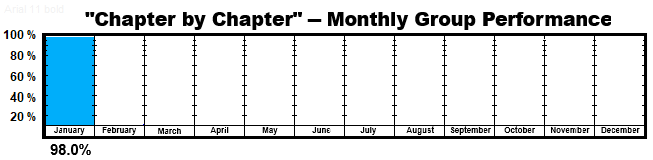
February 26, Thursday———————-ACCOUNTABILITY TIME!
Reading B57 — Song of Songs 5 — Searching in Vain Audio: Song 5 (ESV)
An audio recording of the following comments is available below:
Frustrating Events — This chapter begins with a statement of Solomon’s anticipation of their wedding night in verse 1: “I came to my garden … I ate … I drank.” The remaining verses seem to be a continuation of her dream, as she said, “I slept, but my heart was awake…” (v. 2). Like many of our dreams that contain disconnects, unlikely events, and surprises, she also dreamed that her lover was urgently knocking at her door and asking to be welcomed in: “Open to me … my love” (v. 2). When she delayed, offering two rather frivolous excuses (v. 3), he suddenly and unexpectedly left (v. 6). She searched the city for him, but in a nightmarish way, the watchmen found her (as they did in 3:3), but this time they beat her (5:7). When questioned by others, she then gave a long description of what she loved about his physical appearance, like his portrayal of her in chapter 2. Just before I woke up this morning, I had a frustrating dream about playing golf on a course that was composed entirely of sand. It is frustrating to dream about something that is far from what you would want to happen in real life. That seems to be what Solomon’s future wife was experiencing with this dream that appears to end with the first three verses of the next chapter. In a sense, sometimes things that happen when we are awake also seem somewhat like a dream. We don’t understand why certain things happen. The reason is that we do not see the whole picture from God’s perspective, although it all makes sense to Him.
ACCOUNTABILITY TIME! If you are up to date in your reading as of today,
please let me know at accbibleread@gmail.com.
XXX
February 27, Friday——————-ACCOUNTABILITY REMINDER
Reading B58 — Song of Songs 6 — Beautiful as the Moon Audio: Song 6 (ESV)
An audio recording of the following comments is available below:
Handling Beauty — Searching for her absent lover in verse 1 seems to continue her dream, which appears to end with another reference to their future marriage, when he goes “down to his garden … [and] grazes among the lilies” (vv. 2-3). His praise of her beauty then continues, with the description of her eyes, hair, teeth, and cheeks in vv. 4-7, which is almost identical to what he had said in 4:1-4. Her beauty was also admired by women, even beautiful women: “The young women saw her and called her blessed; the queens and concubines also, and they praised her” (6:9). When she “went down to the nut orchard to look at the blossoms” (v. 11), the chorus of the daughters of Jerusalem begged her, “return, that we may look upon you” (v. 13). It is impressive to me that with all her beauty and all the praise that came to her, she never seemed to become proud, but she was just grateful that it was a means used to attract Solomon to her. Her attitude was quite a contrast to Queen Vashti who defiantly refused to obey King Ahasuerus’ request “to show the peoples and the princes her beauty” (Esther 1:11-12). Also, the king of Tyre was “cast … to the ground” by God because his “heart was proud because of [his] beauty” (Ezekiel 28:16-17). The greatest beauty was later described by Solomon: “…beauty is vain, but a woman who fears the LORD is to be praised” (Prov. 31:30).
ACCOUNTABILITY REMINDER. If you are up to date in your reading as of today,
but did not report yesterday, please let me know at accbibleread@gmail.com.
X
February 28, Saturday—————ACCOUNTABILITY FINAL DAY
Reading B59 — Song of Songs 7 — Beauty and Bonding Audio: Song 7 (ESV)
An audio recording of the following comments is available below:
Love’s Focus — As he did in chapter 4, Solomon takes most of this chapter to review his lover’s beautiful features: “How beautiful are your feet … How beautiful and pleasant you are” (vv. 1, 6). This chapter emphasizes to me a significant difference between men and women. We men are strongly attracted by what we see; therefore, we should be cautious about what we allow our eyes to look at, as Job vowed, “I have made a covenant with my eyes; how then could I gaze at a virgin?” (Job 31:1). But Solomon was betrothed to this woman and was looking forward to all that marriage was going to provide in a sensual way. His female lover, however, seemed to be focused more on relationship, wanting to be with him: “I am my beloved’s, and his desire is for me. Come, my beloved, let us go out into the fields … let us go out early to the vineyards” (Song 7:10-12). In addition to companionship, she was also looking forward to their sexual union following their wedding, so she said, “There I will give you my love. The mandrakes give forth fragrance … all choice fruits … which I have laid up for you, O my beloved” (vv. 12b-13). Notice the connection between her love and the mandrakes. In Genesis 30:14-16, Rachel struggled with Leah over mandrakes, an assumed aphrodisiac, which gave her the opportunity to have sexual relations with Jacob that night. Even the Hebrew words for “mandrakes” and “my beloved” sound much alike. Tomorrow, we will read that the desires of both Solomon and his lover will be fulfilled.
ACCOUNTABILITY FINAL DAY! If you have not yet reported for this month,
please let me know your reading status today at accbibleread@gmail.com.
 accbibleread.com