Save or print this page by clicking on “Download” below:
December 28, Sunday
Reading A362 — Psalm 12-13 — How Long? Audio: Psa. 12-13 (ESV)
An audio recording of the following comments is available below:
Waiting on God — These two psalms of David seem to fit the situation existing when he had fled from Absalom. Godly people seemed to be a few floating in a sea of ungodliness. It also fits our circumstances today, which was predicted in this conclusion to Jesus’ parable of the wedding: “… many are called, but few are chosen” (Matt. 22:14). He also said that “the gate is narrow … that leads to life, and those who find it are few” (Matt. 7:14). David seemed to feel abandoned by God, pleading four times, “How long, O LORD?” (Psa. 13:1-2). Waiting for God to act is a common problem for us as well. There is a difference, however, between waiting for God and waiting on God. The former requires patience and the latter requires trust. When we wait on God, we truly believe that He will answer but we don’t know when. Psalm 13 ends with this string: “answer me … I have trusted … my heart shall rejoice … I will sing” (13:3, 5-6). Notice the sequence: request, trust, and the anticipation of fulfilled joy.
XX
December 29, Monday———————-ACCOUNTABILITY TIME!
Reading A363 — Psalm 28, 55 — Pleas for Mercy Audio: Psa. 28, Psa. 55
An audio recording of the following comments is available below:
Betrayed by a Friend — In both of these psalms, David sends out desperate “pleas for mercy” (28:2, 6; 55:1). These psalms are placed here in our chronological readings because they seem to fit well in the context of his running away from Absalom’s rebellion. The most significant feature in Psalm 55 is that David’s opponent was called “my equal, my companion, my familiar friend” (v. 13). Absalom does not fit this description, but there are good reasons to believe that it might be referring to David’s trusted counselor, Ahithophel, who was a significant part of Absalom’s rebellion, as we read earlier in 2 Sam. 15. David also said about him that “His speech was smooth as butter, yet war was in his heart” (55:21). We will soon see how that does describe Ahithophel, as the evil in his heart is exposed, and he commits suicide. Sometimes we do have close friends that turn their backs on us, even family members. If that happens to us, like David, we should cry out in desperation to God with “pleas for mercy.” Then we should follow the advice at the end of this chapter: “Cast your burden on the LORD, and he will sustain you” (v. 22). There is no burden so heavy for you to carry that God is not willing to lift for you.
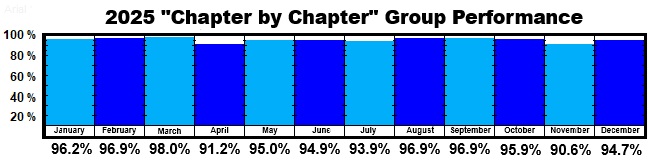
ACCOUNTABILITY TIME! If you are up to date in your reading as of today,
please let me know at accbibleread@gmail.com.
XX
December 30, Tuesday ————– ACCOUNTABILITY REMINDER
Reading A364 — 2 Samuel 16 — Throwing Dirt Audio: 2 Samuel 16 (ESV)
An audio recording of the following comments is available below:
Showing Character — There are five key characters in this chapter’s story, four of them involved in sinful practices. The first was Ziba, the schemer. He lied to David, saying that Saul’s grandson, Mephibosheth, had said, “Today the house of Israel will give me back the kingdom of my father” (v. 3). We will read Mephibosheth’s side of that story later. The second man was Shimei, the curser. Throwing stones and dirt at David, he cried out, “Get out, get out, you man of blood, you worthless man!” (v. 7). He was disobeying God’s law, which said, “You shall not revile God, nor curse a ruler of your people” (Ex. 22:28). We should remember this command in our current political culture. The third character was David, the humble. His response to Shimei’s cursing was to consider that it might be part of God’s punishment (v. 10) for his sins involving Bathsheba and Uriah. Do we ever consider that our abuse might be part of God’s rebuke for what we have done? David’s response here revealed great humility. The next two people were the king’s counselors. Hushai, the faker, went to Absalom, pretending to be his loyal counselor but for the purpose of frustrating the advice of Ahithophel. Insincerely he said, “Long live the king! … whom the LORD … [has] chosen, his I will be…” (vv. 16, 18). The last one was Ahithophel, the evil advisor. He had been a good advisor to David, but he defected, and his advice to Absalom suggested sin: “Go in to your father’s concubines … and all Israel will hear that you have made yourself a stench to your father” (v. 21). These five key people were revealing much about their character.
ACCOUNTABILITY REMINDER. If you are up to date in your reading as of today,
but did not report yesterday, please let me know at accbibleread@gmail.com.
XX
December 31, Wednesday ———– ACCOUNTABILITY FINAL DAY
Reading A365 — 2 Samuel 17 — Hushai over Ahithophel Audio: 2 Sam. 17 (ESV)
An audio recording of the following comments is available below:
God’s Decisions — Some major decisions were made in this chapter. With good planning, David sent Hushai back to volunteer to be a counselor to Absalom in order to frustrate the advice of Ahithophel and to spy on Absalom’s strategy. Absalom had two major advisors plus “all the elders of Israel” (v. 4) to help him make good decisions. This was also good planning. The one who made the major decision in this story, however, was God: “For the LORD had ordained to defeat the good counsel of Ahithophel” (v. 14). God has a way of controlling decisions to ensure that His overall plan is accomplished. Solomon wrote something similar in Proverbs: “The lot is cast into the lap, but its every decision is from the LORD” (Prov. 16:33). Sometimes we just don’t know the right decision to make concerning a problem confronting us, which is why we need to surround all our decisions with prayer. Only God knows the right decision, and we must trust Him to guide us in that direction.
ACCOUNTABILITY FINAL DAY! If you have not yet reported for this month,
please let me know your reading status today at accbibleread@gmail.com.
XX
January 1, Thursday
Reading B1 — 2 Samuel 18 — Absalom Dies Audio: 2 Samuel 18 (ESV)
An audio recording of the following comments is available below:
Father and Son — David ran from his murderous son, Absalom. He was a son-gone-bad, but David still loved him. Some of you may also have a child (or grandchild) who has grieved you because of sinful selfishness. If so, you can empathize with David’s emotional struggle. Absalom had already proven to be untrustworthy and treacherous, murdering his brother, Amnon, and then rebelling against his father, the king. He was striving for power, but he was also filled with pride, having “set up for himself the pillar that is in the King’s Valley … He called the pillar after his own name … Absalom’s monument” (v. 18). His abundant hair, for which he was apparently proud, contributed to his downfall by catching him in the branches of a low-hanging oak tree. So, how could anyone love a man like that? A father could. Despite all that Absalom had done in the past, David carefully commanded his three generals, “Deal gently for my sake with the young man Absalom” (v. 5). Joab callously disobeyed that command and killed Absalom, who hung helplessly from the tree. David was shattered with the news, and he cried, “O Absalom, my son, my son!” (v. 33). Those of you who are young should remember this story for how your wrong attitudes and actions weigh heavily on your parents’ hearts. They cannot stop loving you, even with the pain you cause them.
January 2, Friday
Reading B2 — Psalm 26 — Vindicate Me! Audio: Psalm 26 (ESV)
An audio recording of the following comments is available below:
Vindicated by Grace — David seems to feel unappreciated in this psalm, not being approved or blessed by God. Perhaps it was because it was at this time when his life was in danger from his son, Absalom. Of course, David was not perfect; his sin regarding Bathsheba and Uriah stained his reputation and his conscience. He had admitted his wrongdoing and came back to following God as best he knew how. He requested God to “redeem me, and be gracious to me” (v. 11). In the first verse, he asked God: “Vindicate me, O LORD.” To “vindicate” means proving someone is right or not guilty. The Hebrew word used here is normally translated “judge” in the OT. David appears before the ultimate, divine Judge, and boldly asks, “Prove me, O LORD, and try me; test my heart” (v. 2). He felt innocent, saying twice that he walked in “integrity” (vv. 1, 11). No person is completely innocent. Paul said that “all have sinned and fall short of the glory of God” (Rom. 3:23). We can also remind God of our efforts to follow Him blamelessly, but acknowledge that we “fall short.” In the end, we must plead for and trust in the grace of God. Like David, we must ask for God to “be gracious to me” (Ps. 26:11).
January 3, Saturday
Reading B3 — Psalm 40 — Waiting and Trusting Audio: Psalm 40 (ESV)
An audio recording of the following comments is available below:
Pleading and Prophecy — Whereas in yesterday’s psalm (Ps. 26) David declared his innocence, in today’s psalm (Ps. 40) he seems burdened with guilt: “… my iniquities have overtaken me … they are more than the hairs of my head; my heart fails me” (v. 12). Were these psalms written in the same time frame? His enemies were those “who seek to snatch away my life … who delight in my hurt” (v. 14), which would certainly fit when he was fleeing from Absalom. In any case, David looked back at God’s previous times of rescue and used it as a basis for trusting that He would do it again. This would be a good practice for us as well. When you are in trouble, perhaps being attacked by others, think about when something like this happened to you in the past and how God led you through it and out of it. Praise Him for it before asking for your present needs! In the middle of this psalm, three verses don’t seem to fit the context. It speaks of the value of the sacrificial system and then says, “Behold, I have come; in the scroll of the book it is written of me: I delight to do your will, O my God; your law is within my heart” (vv. 7-8). The “I” in this statement does not apply to David, but looks forward to Christ, a prediction of the Messiah’s coming. Hebrews 10:5-7 quotes these verses and applies them to Jesus. Not being understood by David, God dropped into David’s mind this disconnected prediction about his distant descendant. Peter later mentioned that OT prophets “searched and inquired carefully” about what they predicted, but that “It was revealed to them that they were serving not themselves but you” (1 Pet. 1:10, 12). They were mysteries hidden for future fulfillment and understanding.
 accbibleread.com