Save or print this page by clicking on “Download” below:
August 31, Sunday——————–ACCOUNTABILITY FINAL DAY
Reading A243 — 1 Samuel 2 — Hannah’s Song of Praise Audio: 1 Samuel 2 (ESV)
An audio recording of the following comments is available below:
Putting God First — Today’s reading has a significant contrast between the positive praise of Hannah’s song and the sinful attitudes of Eli’s sons. The theme of Hannah’s song is to “exalt” (or “lift up”) praise to God. That translated Hebrew word begins and ends her song and is used a total of five times in the first 10 verses. God is exalted for His salvation (v. 1), holiness (v. 2), knowledge (v. 3), power over life and death (v. 6), provision (v. 8), and strength (v. 10). Rather than exalting God, however, the sons of Eli were ignoring Him: “They did not know the LORD” (v. 12) and they “treated the offering of the LORD with contempt” (v. 17). Even their father, Eli, was rebuked by God through the prophet sent to him. Eli “kept hearing all that his sons were doing” (v. 22), but he did nothing about it except to ask them why they did such things (v. 23). God asked Eli, why “honor your sons above me” (v. 29). We might ask ourselves a similar question. What do we put in a position of higher honor than the Lord? Is it our family? Our reputation? Our comfort? Our welfare? Our pleasure? We must learn to truly put God first in our lives.
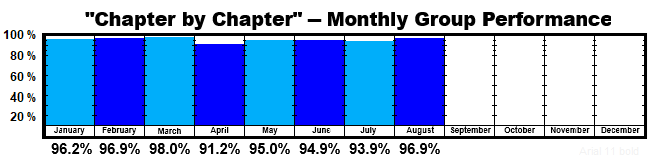
ACCOUNTABILITY FINAL DAY! If you have not yet reported for this month,
please let me know your reading status today at accbibleread@gmail.com.
September 1, Monday
Reading A244 — 1 Samuel 3 — Samuel the Prophet Audio: 1 Samuel 3 (ESV)
An audio recording of the following comments is available below:
Becoming a Prophet — This chapter begins with the statement that young Samuel was “ministering to the LORD” (v. 1), but later it says that “he did not yet know the LORD” (v. 7). He knew about Yahweh, and how to go about the tasks of “ministering to the LORD,” but he lacked a personal relationship with God. I was like that, growing up in a Christian family and going to church regularly. I knew about God and what He required of me, but I had not yet surrendered to Him so that I would be filled with the Holy Spirit and come into a personal, purposeful relationship with God. I was not really saved. I am convinced that many regular attenders in our churches today are in the same condition. A recent annual report of a very good church showed that almost a third of the “giving units” contributed less than $250 for the whole year. That seems to me to show a lack of commitment to God—that they really do “not yet know the LORD.” All of that changed for Samuel when God met him in a miraculous way one night in the tabernacle. God gave him a message of judgment against Eli and his two rebellious sons. Samuel became the Bible’s first named prophet after Moses (cf. Judges 6:8) when he received God’s message and revealed it to Eli. Soon, “all Israel … knew that Samuel was established as a prophet of the LORD” (v. 20).
September 2, Tuesday
Reading A245 — 1 Samuel 4 — The Ark Captured Audio: 1 Samuel 4 (ESV)
An audio recording of the following comments is available below:
The Honored Ark — The ark of the covenant is certainly the center focus of this chapter, being mentioned 12 times. It was highly honored but for different reasons. Its construction, contents, handling, and privileged placement in the tabernacle was carefully ordered by God. After losing 4,000 soldiers in an apparent man-directed war, Israel’s elders suggested bringing the ark into their camp, “that it may come among us and save us…” (v. 3). They seemed to think that it would have a magical power to give them victory. When it entered the camp, there was “a mighty shout” of confidence from the soldiers (v. 5). The Philistines were afraid of it, saying, “A god has come into the camp” (v. 7). Proving that God was not in this war, 30,000 more Israelite soldiers died. Although the ark did not show power to save Israel, the Philistines decided to capture it. Why?! Did they think the “magic” might work for them? We see two other ways the ark was honored after the war. Eli was sitting by the road, waiting for news about the war, and especially about the wellbeing of the ark. His “heart trembled for the ark of God” (v. 13). He greatly honored its value. Then, as soon as the messenger mentioned the capture of the ark, Eli fell over backward, broke his neck, and died (v. 18). He seemed more concerned about the ark than about the lives of his sons. The final evidence of respect for the ark was from the wife of Phinehas before she died after giving birth. She named her son, Ichabod (meaning “where is the glory?”) because she said, “The glory has departed from Israel, for the ark of God has been captured” (v. 22). Tomorrow we will read about what God thought about the importance of the ark.
September 3, Wednesday
Reading A246 — 1 Samuel 5 — Dagon is Humiliated Audio: 1 Samuel 5 (ESV)
An audio recording of the following comments is available below:
The LORD Reigns — The conquering Philistines brought the ark of the covenant to “the house of Dagon” in one of their five main cities, Ashdod (v. 2), perhaps to honor what they thought was their victorious god. Yahweh, however, demonstrated His superior power by causing the statue of Dagon to fall face down in a submissive position before the ark during the next two nights (vv. 3-4) and also causing tumors to break out on the people’s bodies (v. 6). They became “terrified” and sent the ark to another main city, Gath (v. 8), which resulted in a “very great panic … [and] tumors broke out” on the men (v. 9). The ark was then sent to a third main city, Ekron, where they had “deathly panic … [and were] struck with tumors” (vv. 11-12). The increasing fear of the Philistines involved their recognition that the God of Israel was stronger than their own god, Dagon, and that was exactly what God intended to communicate to them. The LORD reigns.
September 4, Thursday
Reading A247 — 1 Samuel 6 — The Ark Returns Audio: 1 Samuel 6 (ESV)
An audio recording of the following comments is available below:
Testing the Lord — The Philistines were pretty well convinced that Yahweh was the cause of their troubles with the tumors breaking out on the men in every city where the ark of God was taken. Twice, they mentioned the need to make a “guilt offering” to Israel’s God (vv. 3, 8). So that they could be sure, however, they devised a test to prove that Yahweh was the source of their problems. Two milk cows were separated from their calves and unnaturally yoked to a cart containing the ark of God to see what would happen. God took over from that point, causing the cows to pull the cart straight to the Israelite town of Beth-shemesh, turning “neither to the right nor to the left” (v. 12), until they arrived at the field of Joshua, turned into it, and stopped at a large stone that would serve as an altar (v. 14). The observing Philistine leaders were convinced and went home. There followed another test by the Israelites. The text mentions that “the Levites took down the ark of the Lord” from the cart (v. 15), which is significant because that town was one of the cities God gave to the Levites (Josh. 21:16). It was only the priests, a particular branch of Levites, however, who were assigned by God to handle the ark of the covenant. The Levites at Beth-Shemesh were apparently not priests, and many of them were killed by God because they treated the ark irreverently, perhaps even looking into it. (The Hebrew for “looking” and the number killed here is unclear.) God is holy and powerful. We are told several times not to “put the LORD your God to the test” (Deut. 6:16; cf. Matt. 4:7; Luke 4:12). He is too holy to fool with.
September 5, Friday
Reading A248 — 1 Samuel 7 — Philistines Defeated Audio: 1 Samuel 7 (ESV)
An audio recording of the following comments is available below:
Full Turn to God — We have no record of Samuel’s activities for a 20-year period, but his influence was making an impact on Israel, whose people “lamented after the LORD” (v. 2). They were feeling sorry for their sins of drifting away from Yahweh to serve other gods. Two important steps of God-required change are seen here. First was Samuel’s challenge to repent: “if you are returning to the LORD with all your heart, then put away the foreign gods” (v. 3). They were feeling sorry, but they were not doing anything about it; they still had the idols of false gods in their homes and communities. What is it that causes you to drift away from God? We need to do something about it: put it away! God does not respond positively to wishful thinking. The second important step that Israel took at Mizpah was to confess their wrong to God: “We have sinned against the LORD” (v. 6). Our pride tends to keep us from doing that, but it is a necessary step in God’s sight. After Israel confessed and Samuel prayed, God stepped in to do what they could not do: He confused the attacking Philistine army with mighty thunder (v. 10), and they were defeated. Samuel then set up a monument to commemorate that miraculous event, calling the stone “Ebenezer,” meaning “stone of help,” giving God the glory.
September 6, Saturday
Reading A249 — 1 Samuel 8 — Request for a King Audio: 1 Samuel 8 (ESV)
An audio recording of the following comments is available below:
Choosing Wisely — Samuel was not wise in appointing his two sons to be judges, and it led the people of Israel to ask for a king so they could be, “like all the nations” (v. 5). This phrase is a key to this chapter, being repeated in verse 11. The people were not choosing wisely either, wanting to follow the crowd instead of the Lord. It is the same problem the church faces today as it tends to drift closer to how the world around us thinks and acts. God’s people today, as they were in Samuel’s time, are called to stand out to be different and to serve the Lord exclusively and wholeheartedly. God’s surprising answer to Samuel’s prayer was to “obey the voice of the people” (v. 7), not because it was His will, but because He was going to show them the negative consequences of rejecting Him and going their own way to follow the world. Samuel warned them, but they “refused to obey” (v. 19). Do any of you have a teenager who did that? It is painfully frustrating. They refused godly guidance because they wanted to do it their own way, i.e., to follow the ways of the world. We will read tomorrow that God would let Israel have a king, but it would not go well until He chose godly David to lead them.
 accbibleread.com
Many choose to follow the world instead of God, that’s the failure of Israel at their time. Gadgets are the culprit of today because of over using it. No more time to read the word of God.
LikeLike