Save or print this page by clicking on “Download” below:
April 27, Sunday
Reading A117 — Exodus 38 — Building the Outside Audio: Exodus 38 (ESV)
An audio recording of the following comments is available below:
Guarding Our Assets — After describing the construction of the tabernacle area outside the sanctuary, this official record summarizes the three metals that were used. The total weight of gold used was 2,193 lbs. (993 kg), which at today’s prices would be worth over $100 million (6 billion Philippine pesos). The 7,544 lbs. (3,422 kg) of silver would cost $3.8 million (220 million PHP) today. The bronze would be worth about $7,434 (430,300 PHP) in 2025. What a valuable target that would be for the joint armies of several kings to capture! God doesn’t need vaults, however; He protected all that wealth and His precious people by His own power and wisdom. How about your assets? Do you ask God to protect what He has entrusted to you? We shouldn’t leave our computers and jewelry on the front porch, but we should trust God to care for what is valuable to us. Thank Him for it!
April 28, Monday———————-ACCOUNTABILITY TIME!
Reading A118 — Exodus 39 — Finishing the Tabernacle Audio: Exodus 39 (ESV)
An audio recording of the following comments is available below:
Exact Obedience — Ten times in this chapter, it is said that things were done as “the LORD had commanded” Moses. All the parts of the tabernacle were completed. Three times in the last two verses, the idea is repeated that “the people of Israel had done all the work … they had done it … so had they done it” (vv. 42-43). This is a chapter about obedience—exact obedience. The approval of their obedience was shown when “Moses blessed them” (v. 43). Obedience is appreciated and blessed. There was no “good enough” attitude or performance here. Rather, there was an emphasis on doing it right. What a great example they were for us! What God commands should be done, and it should be done right. We should not allow our confidence in a forgiving God to lessen our sense of responsibility to do what He has commanded. Let’s not forfeit our blessings.
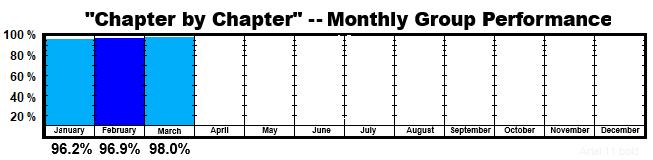
ACCOUNTABILITY TIME! If you are up to date in your reading as of today, please
click here to leave your email address or let me know at accbibleread@gmail.com.
April 29, Tuesday—————-ACCOUNTABILITY REMINDER
Reading A119 — Exodus 40 — Erecting the Tabernacle Audio: Exodus 40 (ESV)
An audio recording of the following comments is available below:
The Cloud of Glory — It had been a full year since Israel had been guided by the cloud across the Red Sea. All this time, the people had been led by the cloud and fed with manna from God. The tabernacle parts had been carefully built, and in a single day, “In the first month in the second year, on the first day of the month, the tabernacle was erected” (v. 17). As we read ten times yesterday, the parts of the tabernacle were made “as the LORD had commanded” Moses, so we see the same expression used eight times in this chapter in describing how the tabernacle was erected. It was all done exactly right. As Moses’ blessing was the expression of God’s approval at the conclusion of building the parts of the tabernacle (39:43), so God’s approval following assembling it was very dramatic. The cloud “settled on it, and the glory of the LORD filled the tabernacle” (40:35). The cloud was not only the general Guide but had become the specific Glory of Yahweh that was concentrated on the now-constructed tabernacle. The Lord’s presence became even more concentrated on the Day of Pentecost when the Holy Spirit came to indwell everyone who accepted Jesus’ sacrifice for their sins. The cloud of God’s glory now dwells within us.
ACCOUNTABILITY REMINDER If you are up to date in your reading as
of today, but did not report yesterday, please click here to leave your
email address or let me know at accbibleread@gmail.com.
April 30, Wednesday—————–ACCOUNTABILITY FINAL DAY
Reading A120 — Leviticus 1-2 — Animal and Grain Offerings Audio: Lev. 1-2 (ESV)
An audio recording of the following comments is available below:
Giving Our Best — The book of Leviticus focuses on the work of the priests from the tribe of Levi. Since the tabernacle was erected on“the first month in the second year, on the first day of the month” (Ex. 40:17) and the book of Numbers begins at “the first day of the second month, in the second year” (Num. 1:1), Leviticus was written during that one-month period. It continues where Exodus concluded. There are five major kinds of offerings described in the first six chapters of Leviticus, beginning with animal sacrifices in chapter 1 and grain offerings in chapter 2. The value of the animal sacrifices is stressed by the requirement of its being “without blemish” (Lev. 1:3, 10). Worth is also indicated by the costly bull given by wealthy people, a sheep or goat for middle-class worshipers, and birds for the very poor. These animal sacrifices were also costly in the sense that the whole animal was burned up, no edible part being reserved for the priests. Value is also shown in the grain offerings by the inclusion of the more costly fine flour and very expensive frankincense. All of this symbolizes that God deserves our best. We are not to give Him our leftover finances or time but those things which cost us dearly. After all, it is a “sacrifice”!
Meditation — Here is an additional thought about atonement: Lev. 1:4 says that the person bringing a bull to be sacrificed must “lay his hand on the head of the burnt offering, and it shall be accepted for him to make atonement for him.” Touching the animal was a symbol of identification where the worshiper was saying, “This animal represents me.” The second part of that verse is God’s action, that He accepted the substitute sacrifice “to make atonement for him.” It is not expressed in this passage, but atonement is composed of two parts: expiation, involving the removal of sin, and propitiation, including removing God’s wrath. It was an early picture of what Christ came to do through His death on the cross: He removed both our sin and God’s wrath.
ACCOUNTABILITY FINAL DAY! If you have not yet reported for this month,
please let me know your reading status today at accbibleread@gmail.com.
May 1, Thursday
Reading A121 — Leviticus 3-4 — The Peace and Sin Offerings Audio: Lev. 3-4 (ESV)
An audio recording of the following comments is available below:
Connecting Sacrifices — Two additional sacrifices are featured in today’s reading. Chapter 3 presents the Peace Offering, which was a voluntary sacrifice by one who wanted to symbolically express his appreciation for his spiritual connection with God. He voluntarily brought either a bull, a sheep, or a goat. It is a sacrifice in which the one offering the sacrifice physically participates in the ritual, where he would “lay his hand on the head of the offering and kill it” (3:2, 8, 13). Normally, the priest would do that. He was desiring and participating in his connection with God. Chapter 4 presents the Sin Offering, and its purpose was to reconnect a broken relationship with God because of personal sin. If the sinner was a priest or the whole congregation, the costlier offering of a bull was required (4:3, 14), and for others, a goat or lamb was offered (vv. 22, 28, 32). Being connected in relationship to God is of vital importance. Today, we initially establish that relationship by surrendering to Christ and receiving the Holy Spirit as the divine presence in our lives at the time of our conversion. We reconnect our broken fellowship with God through confession: “If we confess our sins, he is faithful and just to forgive us our sins and to cleanse us from all unrighteousness” (1 John 1:9).
May 2, Friday
Reading A122 — Leviticus 5-6 — The Guilt Offering Audio: Leviticus 5-6 (ESV)
An audio recording of the following comments is available below:
Sin and Guilt — The fifth major category of offerings is “the guilt offering.” The differences between “the sin offering” of verses 1-13 and “the guilt offering” in verses 14-19 are not entirely clear, except that the latter unnamed offenses seem to be more serious because they are labeled “a breach of faith” (v. 15), they require the sacrifice of a ram for all people rather than the less expensive animals for poorer people, and they must be compensated by adding a fifth of its value to be given to the priest (v. 16). Sometimes we sin both intentionally and unintentionally. Whether we realize it immediately or afterwards, we should bring it to God without delay and in humility, confessing it and asking for His forgiveness.
May 3, Saturday
Reading A123 — Leviticus 7 — Guilt and Peace Offerings Audio: Leviticus 7 (ESV)
An audio recording of the following comments is available below:
Holy Giving — More information about “the guilt offering” is provided at the beginning of this chapter, focusing mostly on how it was to be presented. Twice, it says that “It is most holy” (vv. 1, 6). Although the offering was given to God, portions of the flesh were reserved for the priest to eat, but he had to eat it in “a holy place,” a place dedicated to God. Near the end of the chapter, “the peace offering” is featured, and it also describes the portions of it that were reserved as food for the priests. The breast and the right thigh, regarded as the best parts of the animal sacrifice, were to be given to the priests (vv. 31-32). It is interesting to see how carefully God provided for the priests who represented Him and provided a spiritual go-between service for the people. God gave them the best. We should share that high regard for the spiritual leaders God provides for us in our churches today. We give our financial offerings to the Lord regularly at church, but a portion of those gifts are provided for the support of the pastors who lead us. They are God’s representatives, given to teach and guide us in our Christian living and service. We are not to give reluctantly because we know that a significant portion of it goes to put food on the table for our leaders; it is God’s plan, and “It is most holy” to Him.
 accbibleread.com
God provides for his people, therefore we should be thankful and not worry.
LikeLike