Save or print this page by clicking on “Download” below:
October 13, Sunday
An audio recording of the following reading is available below.
xxx
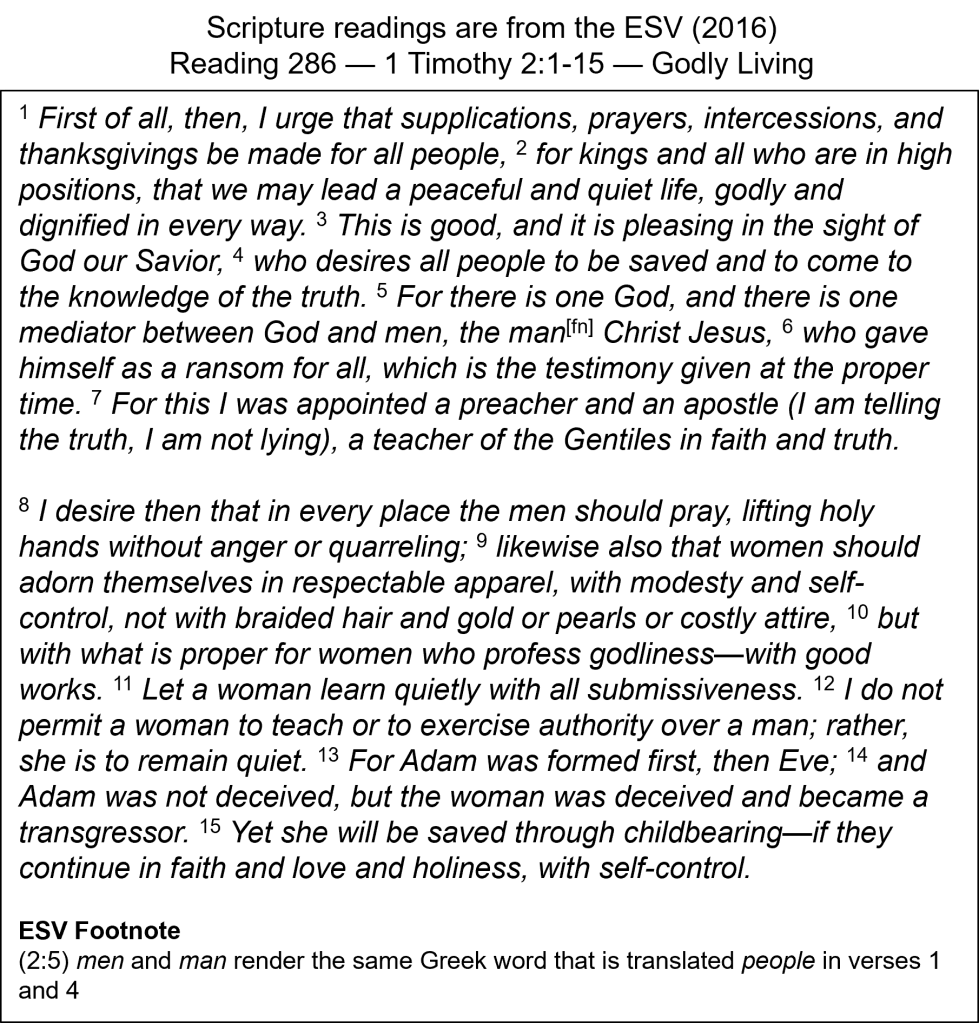
Evidence of Holiness — There are several controversial doctrines taught in this chapter, but we will concentrate only on the comments about holiness and godliness. The first mention of godliness (v. 2) should be a result of prayer for those in governmental authority over us. It is assumed that their purpose is to maintain a peaceful atmosphere for their people. Pray for your leaders! The second key word of holiness (“lifting holy hands” — v. 8) is aimed at the problem of anger among males. Hands that would respond to anger in violence should, instead, be raised in prayer to God. Pray peacefully! Next, is the instruction for a woman to show her “godliness” (v. 10) through dressing modestly in public and being submissive to her husband and to male leadership in her church. Look and act the part! The last comment comes with the controversial statement about being “saved through childbearing” (v. 15). One of the qualities of her children should be “holiness,” i.e., being set apart for God. As John wrote, “I have no greater joy than to hear that my children are walking in the truth” (3 John 1:4). Teach your children to be holy!
Take My Life (Holiness) – YouTube

xxx
XXX
October 14, Monday
An audio recording of the following reading is available below.
xxx
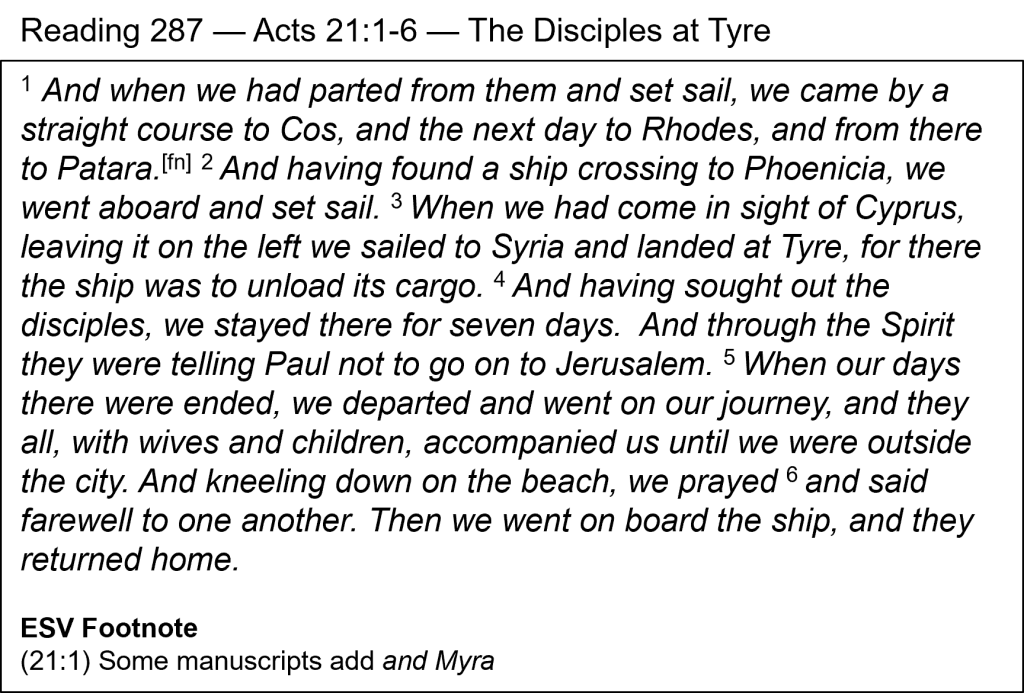
Guidance or Conclusion? — This passage brings up a question about guidance from the Holy Spirit. Earlier, the Spirit was clearly directing Paul to go to Jerusalem: “Paul resolved in the Spirit to … go to Jerusalem” (Acts 19:21). In the following chapter, Paul said, “I am going to Jerusalem, constrained [“compelled” (NIV); “bound” (NASB)] by the Spirit, not knowing what will happen to me there” (20:22). He knew he should go there, but the Holy Spirit did not tell him specifically what would happen to him after he arrived. In today’s reading, when he got to Tyre, the Christians there, “through the Spirit … were telling Paul not to go on to Jerusalem” (21:4). Had the Spirit changed His mind? The problem here apparently comes from the interpretation of what these disciples in Tyre heard from the Holy Spirit. What the Spirit told them was likely that Paul would be arrested in Jerusalem, so it was the disciples’ conclusion that, therefore, Paul should not go there. This was exactly what happened later in this chapter, which we will read about tomorrow. The Spirit said what would happen, but the people drew their own conclusions about what Paul should do about it. The Spirit still guides us today, but we should be careful about how we interpret what we should do as a result.
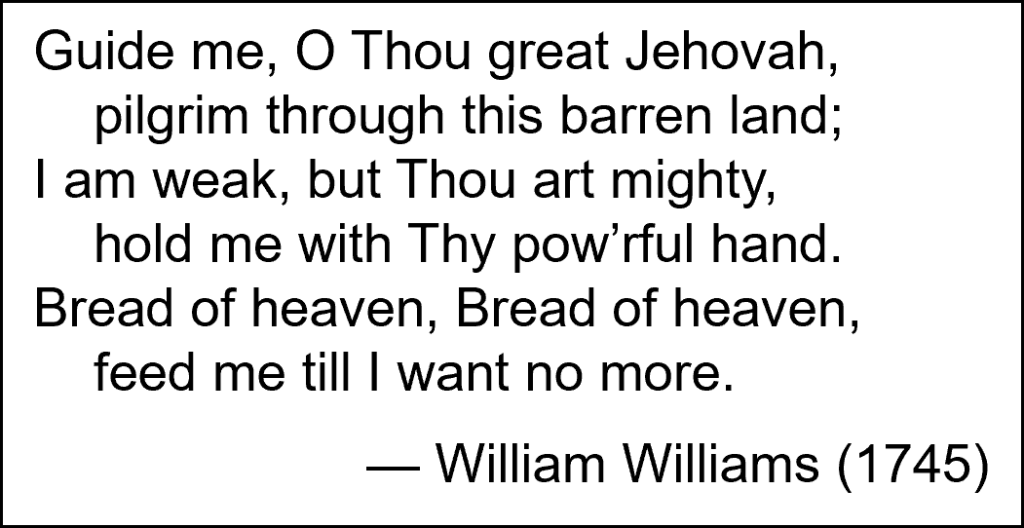
Guide Me, O Thou Great Jehovah – YouTube
xxx
XXX
October 15, Tuesday
An audio recording of the following reading is available below.

xxx
The Uncomfortable Will of God — Sometimes God leads us into situations we would not have chosen on our own. The prophet, Agabus, quoted these direct words of the Spirit: “Thus says the Holy Spirit … the Jews at Jerusalem will bind … and deliver him into the hands of the Gentiles” (v. 11). Our natural tendency is to avoid trouble, but the Spirit saw the bigger picture, and Paul’s arrest was to accomplish God’s good plan. The Spirit had directed Paul to go to Jerusalem, and he was willing to do that, even at the cost of his life. There was a lot of emotion involved in this decision as his friends were weeping, which was breaking Paul’s heart (v. 13). Sometimes, God leads us into uncomfortable situations because He wants to use it as an opportunity for our growth or as a means for bringing someone else to Christ. Are we willing to follow Him anywhere?

xxx
XXX
October 16, Wednesday
An audio recording of the following reading is available below.

xxx
The Subtle Spirit — We read earlier that Paul had decided “in the Spirit … saying … I must see Rome” (Acts 19:21). The Holy Spirit had led him through arrest, imprisonment, and shipwreck, but he had arrived in Rome. That was an advantage to us because during his two years there, the Spirit led him to write the Prison Epistles (Ephesians, Philippians, Colossians, and Philemon). When he first arrived in Rome as a prisoner, he summoned the leaders of the Jews to challenge them with the message of the gospel. Some responded positively, but most of them rejected the promised Messiah, fulfilling the prophecy of Isaiah (6:9-10), given through the Holy Spirit (Acts 28:25). Although the Spirit was not often obvious throughout Israel’s history, we see here that He was involved in the writing of Scripture. The Spirit is subtle, always working behind the scenes, and always pointing to Christ. He is still doing that today, subtly interpreting God’s Word to us as we read it, and motivating and guiding us as we apply it to our daily lives.

xxx
XXX
October 17, Thursday
An audio recording of the following reading is available below.
xxx
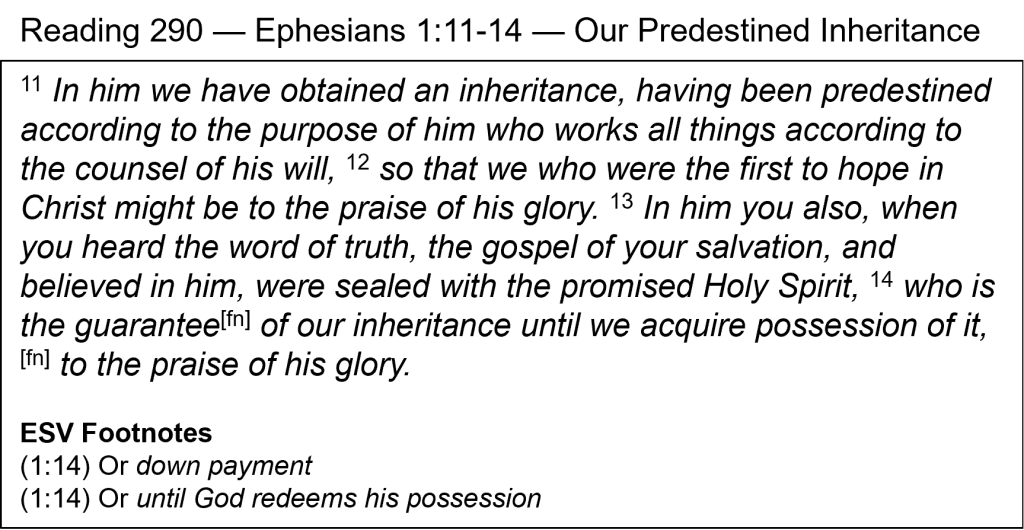
The Guaranteed Seal — For the third time in three weeks, we have come across this idea that the Holy Spirit is our guarantee that our future inheritance is sealed. Today’s passage looks both backward and forward. In our past, at our introduction into eternal life, we “heard the word of truth … and believed” (v. 13) and we were “sealed” with the Spirit. The Holy Spirit is also our “guarantee” for our future “inheritance” in heaven (v. 14). The unique thing about these two statements is that it is speaking of the “promised Holy Spirit” (v. 13b), an expression used elsewhere only in Gal. 3:14. The coming of the Spirit was anticipated and promised in the OT, like in Ezekiel where God promised, “I will put my Spirit within you” (Ezek. 36:27). It was the eternal plan of the Father to send the Spirit to indwell the hearts of those who believed in the sacrifice of His Son. From the past to the future, God is involved in preparing and carrying out His plan to save us and others for an eternal relationship with Him.

xxx
XXX
October 18, Friday
An audio recording of the following reading is available below.
xxx
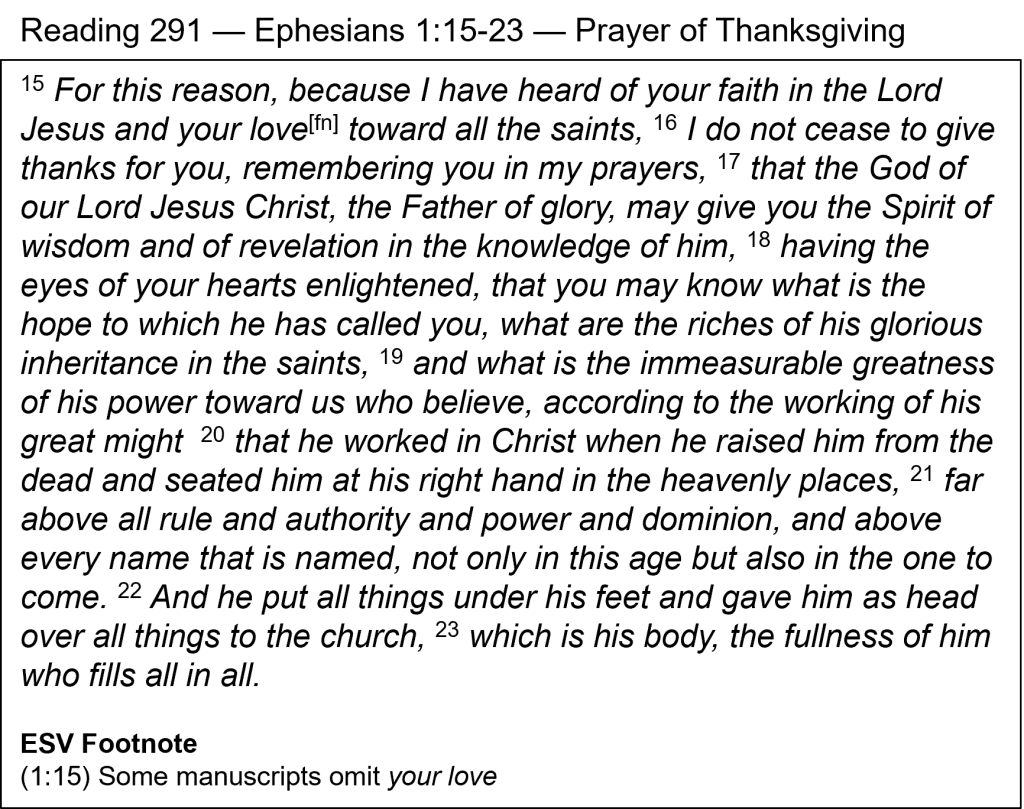
Wisdom and Revelation — The Holy Spirit is called here, “the Spirit of wisdom and of revelation” (v. 17). Although the Spirit already dwelt within the Ephesian Christians, Paul prayed that God might increase their ministry through the Spirit’s provision of “wisdom and … revelation.” We should ask for the Spirit’s active involvement before we read God’s Word every day. Several years ago, I took the advice of a pastor who encouraged me to quote the words of this great hymn (by Clara Scott) during my morning prayer before reading the Bible:
Open my eyes that I may see glimpses of truth Thou hast for me.
Place in my hands the wonderful key that shall unclasp and set me free.
Silently now I wait for Thee, ready, my God, Thy will to see.
Open my eyes, illumine me, Spirit divine!
The Holy Spirit provides “wisdom” in the form of insight into Scripture’s truth and “revelation” in uncovering what had been a mystery to us before. Our Bible reading times ought to be experiences of discovery. Pray for wisdom and revelation, and then look for it! Notice also that the object of our discovery should be “in the knowledge of him” (v. 17b). Again, we see the Holy Spirit pointing to another—God the Father.
Thou Whose Almighty Word – YouTube
xxx
XXX
October 19, Saturday
An audio recording of the following reading is available below.
xxx
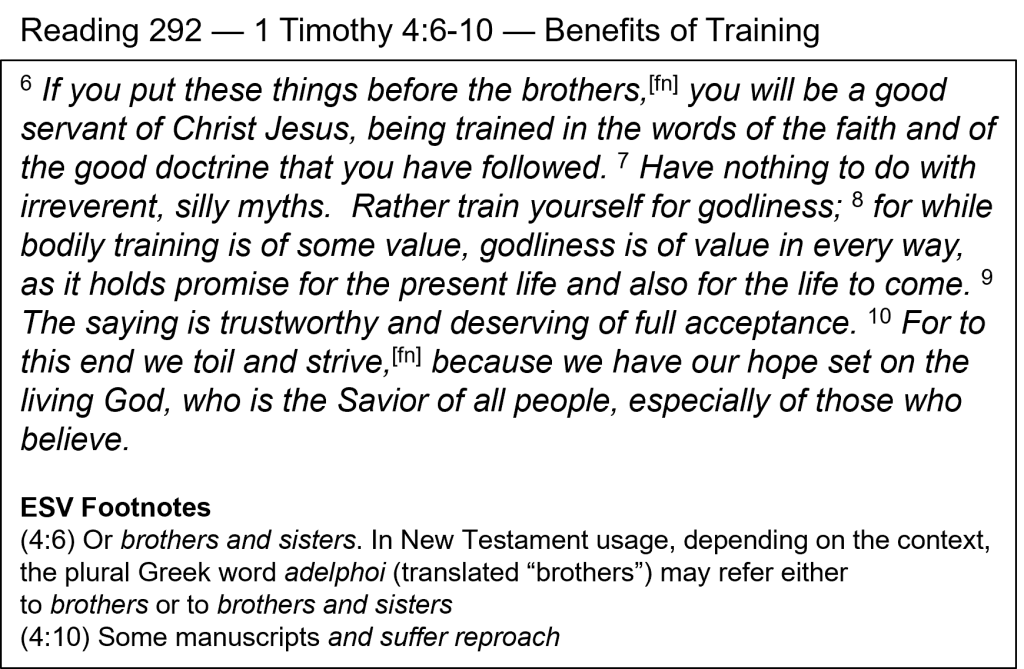
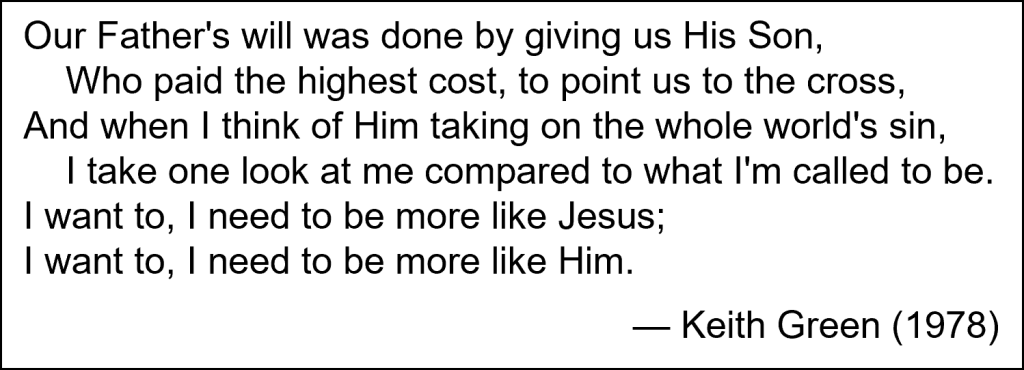
Training in Godliness — Keeping our physical bodies fit is important. The saying, “If we don’t use it, we lose it,” fits here as well as in language. (How much facility do you have in the foreign language you studied in high school?) As I get older, I am increasingly aware of my need to be physically active. This is true also in spiritual matters. Setting aside time every day to read the Bible and to pray are exercises that are critical to our building and maintaining a high level of godliness. Training is not always easy, but it is necessary. Paul said that you should “train yourself for godliness” (v. 7) because it is very beneficial: “…it holds promise for the present life and also for the life to come.” (v. 8). In this present life, it helps us to become more like our Savior.
I Want to Be More Like Jesus – YouTube
XXX
 accbibleread.com