
Save or print this page by clicking on “Download” below:
May 5, Sunday
An audio recording of the following reading is available below.
XXX
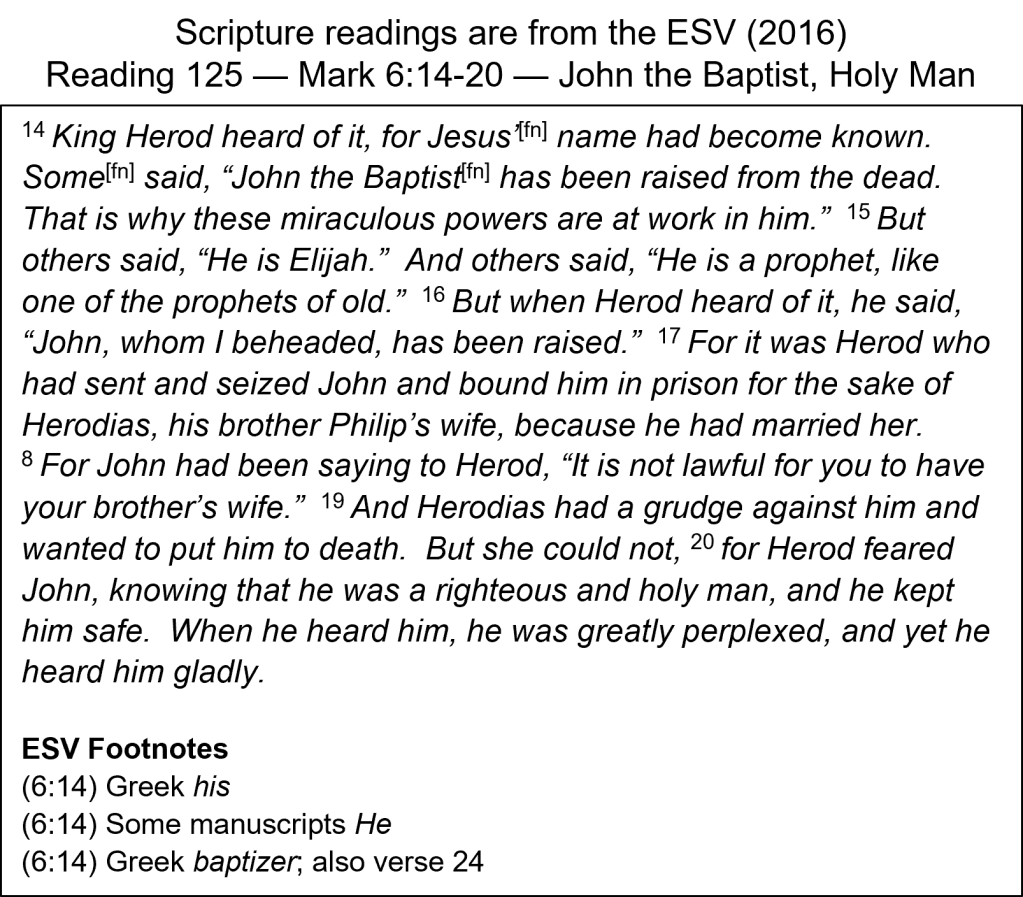
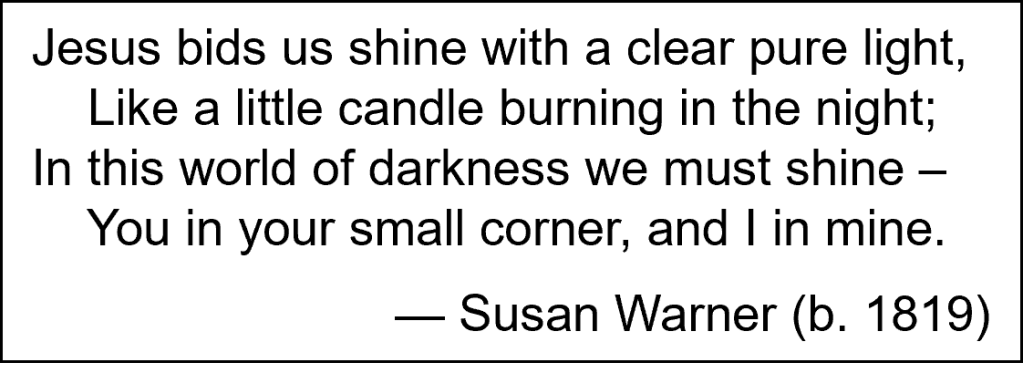
Attracted to Holiness — King Herod Antipas was popularly called a king, although he was really a tetrarch, appointed by Rome to govern the region that included Galilee. He was one of the seven sons of Herod the Great, the one who sought to kill the baby Jesus. This Herod family was composed of Edomites (descendants of Esau), who had to some degree embraced Judaism, but were not godly people. They were probably a lot like most people around us today who are nominal Christians but not born again. Herod Antipas had married the estranged wife of his brother, Herod Philip, which was against God’s Law that said, “If a man takes his brother’s wife, it is impurity…” (Lev. 20:21). John the Baptist had publicly denounced Herod Antipas for that act, which disturbed both Herod and his wife, Herodias. Herod Antipas, however, had conflicting feelings about John, and considered him to be “a righteous and holy man” (Mark 6:20), but he also “feared John.” Although he was “perplexed” when he heard John speak, “yet he heard him gladly.” Herod was both drawn and torn concerning John, just like some of our neighbors and friends today. We are the light of the world, and some people are attracted to that light but might also be afraid that it could “burn” them.
XXX
May 6, Monday
An audio recording of the following reading is available below.
XXX
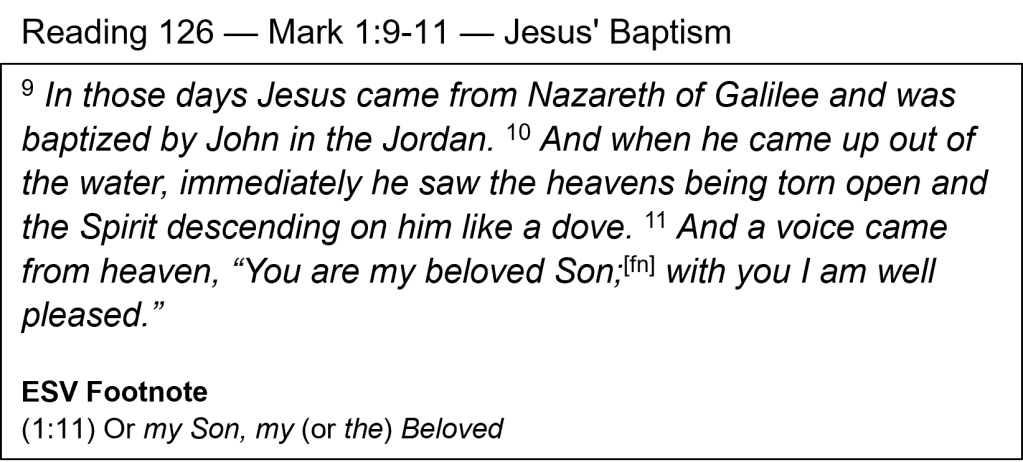
The Descending Dove — All three Persons of the Godhead are mentioned in this description of Jesus’ baptism. Although John’s baptism was one of repentance, the sinless Jesus identified with sinful mankind by insisting on being baptized. Luke’s account mentions that Jesus was praying after He came up out of the water. Then the Father performed a dramatic, visual demonstration of His approval and anointing by tearing open the heavens and sending the Holy Spirit in a visible form to commission and empower Jesus for His earthly ministry. Here, the Spirit’s coming looked something like a dove, whereas later, on the Day of Pentecost, it would look like tongues of fire settling on the converts. They were visible demonstrations of the activity of the invisible Holy Spirit when He came into the hearts of people who turned to Jesus in faith. He is the Heavenly Dove. It didn’t look like a hawk, an eagle, or a vulture, but a gentle, beautiful dove.
Come, Holy Spirit, Heavenly Dove – YouTube

XXX
May 7, Tuesday
An audio recording of the following reading is available below.

XXX
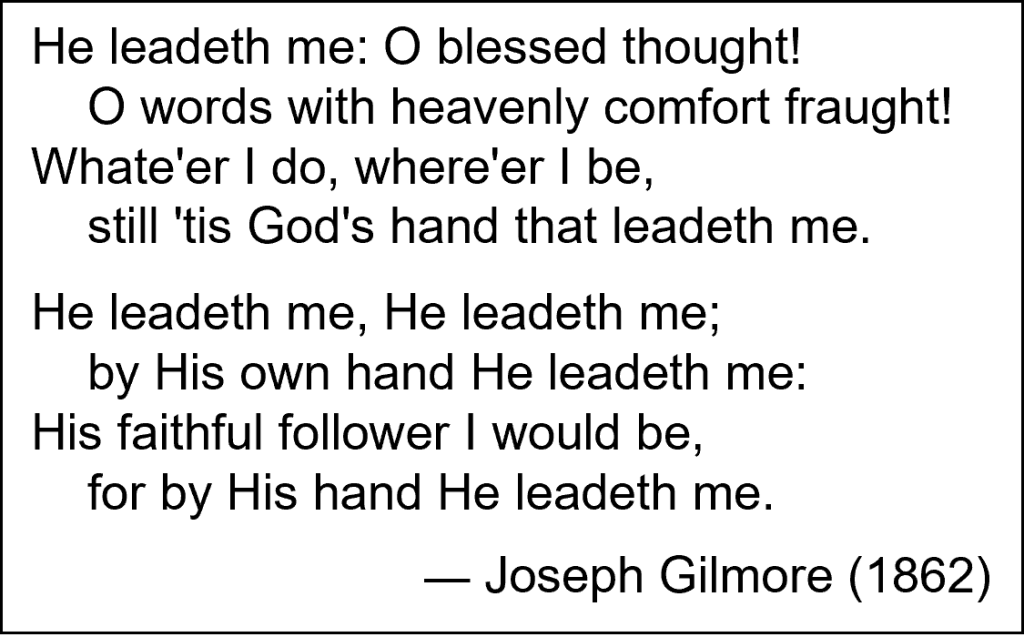
The Testing Spirit — Yesterday, we read that the Holy Spirit descended “on him,” but in today’s reading, we see that immediately following His baptism, Jesus was “full of the Holy Spirit” (v. 1). Certainly, this means that He was indwelt by the Spirit, but it means more than that because of what follows: He “was led by the Spirit.” This involved both the Spirit’s action of leading and Jesus’ willingness to follow. A full tank of gasoline is of no use unless the car’s engine is running. Being indwelt by the Spirit is necessary for salvation, but we also are to be “led by the Spirit.” The problem is that sometimes the Spirit may lead us to go through difficult times. For Jesus, He was led by the Spirit into the wilderness to be exposed to Satan’s temptations (v. 2). Sometimes our faith needs to be challenged, our patience stretched, our trust strengthened, or our endurance extended. Are we willing to be led there?
XXX
May 8, Wednesday
An audio recording of the following reading is available below.
XXX
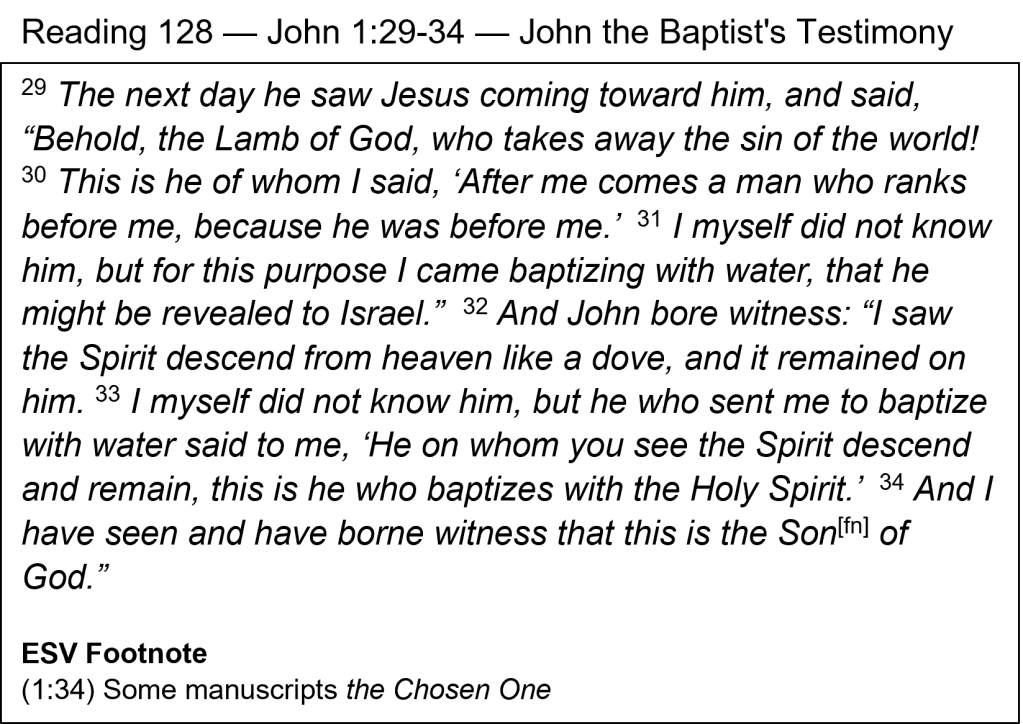
The Remaining Spirit — Two days ago, we saw in Mark’s account of Jesus’ baptism that John saw “the Spirit descending on him like a dove,” but today, we read that “it remained on him” (v. 32, cf. 33), which is a picture of permanence. The Holy Spirit not only marked the beginning of Jesus’ ministry but remained throughout His life on earth. He is the remaining Spirit. In Old Testament times, the Spirit would temporarily come upon chosen individuals to cause them to prophesy or perform some miraculous feat of strength or leadership. We even saw the statement that the Spirit “departed from Saul” (1 Sam. 16:14). It was different, however, for Jesus, and it is different for us. The Holy Spirit has come to remain in us. He doesn’t leave us when we fall into sinful attitudes or actions, rather He convicts us. Jesus promised His disciples that when the Holy Spirit would come, “he will convict the world concerning sin…” (John 16:8). Paul wrote later that the “gospel came to you … in the Holy Spirit and with full conviction” (1 Thess. 1:5). The Spirit remains in us to enlighten, guide, empower, and convict us. God has promised, “I will never leave you nor forsake you” (Heb. 13:5).

XXX
May 9, Thursday
An audio recording of the following reading is available below.
XXX
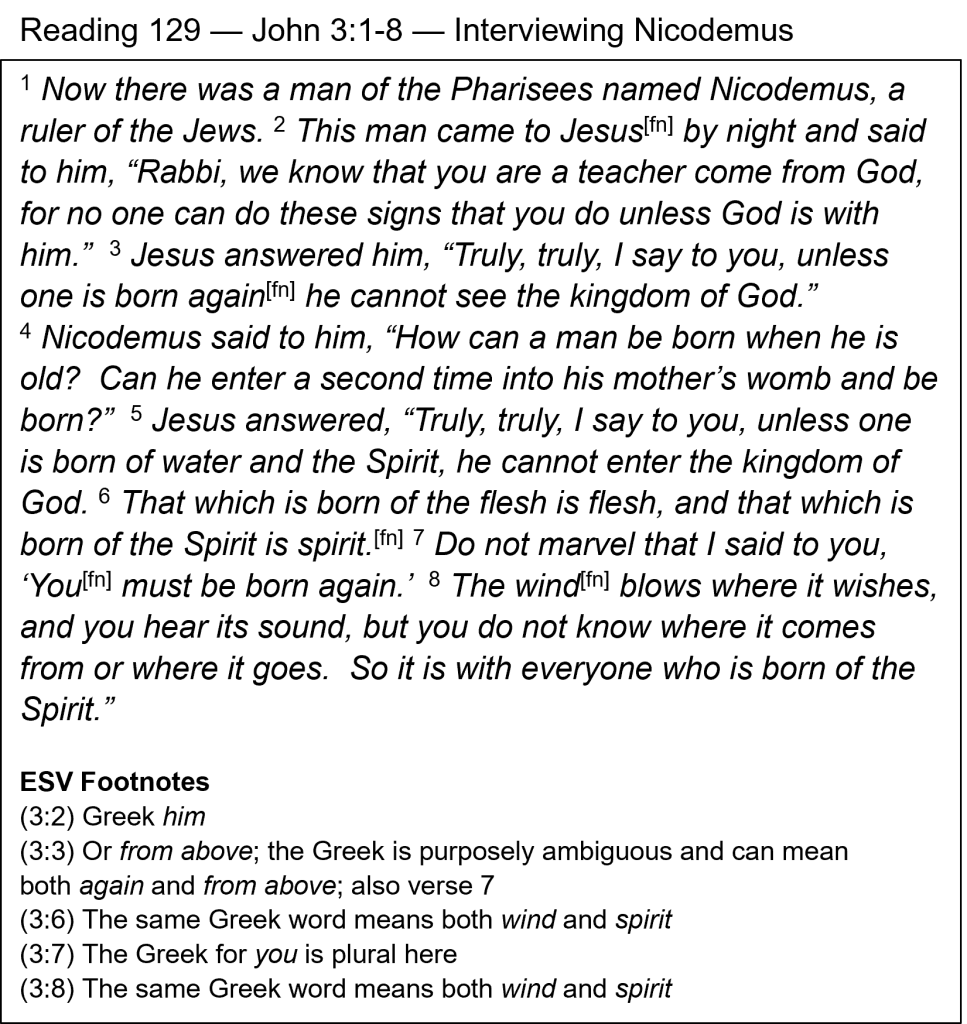
Born of the Spirit — Nicodemus came respectfully, but secretly, to Jesus at night. If he came to ask a question, he never got a chance because Jesus first had an important message for him: “You must be born again” (v. 7). Nicodemus then wanted to know “how” (v. 4) because he only understood physical birth. Jesus had to explain that being born again required spiritual birth. One is born physically to become a physical person but may also become a spiritual person through the Holy Spirit’s action. To enter the kingdom of God, Jesus said that one must be “born of water and the Spirit” (v. 5). What does “water” refer to here? Contextually, the closest connection would be to the water involved in the physical birth, so Jesus would be saying that one must not only be born physically but also spiritually to enter the kingdom of heaven. Those who believe that one enters the kingdom of God through the act of baptism see this water statement as referring to the water of baptism, going further back in context to the ministry of John the Baptist. Others go even further away from the context to believe that Jesus was referring to the prophecy through Ezekiel: “I will sprinkle clean water on you, and you shall be clean. … And I will give you a new heart. … And I will put my Spirit within you” (Ezek. 36:25-27). The bottom line is that being born of the Spirit is having the Holy Spirit enter the heart and life of a person, providing spiritual life in addition to physical life.
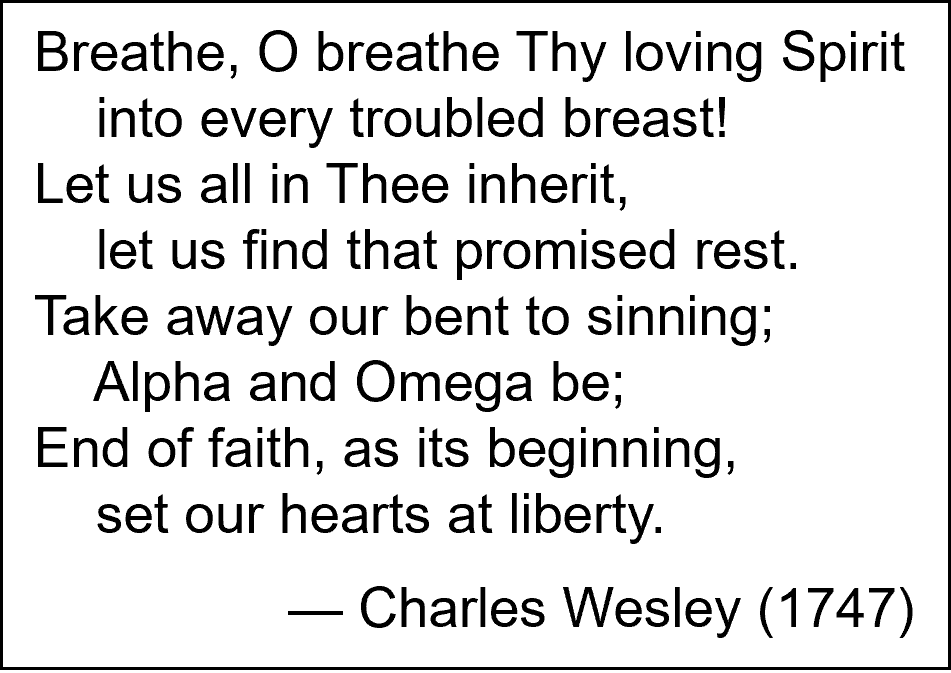
Love Divine, All Loves Excelling – YouTube
XXX
May 10, Friday
An audio recording of the following reading is available below.
XXX
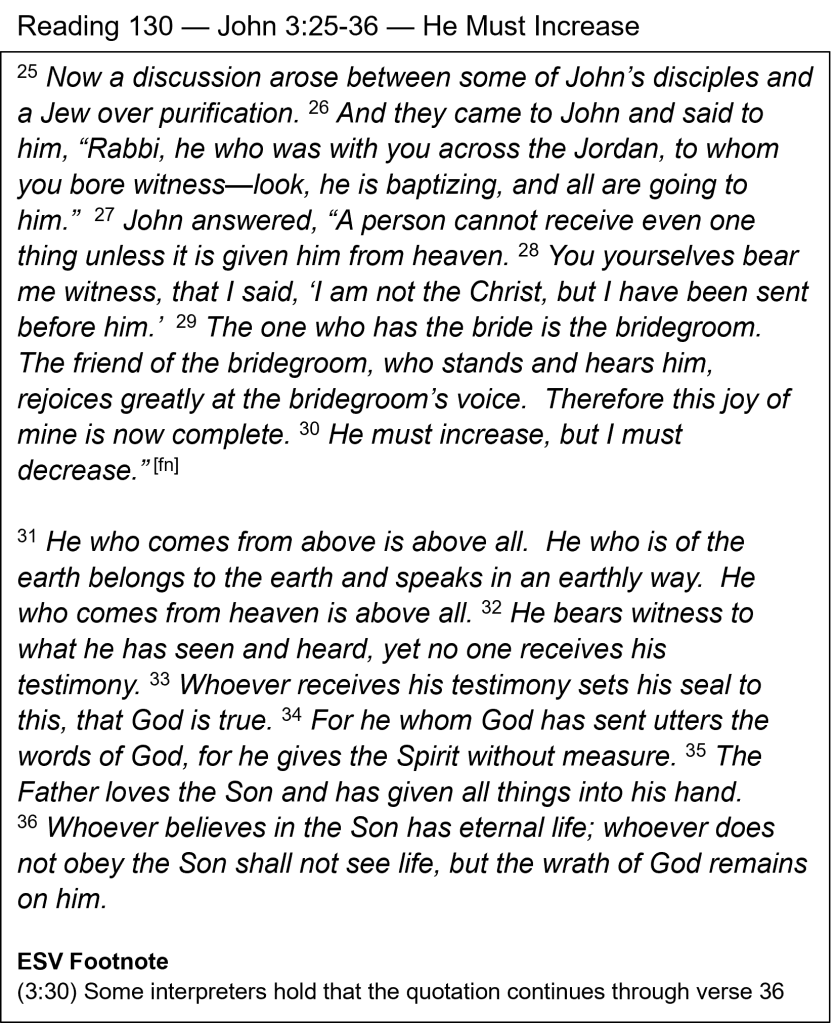
The Measureless Spirit — We encounter the Trinity again in this passage with the Father giving the Holy Spirit to the Son. The way in which He gives the Spirit is unusual, however, in that He “gives the Spirit without measure” (v. 34). We have seen many times in the OT that the Holy Spirit came upon certain prophets and leaders for a particular time and purpose, which was the Spirit given in measure. For Jesus, however, the Spirit was given “without measure,” measureless, being complete in every way, which enabled Him to perform countless miracles and teach amazing truths. It was the Trinity at work. How much of the Holy Spirit do we post-Pentecost Christians possess? All of us who are born again have the Spirit, but the Scripture seems to indicate that being “filled with the Spirit” involves an additional “measure.” After Peter and John were arrested and brought before the Jewish Sanhedrin to be warned about preaching in the name of Jesus, they returned to their Christian friends to tell their story. When they prayed together, “they were all filled with the Holy Spirit…” (Acts 4:31). God added some measure to their experience with the Spirit. More of the Spirit is also available to us as we yield to God in obedience. Paul also commanded the Ephesian Christians to “be filled with the Spirit” (Eph. 5:18).
XXX
May 11, Saturday
An audio recording of the following reading is available below.

XXX
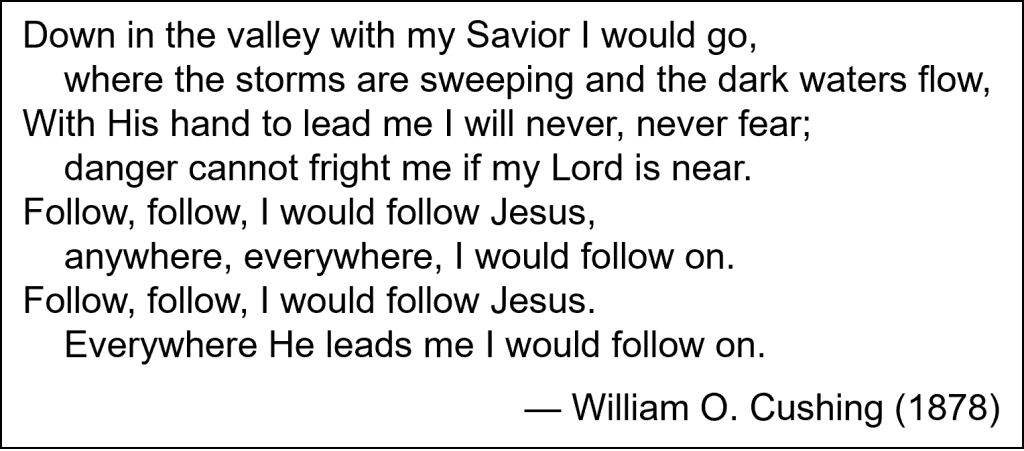
Following Holiness — This is the first of three Scripture contexts that mentions “holy angels” (v. 38; cf. Acts 10:22, Rev. 14:10). Why are they “holy”? First, they are holy in contrast to the fallen angels who “sinned” (2 Pet. 2:4), “left their proper dwelling” (Jude 1:6), and were led by the devil (Matt. 25:41). Second, the “holy angels” were holy in that they remained faithful to the holy God. It seems to be no coincidence that this statement was made in the context of this challenge by Jesus to individuals: “let him deny himself and take up his cross and follow me” (v. 34). Submission and obedience to God is what characterizes holy angels and holy people. Holy people live not for themselves but for God. They follow holiness.
 accbibleread.com