
Save or print this page by clicking on “Download” below:
Accountability Window: March 31
March 31, Sunday——————-ACCOUNTABILITY FINAL DAY
An audio recording of the following reading is available below.

XXX
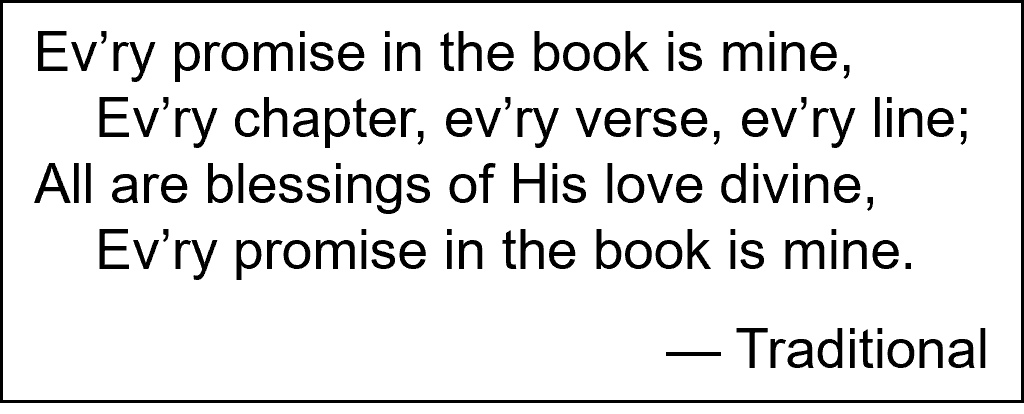
Holy Promises — Like yesterday’s reading, this psalm goes back to Israel’s rescue from Egypt. It was so miraculous that the Egyptians were glad to see them go (v. 38). God provided everything they needed: light at night, quail and bread to eat, and water to drink in the dry desert (vv. 39-41). The next verse adds something new: “…he remembered his holy promise” (v. 42). This is the only place in the OT that a promise is called “holy.” The promise to Abraham was holy because a holy God had made it. All of God’s promises are holy; they are reliable because of who He is. He had promised Abraham innumerable descendants and a Promised Land. When they crossed the Red Sea, there were over 600,000 men who were Abraham’s descendants, and 40 years later, their descendants were in the Promised Land. Although Abraham never saw the fulfillment of all those promises, except for his descendants Isaac, Jacob, and Esau, he had faith that the rest would come to pass. For centuries after that, God sent prophets to Israel to make another promise: the Messiah would come. Those prophets never saw its fulfillment, but it happened when the Son of God came to earth. Before Jesus left, He promised that He would send the Holy Spirit, and on the Day of Pentecost after His departure, Spirit-filled Peter preached that Jesus was “exalted at the right hand of God, and having received from the Father the promise of the Holy Spirit, he has poured out…” (Acts 2:33). We have also received that holy promise, the promised Holy Spirit. The holy God makes only holy promises.
Here is a chorus I used to sing as a child:
Every Promise in the Book Is Mine – YouTube
ACCOUNTABILITY FINAL DAY! If you have not yet reported for this month,
please let me know your reading status today at accbibleread@gmail.com.
XXX
April 1, Monday
An audio recording of the following reading is available below.

XXX
Seeing God’s Perspective — The fact that the elders of Judah had come to Ezekiel’s house to consult him says much about their respect for him and their acknowledgement that he was a genuine prophet of God. In apparent direct response to their desire, “the hand of the Lord GOD fell upon” Ezekiel (v. 1) and he saw God’s appearance in a vision. Ezekiel said that when the hand of God reached out to take a lock of his hair, “the Spirit lifted me up between earth and heaven and brought me in visions of God to Jerusalem” (v. 3). These two actions, the Father grasping and the Spirit lifting, show the oneness of the Godhead. Ezekiel’s lifting by the Spirit was more likely virtual rather than the possible literal transportation in yesterday’s reading, which can be seen as the vision description continues through the rest of this chapter. Ezekiel’s transportation to Jerusalem was probably more like Paul’s experience that he described as being “caught up to the third heaven—whether in the body or out of the body I do not know” (2 Cor. 12:2). The cultic images Ezekiel saw in this vision of Jerusalem’s temple, about five years before it was destroyed, was the evidence God wanted the elders sitting before Ezekiel to know, i.e., how far away from God Jerusalem’s religious leaders had gone, and how justified God was in judging their actions through the destruction of the temple. That vision gave insight into the mind of God and the reasons why that which He does is completely justified. The Holy Spirit sometimes gives us that kind of insight as we read the Bible and wonder, “Why did God do that?” He also sometimes reveals to us reasons for how God might be allowing us to go through certain difficulties in life. God is always good, and He is always right. When the Holy Spirit gives us a view from the divine perspective, we will understand and agree.
We’ll Understand it Better By and By – YouTube

XXX
April 2, Tuesday
An audio recording of the following reading is available below.

XXX
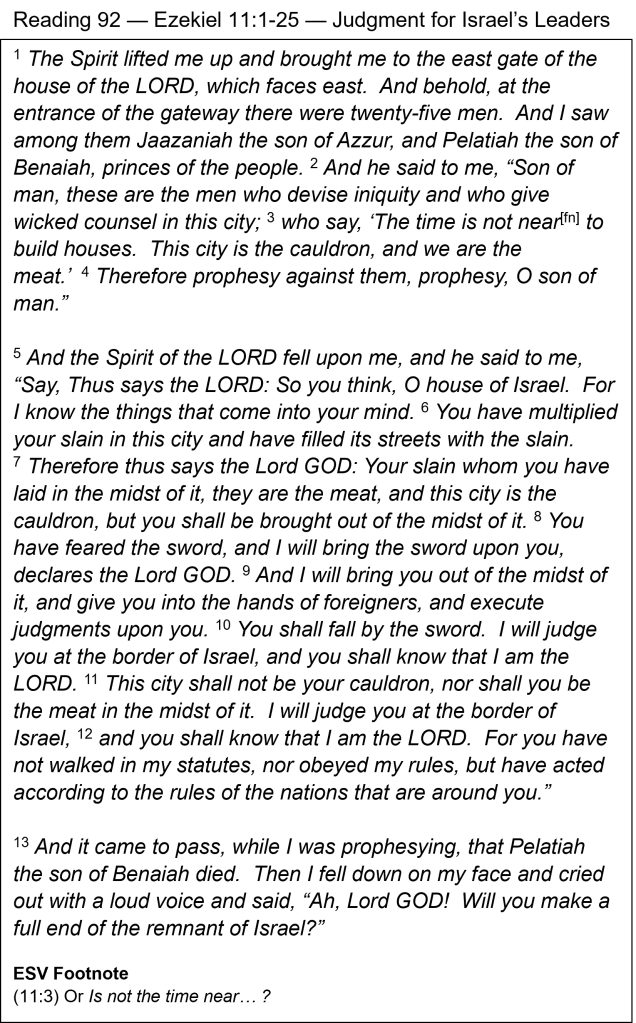
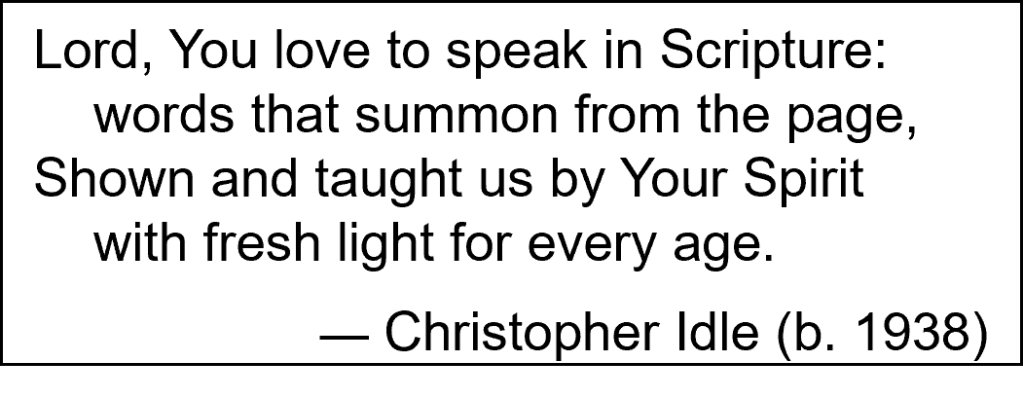
The Spirit Speaks — Three actions of the Holy Spirit are mentioned in this passage. Two of them involve the kinds of travel we have seen before: “The Spirit lifted me up and brought me to the east gate” of Jerusalem (v. 1) and “… the Spirit lifted me up and brought me … into Chaldea” (v. 24). The third action of the Holy Spirit in this passage caught my attention; it was how He spoke to Ezekiel: “…the Spirit of the LORD fell upon me, and he said to me, ‘Say, Thus says the LORD …’” (v. 5). We read something similar earlier (March 27), but it was unclear as to whether it was the Father speaking or the Holy Spirit. In Ezek. 1:28, Ezekiel saw “the likeness of the glory of the LORD … and I heard the voice of one speaking.” The next two verses (2:1-2) add that “he said to me … I will speak with you. And as he spoke to me, the Spirit entered into me … and I heard him speaking to me.” Here, it sounds like both the Father and the Spirit were speaking to Ezekiel. On March 28, we read that “the hand of the LORD was upon me there. And he said … But the Spirit entered into me … and he spoke with me and said to me…” (Ezek. 3:23-24). It is not entirely clear, but it seems that both the Father and the Holy Spirit were speaking. Both were involved as possible speakers in the March 29 reading, too, where “the hand of the Lord GOD … took me by a lock of my head, and the Spirit lifted me up … Then he said to me …” (Ezek. 8:1, 3). In today’s reading, however, it seems clear that the Holy Spirit spoke directly to Ezekiel: “The Spirit lifted me up and brought me to the east gate … And he said to me…” (11:1-2) and in verse 5, “And the Spirit of the LORD fell upon me, and he said to me …” We see in these examples both the oneness of Yahweh and a distinction within the Godhead. The Spirit audibly spoke to people in the Old Testament. That seems to say to me that the Spirit is personal rather than only a mystical or ethereal Being that is difficult to identify or comprehend. We will see more evidence of the Spirit speaking to people when we get to the New Testament. The Holy Spirit speaks to people even today, perhaps in a different way.
Lord, You Sometimes Speak in Wonders – YouTube
XXX
April 3, Wednesday
An audio recording of the following reading is available below.

XXX
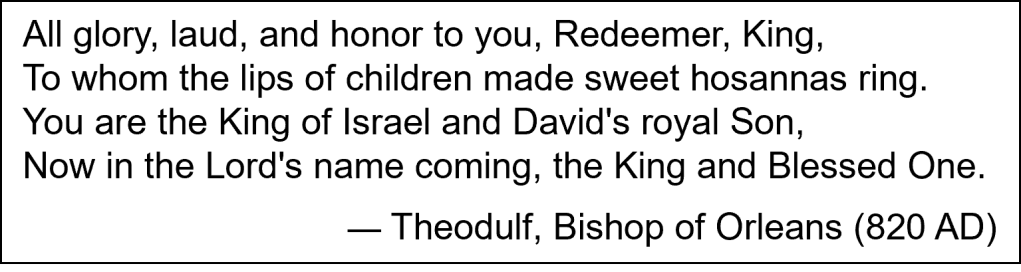
Indwelt for Glory — This passage is bracketed by similar statements: “It is not for your sake … that I am about to act…” (v. 22), and “It is not for your sake that I will act…” (v. 32). What God was going to do was to perform a long-term restoration of Israel. It would begin with returning them from a 70-year exile in Babylon to the Promised Land. It would continue with a new desire to follow God: “I will give you a new heart, and a new spirit I will put within you” (v. 26). It would end with the Holy Spirit being placed in the hearts of people who recognized and accepted Jesus as the Messiah: “And I will put my Spirit within you and cause you to walk in my statutes…” (v. 27). That relationship would then spread to Gentiles around the world, so that we have become part of that fulfilment. Please don’t miss the purpose for all of this: “It is not for your sake,” rather it is for the glory and honor of Yahweh. We benefit greatly from it, but it is meant to cause God to be recognized and honored for who He is. The indwelling Holy Spirit enables us to walk in the Father’s way and to point all glory to Him.
All Glory, Laud, and Honor – YouTube
XXX
April 4, Thursday
An audio recording of the following reading is available below.
XXX
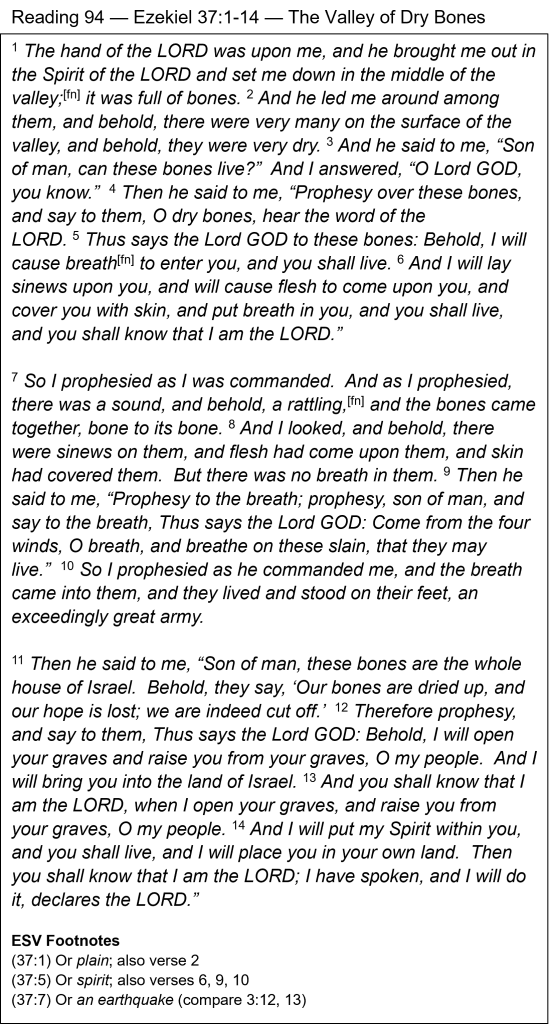
Breath of God — We saw a month ago in reading Ps. 104:30 that the same Hebrew word (rûaḥ) can be translated as “breath” or “Spirit,” depending on the context. We see that again in today’s passage, where rûaḥ appears 10 times, translated as “breath … wind … Spirit.” Here the Holy Spirit again transports Ezekiel, in a new vision, to see a valley of dry bones. It depicts the exiles’ opinion of their hopeless state, what they consider to be the death of their country. The vision demonstrates that nothing is impossible with God and that He will keep His promises. The bones are miraculously put together, and muscles, flesh, and skin are applied, but the bodies are still dead. Finally, physical breath made the difference for the corpses. In a similar way, the Breath of God, the Holy Spirit, makes the difference for a spiritually dead person. The vision concludes with this promise to Israel: “I will put my Spirit within you, and you shall live, and I will place you in your own land” (v. 14). Those exiled Jews would be allowed to return to the Promised Land after 70 years, and the nation would be restored, without a king, while it awaited the introduction of the promised Messiah, Jesus. After His death and resurrection, God breathed on Israel in a new way, through the Holy Spirit, who was made available to dwell within both Jews and Gentiles who accepted Jesus as their Savior. The nation of Israel was not only restored as promised in this vision, but the church was also born, all accomplished by the Breath of God, the Holy Spirit.
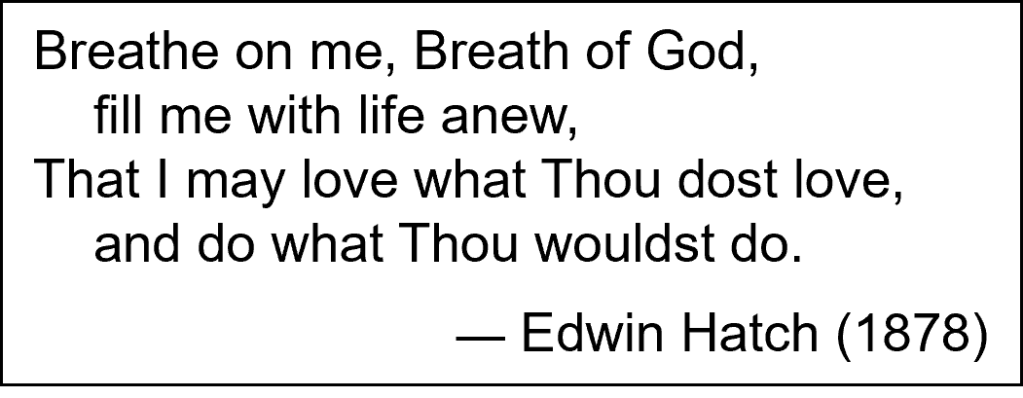
Breathe on Me, Breath of God – YouTube
XXX
April 5, Friday
An audio recording of the following reading is available below.

XXX
Poured-out Spirit — We come today to another of several OT prophets that report God’s promise to pour out the Holy Spirit on His people (“…when I pour out my Spirit upon the house of Israel, declares the Lord GOD”—v. 29). Here, it is in the context of one of the benefits given after God would return the Jews from Babylon in His mercy, restoring their fortunes (v. 25), causing them to forget their past shame and treachery (v. 26), and bringing them to realize that God had accomplished it all (v. 28). The climax of His accomplishments would wait until after the Messiah came and fulfilled His purpose. That event would begin on the Day of Pentecost when the Holy Spirit would be exposed in Scripture to the greatest extent, when He was made available to all who would surrender to God in faith. It happened to over 3,000 individuals on that first day and has been spreading to millions of others for nearly 2,000 years. This “pouring” picture emphasizes its extent. Any Jew or Gentile who accepted the Messiah and His sacrifice would be indwelt and changed by the Holy Spirit.
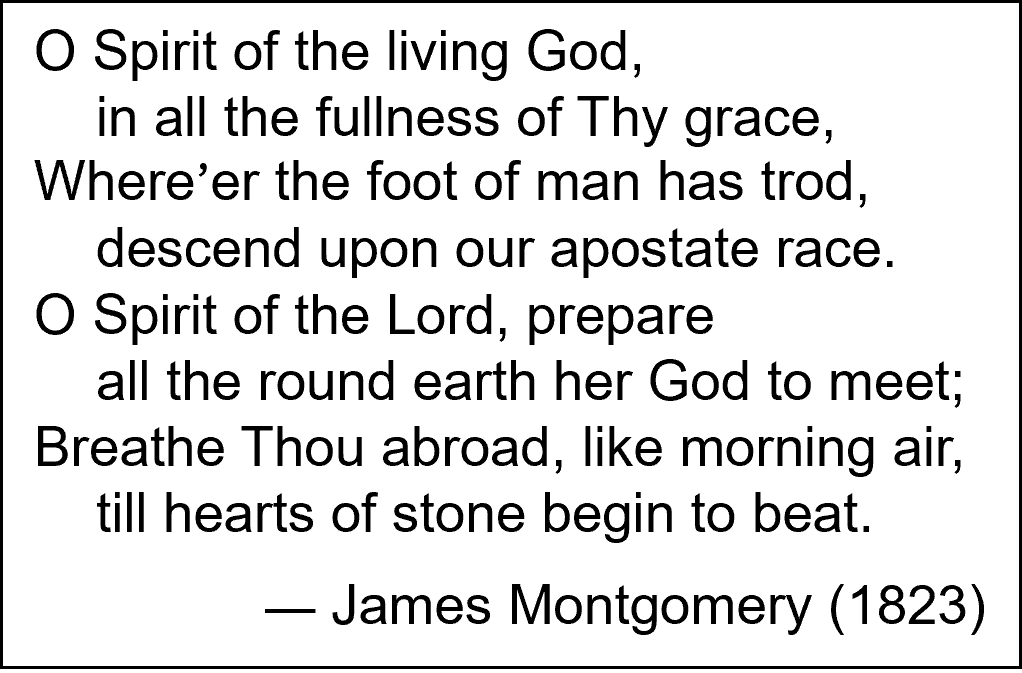
O Spirit of the Living God – YouTube
XXX
April 6, Saturday
An audio recording of the following reading is available below.
XXX
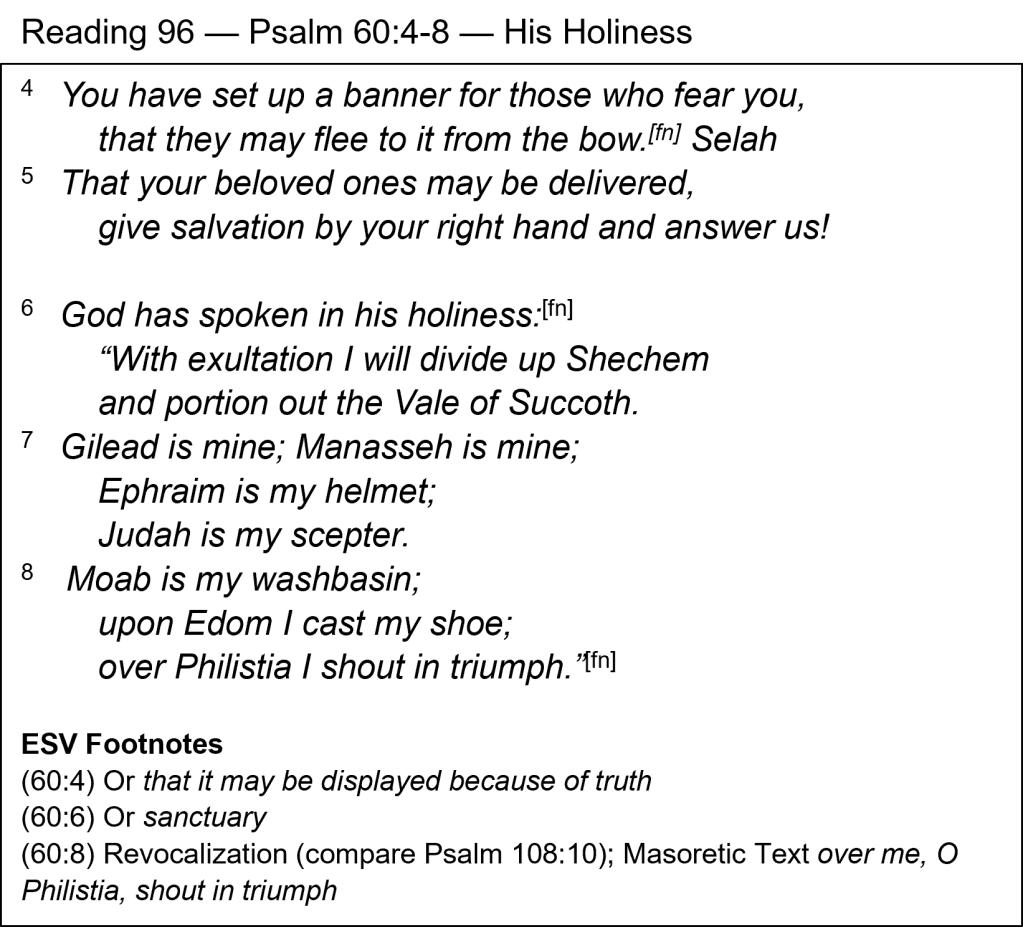
Spoken in Holiness — This is a psalm of David, under whose leadership Israel achieved its greatest territorial expansion. In spite of his conquests, however, he prayed for God to deliver them from opposition (v. 5). In response, God reminds David that He “has spoken in his holiness” (v. 6). Over 1000 years earlier, God promised Abraham that the land on which he stood in Canaan was to belong to his descendants (Gen. 12:7); it was the Promised Land. When God speaks “in his holiness,” He speaks with integrity. What He promises, He will perform. Our whole Bible has an abundance of fulfilled promises of God. How, then, could we doubt that His still-unfulfilled promises will come in His perfect timing? We have the promises of Jesus’ return and of our future in heaven. We can wait with joyful expectation that those promises, made “in his holiness,” will be fulfilled. How about the promises we make? Are they holy, i.e., set apart as being different from the world’s promises? Since we have been made holy by the indwelling presence of the Godhead, we should be known as those whose word is good, people who keep their promises because they were spoken in holiness.
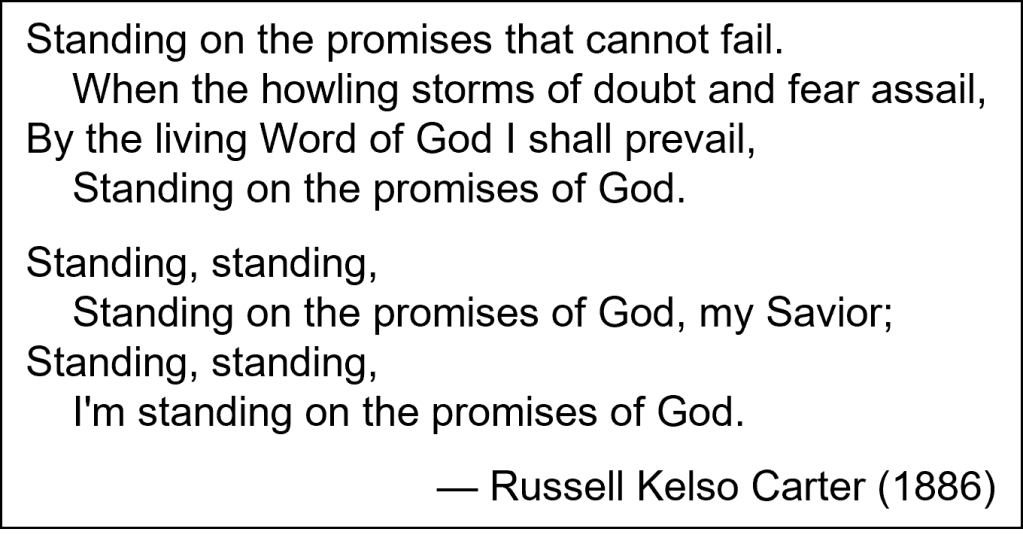
Standing on the Promises – YouTube
 accbibleread.com