
Save or print this page by clicking on “Download” below:
November 26, Sunday
An audio recording of the following reading is available below.

XXX
Resurrection and Revelation — The two events centered on Jesus in this passage are His resurrection and His revelation—when He was leaving the earth and when He will return. Peter tied His resurrection to our spiritual rebirth (v. 3) in that, as He was raised to a new kind of life, so we received a new kind of life when we were born again. His resurrection also provides the example and assurance of our own future physical resurrection from the dead into a different kind of life, at which time we will experience the inheritance kept for us in heaven (v. 4). The second emphasis is on the revelation of Jesus (v. 7), which points ahead to His Second Coming. The word “reveal” means to make something known. At His return, it will allow those still living to see Jesus in His glorified body. Until now, we only know Jesus through what we read about Him in Scripture and what we experience in our personal, spiritual relationship with Him. At His revelation, however, we will see it all. We will see Him physically and we will, for the first time, experience our spiritual life without the temptations, traps, and guilt of our sinful nature.
Jesus, These Eyes Have Never Seen – YouTube

XXX
November 27, Monday
An audio recording of the following reading is available below.
XXX
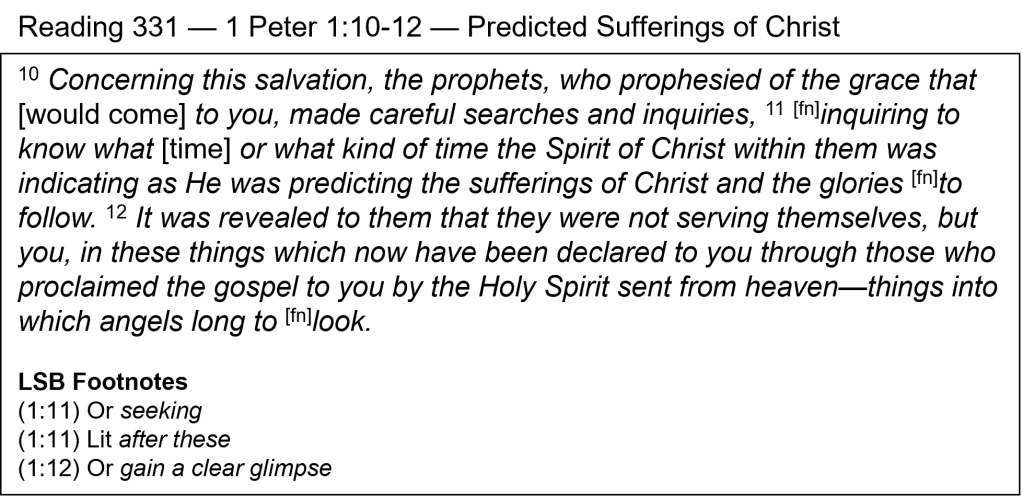
Suffering and Glory — What a privilege it is for us to have the Old and New Testaments! In their writings, the OT prophets pointed forward to the coming Messiah, but they didn’t understand it all. Some truth was revealed to them but not all of it. Now that we have the NT, much of what those OT prophets wrote is now clear because it has been fulfilled. The Holy Spirit revealed that the Messiah would have to experience suffering, and that it would be followed by glory (v. 11b), which referred to Jesus’ death, resurrection, and ascension. The prophets didn’t understand all of this; they were only told that it was intended for our later understanding (v. 12). The gospel message was later proclaimed, but even the angels don’t completely understand it, being information “into which angels long to look” (v. 12). The footnote for this word “look” suggests it can mean to “gain a clear glimpse.” It is used only five times in the NT, and in three of those places, it describes Peter, John, and Mary Magdalene stooping to see what was inside Jesus’ tomb, which took time for their eyes to adjust to the darkness. It was more than a glimpse; it was the kind of look that develops. That is the way we ought to read the Bible, carefully reading, rereading, thinking about it, and asking questions about what we are reading. It is a great privilege to peer into God’s Word.
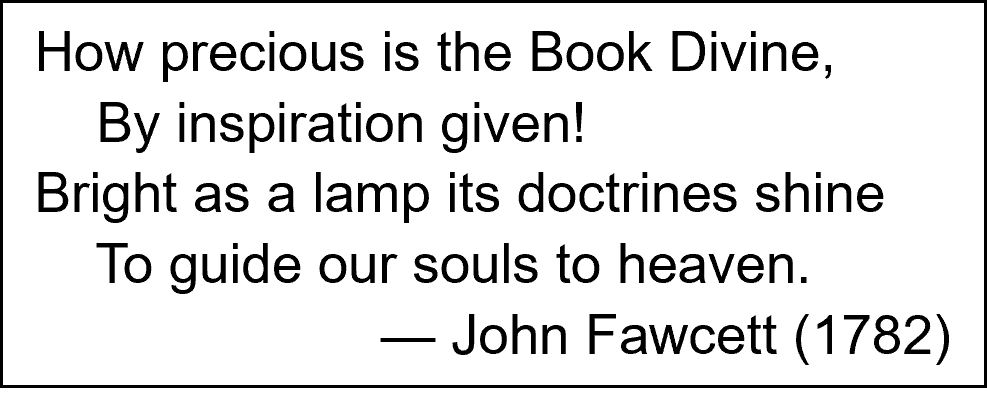
How Precious Is the Book Divine – YouTube
XXX
November 28, Tuesday———————–ACCOUNTABILITY TIME!
An audio recording of the following reading is available below.
XXX
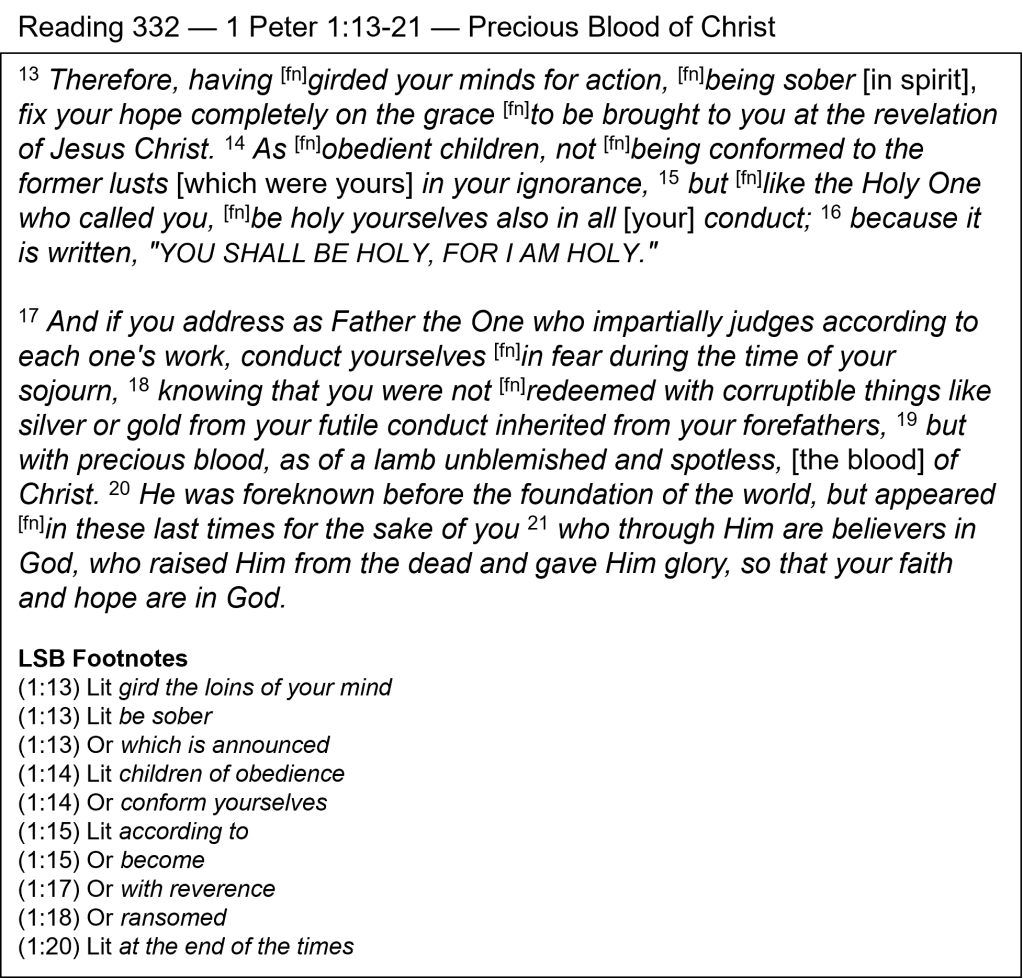
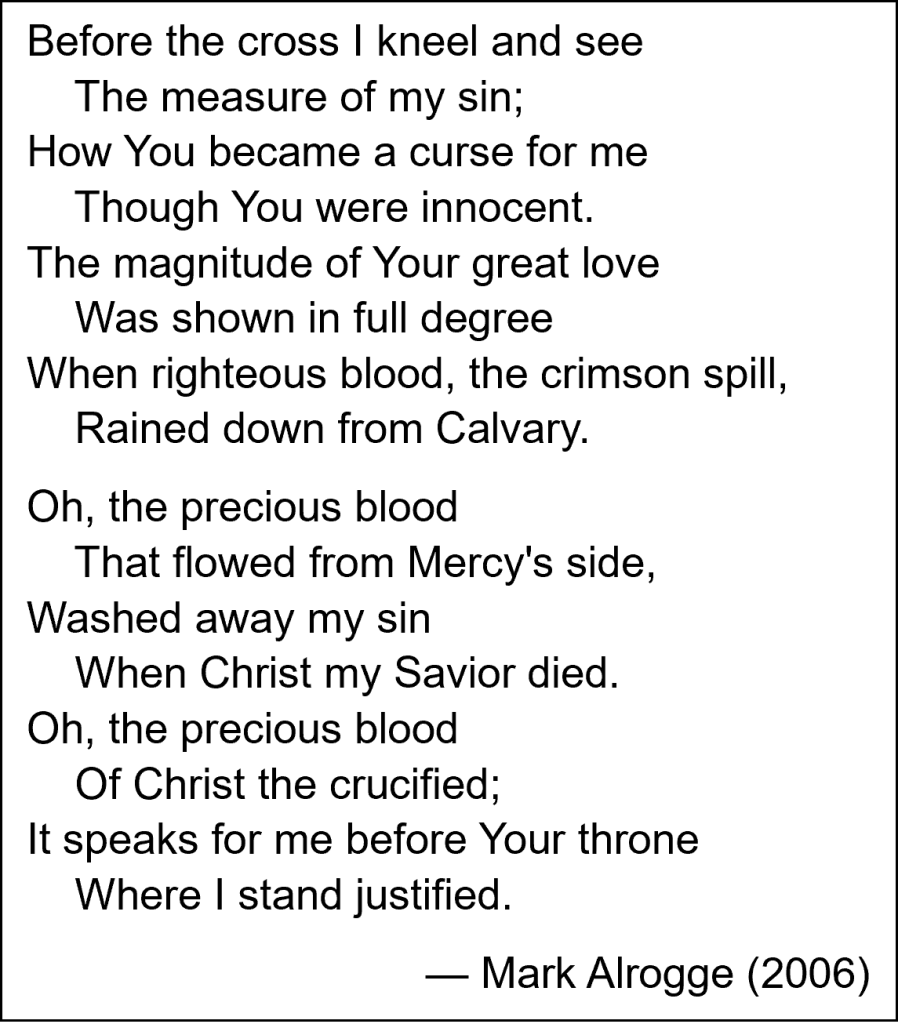
Redeemed or Judged — The main emphasis of this passage is holiness: “…like the Holy One … be holy yourselves” (v. 15). That is a very high standard and would be impossible, except that God gives us all we need to live holy lives. We are told here to “fear” God in two ways and for two reasons. We are to “fear” Him first as “the One who impartially judges according to each one’s work” (v. 17), and that is because Paul wrote that “we must all appear before the judgment seat of Christ” (2 Cor. 5:10). That is a being-afraid kind of fear—fear of being judged—and it provides an incentive for us to live holy lives. That reason of potential judgment precedes the word “fear” in verse 17 of today’s reading. What follows, in verses 18-19, shows the second kind of “fear,” that of reverence, which means having a great respect and admiration for who Christ is and for what He has done. Through His death on the cross, He “redeemed” us, paying the most valuable ransom price, His “precious blood.” Blood is precious because it keeps us alive, but Jesus’ blood was also precious because of who He was; He was the “unblemished and spotless” Lamb of God, the final Pascal Lamb. He was the Perfect Sacrifice.
ACCOUNTABILITY TIME! If you are up to date in your reading as of today, please
click here to leave your email address or let me know at accbibleread@gmail.com.
XXX
XXX
November 29, Wednesday—————ACCOUNTABILITY REMINDER
An audio recording of the following reading is available below.

XXX
Living Stones — Peter refers here to the OT people of God, Israel, and applies it to the NT Church. God’s predicted Messiah is now building the new spiritual temple. Many things are said in today’s reading about the “stones” which make up this new temple of God. The most important stone is that of Jesus Christ. He is the “chief cornerstone” (v. 7). The cornerstone of a building established the major lines of the whole structure. Placed at the base of one corner, it would set the two perpendicular horizontal lines and the vertical line for the building. As it was the absolute standard, so Christ is that standard of truth and direction for the Church, which is based on Him alone. He is also called “a living stone” (v. 4) because He is alive. This spiritual building is also composed of “living stones” (v. 5), i.e., believing people who are growing in numbers and in maturity. This living, messianic cornerstone is also called “choice and precious in the sight of God” (v. 4). The Son of God was chosen by the Father to be this cornerstone, and it is precious in relationship to the Father and in value, being perfect. Sadly, in a different sense, this divine stone serves as “a stone of stumbling” (v. 8) for those who refuse to believe; they stumble over the truth.

ACCOUNTABILITY REMINDER If you are up to date in your reading as
of today, but did not report yesterday, please click here to leave your
email address or let me know at accbibleread@gmail.com.
XXX
XXX
November 30, Thursday—————ACCOUNTABILITY FINAL DAY
An audio recording of the following reading is available below.
XXX
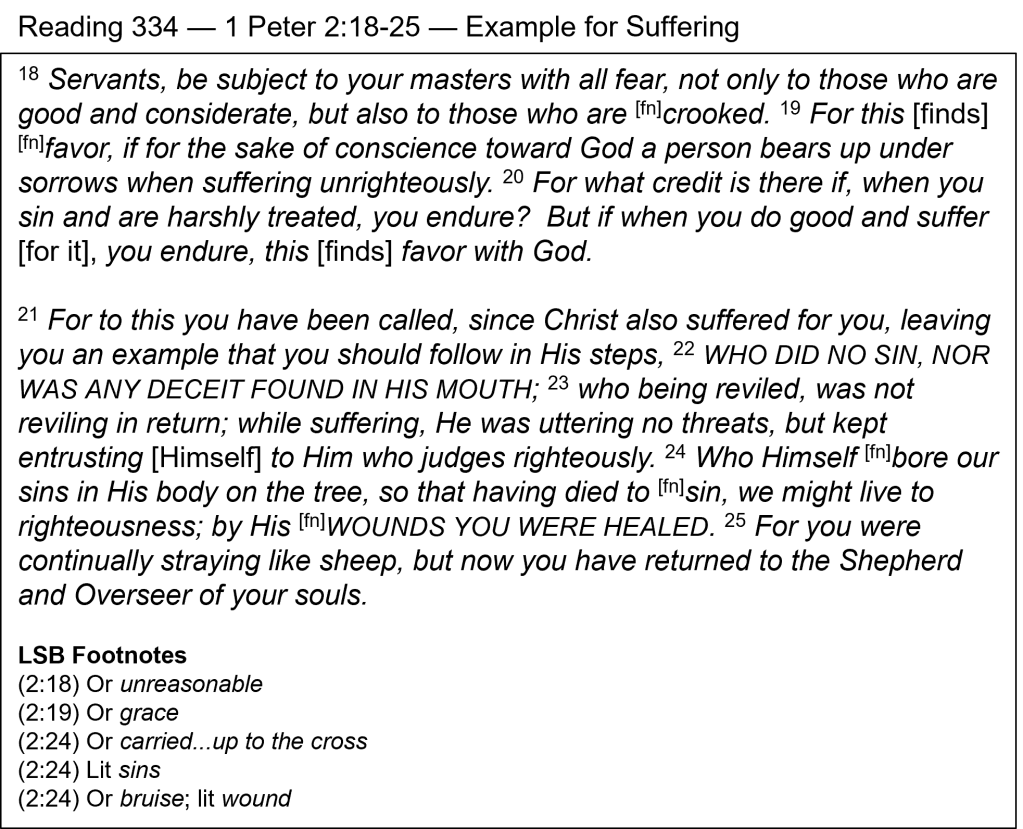
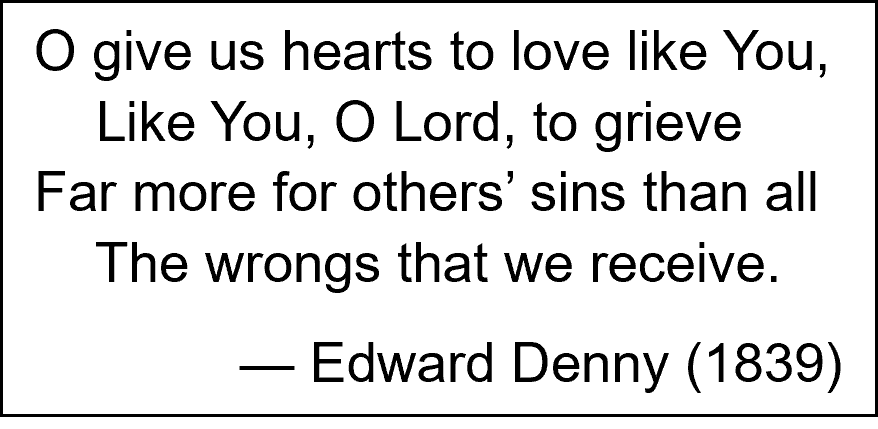
Suffering Unjustly — Occasionally, we find ourselves being accused of something we did not do, but more often, we suffer the consequences of our own wrongdoing. When we are wronged unjustly, however, we have Jesus as our example to follow (v. 21). First, He is our example for not retaliating, which goes against our natural tendency. If someone says something nasty to us, we want to respond to them with a nasty comment. When Jesus was “being reviled, [He] was not reviling in return” (v. 23). If our attacker sees that we do not retaliate, it provides a witness of God’s work in our lives. Jesus is also our example of not being judgmental. If we try to get even for a wrong done to us, we are acting as our own judge. Instead, we should do what Jesus did — He “kept entrusting Himself to Him who judges righteously” (v. 23). We are to turn over to the Divine Judge to decide and to apply the penalty where it is due. It is difficult to admit, but sometimes when we feel wronged, we share part of the blame. Let God decide and punish! Jesus is also our example of sacrifice. Rather than wanting to punish, Jesus willingly paid the penalty for those who had wronged Him. Rather than retaliating, He sacrificed for others, being the one “Who Himself bore our sins in His body on the tree” (v. 24).
What Grace, O Lord, and Beauty Shone – YouTube
ACCOUNTABILITY FINAL DAY! If you have not yet reported for this month,
please let me know your reading status today at accbibleread@gmail.com.
XXX
December 1, Friday
An audio recording of the following reading is available below.
XXX
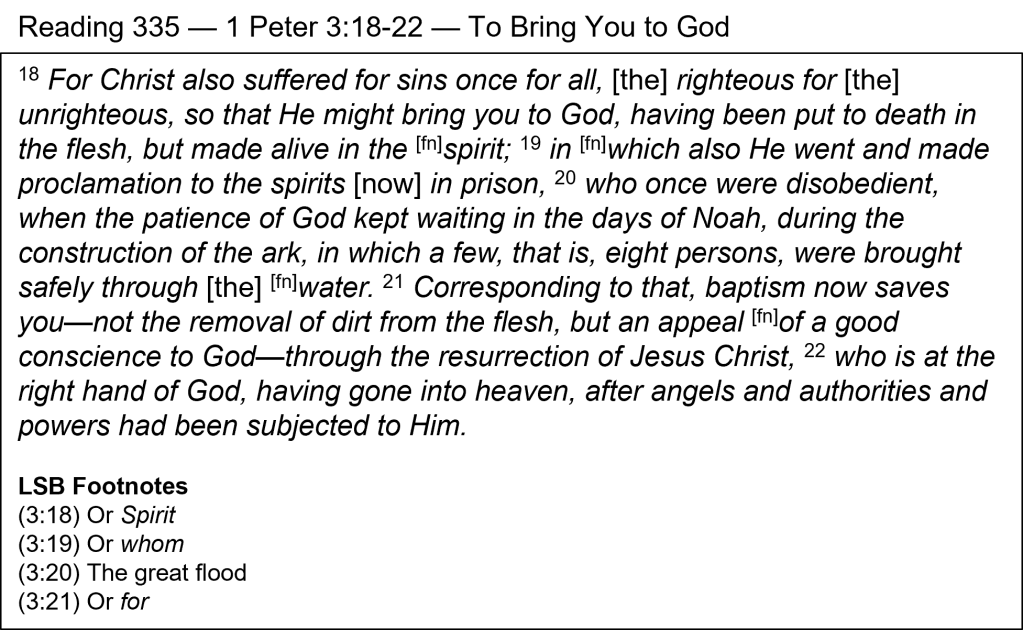
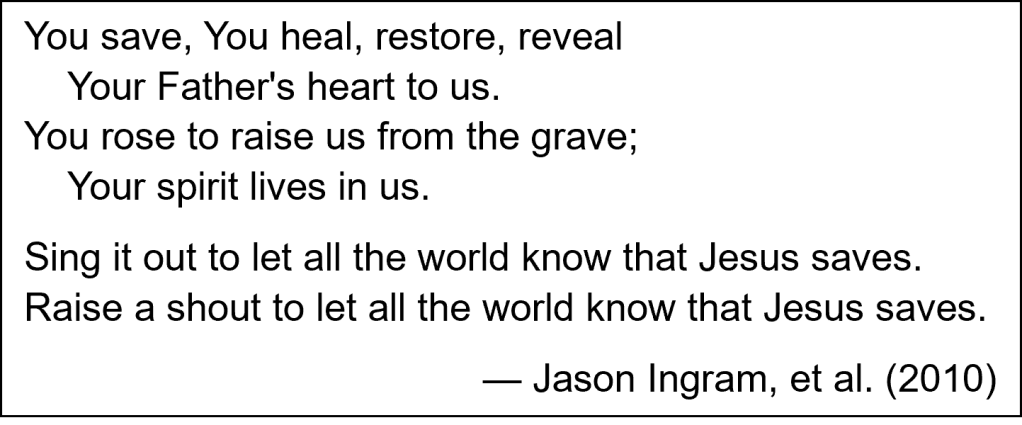
What Saves You? — There is some controversial content in this passage, but it starts out very clearly to state the doctrine of Christ’s substitutionary atonement, that the righteous Jesus suffered death for unrighteous people (v. 18). That concept is so opposite to our natural human understanding of fairness; we think that unrighteousness should be punished. So does God, but He satisfied His perfect justice with perfect love in offering to take our penalty upon Himself. That sacrificial act makes it possible for Him to “bring you to God” for salvation (v. 18). Sacrifice saves you. Now for the difficult part: Peter also writes that “baptism now saves you” (v. 21), using Noah’s ark as a comparison, both involving water. Roman Catholics take that statement literally, that the act of being baptized is what saves one. Evangelical Christians, however, focus on the “appeal of [or for] a good conscience to God” (v. 21), which represents faith as the saving means supported throughout the NT. We are saved through faith in Christ, and we are saved because of His substitutionary sacrifice for us on the cross. What a Savior!
XXX
December 2, Saturday
An audio recording of the following reading is available below.
XXX
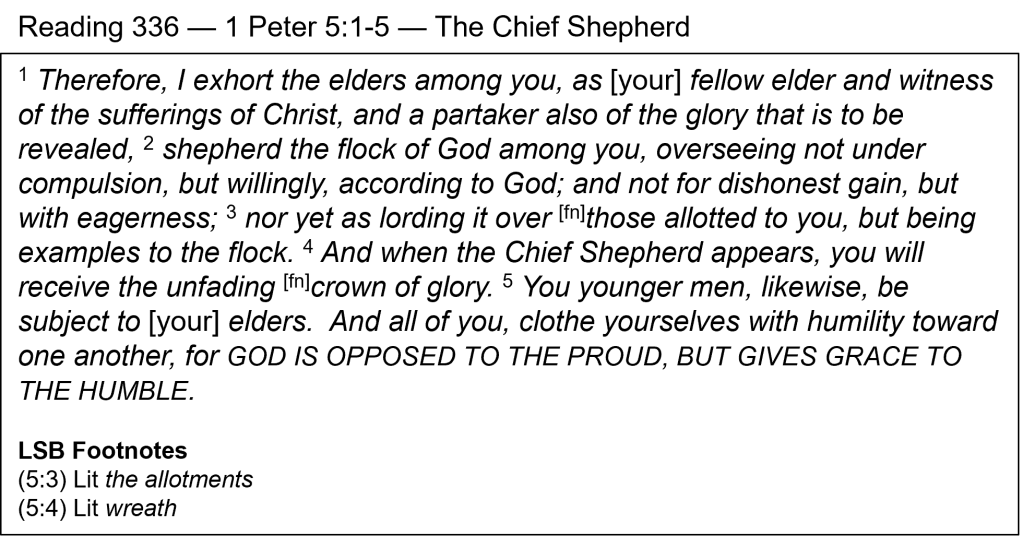
Levels of Leadership — There are three levels within the Church mentioned here. At the top is the Chief Shepherd, Jesus (v. 4). In the middle are the elders, the leaders of the churches (v. 1), Peter including himself in this category, although he was also an apostle. Most of us are on the bottom level, the sheep, who are to “be subject to your elders” (v. 5). The elders are to be “examples to the flock” (v. 3) as Christ is their ultimate example. That means that a higher standard is placed on the elders; if they are not example-worthy, they shouldn’t be shepherds. Jesus, as the highest example, was willing to suffer for the benefit of His sheep. Sacrificial shepherding is the standard placed before the elders. Since God opposes the proud, but gives grace to the humble, all of us are to “clothe yourselves with humility” (v. 5). That is an intentional act that is within our ability and responsibility. Then, there is reward for all of this: “…when the Chief Shepherd appears, you will receive the unfading crown of glory” (v. 4). Jesus is not only our sacrificing example, He is also our generous rewarder.
Am I a Soldier of the Cross – Bing Video
 accbibleread.com