Save or print this page by clicking on “Download” below:
November 19, Sunday
An audio recording of the following reading is available below.
XXX
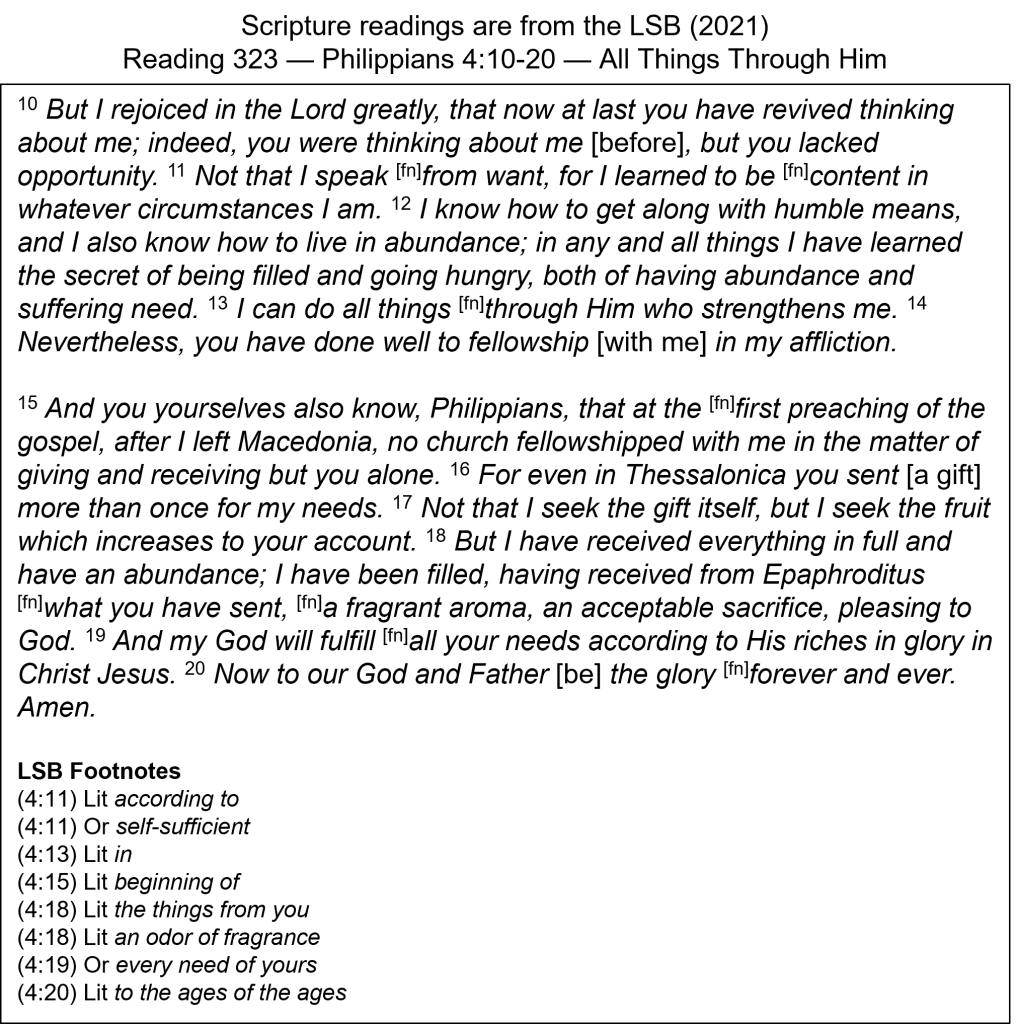
He Strengthens and Supplies — Twice in this passage, Paul mentions ways in which Jesus provides for us. First, He strengthens us. The familiar, general statement that “I can do all things through Him who strengthens me” (v. 13), is made in the context of being content in opposite financial circumstances, “humble means” and “abundance” (v. 12). We don’t get our strength from financial wealth; we get it from Christ. We can be just as “strong” in material poverty as we can in material luxury. Jesus can give you strength to be poor! The second thing Paul mentions that Jesus does for us is to supply our needs (v. 19). Our “needs” come somewhere between poverty and luxury. Most of us don’t need nearly as much as we think we do. Twice in today’s reading, Paul wrote that he had learned something important. He had learned to be content (v. 11) and to know “the secret of being filled and going hungry” (v. 12). We need to learn the secret of contentment. If you have not learned to be content with what you have, you will not be content with what you want.
Instead of a song for today, I encourage you to watch this excellent
short video, summarizing the message of Paul’s letter to the Philippians,
including the passage that concludes our reading for today.
Dwell on These Things
XXX
November 20, Monday
An audio recording of the following reading is available below.

XXX
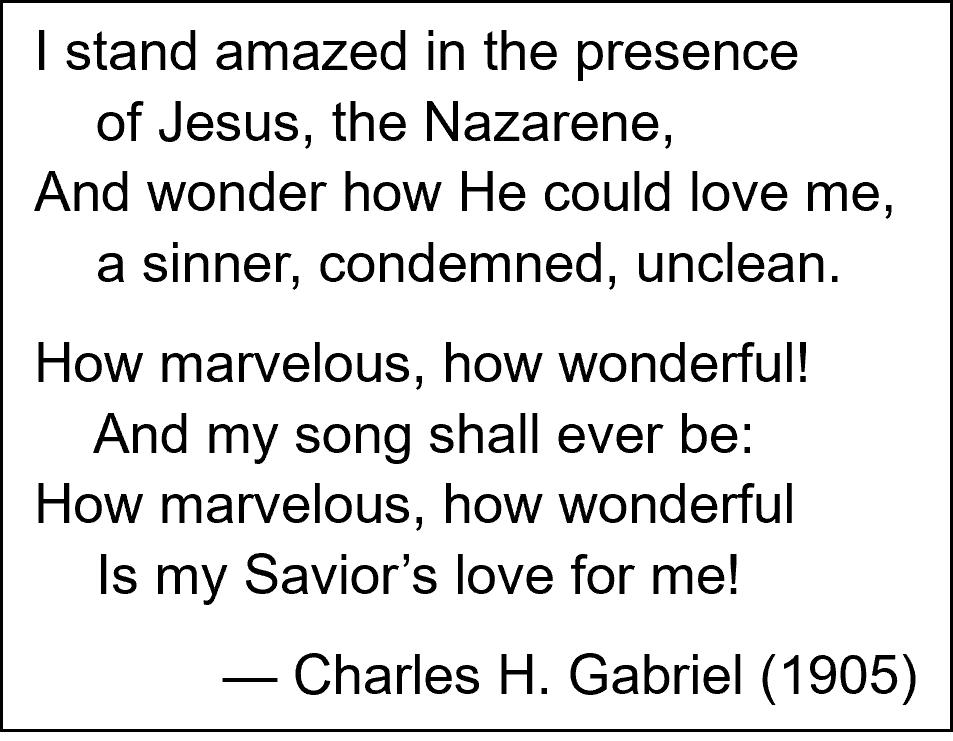
Merciful Savior — Twice in this paragraph, Paul said that Jesus showed him mercy (vv. 13, 16), and this mercy was related to grace (v. 14). Mercy is not getting the bad we deserve, and grace is being given the good we don’t deserve. After meeting Jesus on the Damascus Road, Paul came to know that he was a dreadful sinner. He thought he was only persecuting Christians, but he was attacking the Son of God. He didn’t deserve mercy, and neither did we. Jesus is merciful, and that is why He came to earth: “Christ Jesus came into the world to save sinners” (v. 15). He is a merciful Savior. When Christ saved Saul, it was to “demonstrate all His patience as an example” to future believers (v. 16). His conversion was a dramatic example of the grace and mercy of God. It is the same for us. Unbelieving friends around us see the difference in our lives. They see us react in silence rather than profanity, in forgiveness rather than retaliation, and in love instead of resentment. We are examples of the grace and mercy of Jesus.
XXX
November 21, Tuesday
An audio recording of the following reading is available below.

XXX
Salvation’s Plan — There are three primary parts of God’s plan for salvation presented in this paragraph. The first is God’s desire: He wants salvation for everyone. He “desires all men to be saved” (v. 4). Scripture makes it clear that not all will be saved, but their salvation is God’s desire. The second step for salvation was to provide a Mediator, “the man Christ Jesus” (v. 5). Jesus is the only link between mankind and the Father, not saints or priests. He offered that connection through His voluntary death, which provided payment as “a ransom for all” (v. 6). Although both the Father’s desire for man’s salvation and Jesus’ ransom was intended “for all,” neither was fully realized because of the freedom given to mankind to choose whether to accept the offer or not. The third part of God’s plan for salvation involves Christians like us. Paul concluded that it was, “For this I was appointed a preacher … an apostle … [and] a teacher” (v. 7). God’s plan of salvation is offered through a message that must be spread to others so that they also might “come to the full knowledge of the truth” (v. 4).
Arise, My Soul, Arise – YouTube
XXX
November 22, Wednesday
An audio recording of the following reading is available below.
XXX
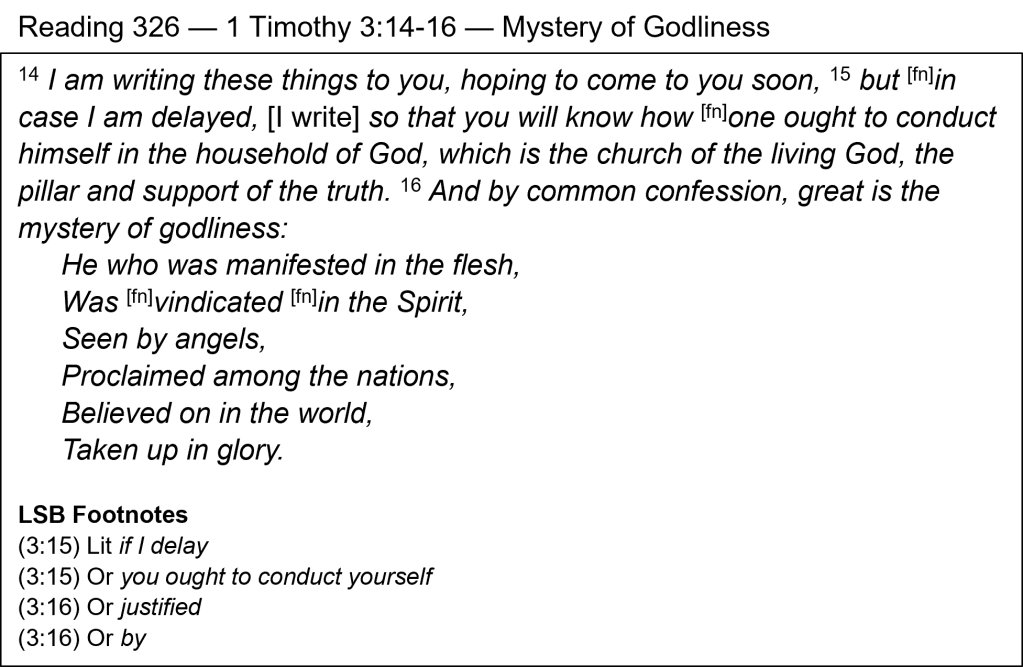
Gospel Hymn — The last verse in this section seems to be a hymn, and it summarizes the gospel. It is called “the mystery of godliness” here, but Paul used similar expressions earlier, like “the mystery of the faith” (v. 9) and “the mystery of the gospel” (Eph. 6:19). Just as John 3:16 is a summary of the Good News, so is 1 Timothy 3:16. Six features of the gospel are presented here. 1) That He was “manifested in the flesh,” which refers to His incarnation, His time on earth that included the crucifixion; God became man. 2) His vindication (or justification) in the Spirit seems to depict His resurrection. 3) Being “seen by angels” probably pictures His return to heaven. 4) “Proclaimed among the nations” is the later spread of the message of salvation to the Gentiles, and 5) “Believed on in the world” shows its global acceptance by many. 6) Although out of order, the last one, being “taken up in glory,” refers to His ascension into heaven. That is the gospel, and we should proclaim it.
We Have a Gospel to Proclaim – YouTube

XXX
November 23, Thursday
An audio recording of the following reading is available below.
XXX
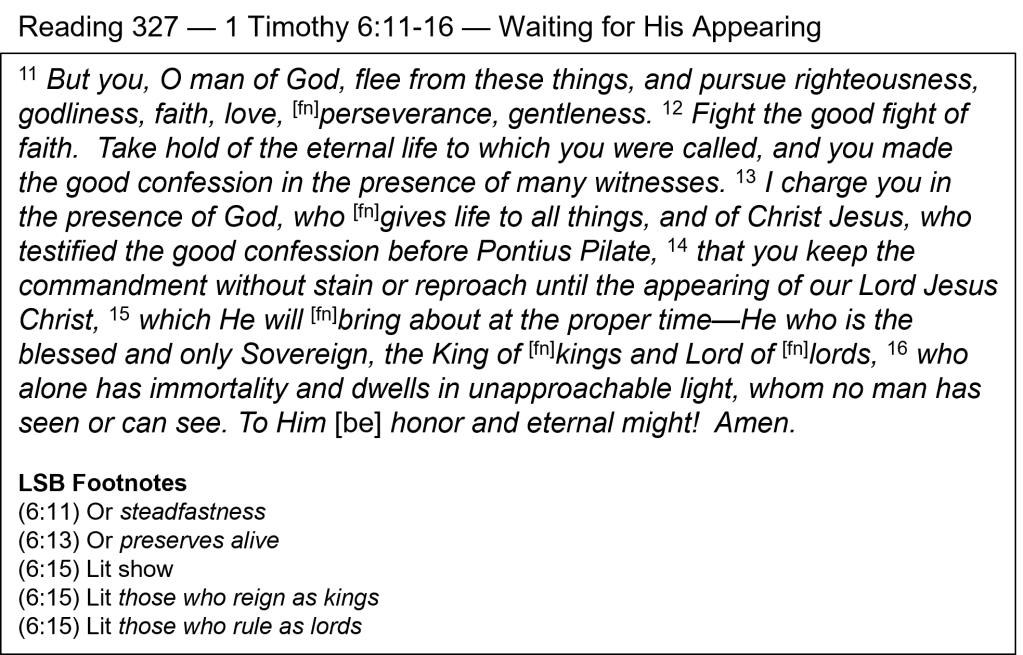
An Accountable Witness — In our study last year, we considered the many things at the end of this passage that speak about the Father, but there are also two important actions of Jesus mentioned here. The first was something He did in the past, i.e., He “testified the good confession before Pontius Pilate” (v. 13). With His life on the line, He declared the truth, that He was a heavenly king, saying, “For this I have been born, and for this I have come into the world, to bear witness to the truth. Everyone who is of the truth hears My voice” (John 18:37). His purpose for coming to earth was to proclaim the truth. That is also a purpose for our existence as Christians. We must share our “good confession” of the truth that we have come to know. Jesus was a witness and so are we. The second action of Jesus in our passage for today is something He will do in the future, “the appearing of our Lord Jesus Christ” (1 Tim. 6:15), His Second Coming. Paul mentioned this in the context of accountability, charging Timothy to “keep the commandment without stain or reproach until the appearing of our Lord Jesus Christ” (v. 14). We are to be faithful in our witness and in our obedience so that when Jesus returns, we will hear from our Savior this greeting: “Well done!”.

XXX
November 24, Friday
An audio recording of the following reading is available below.
XXX
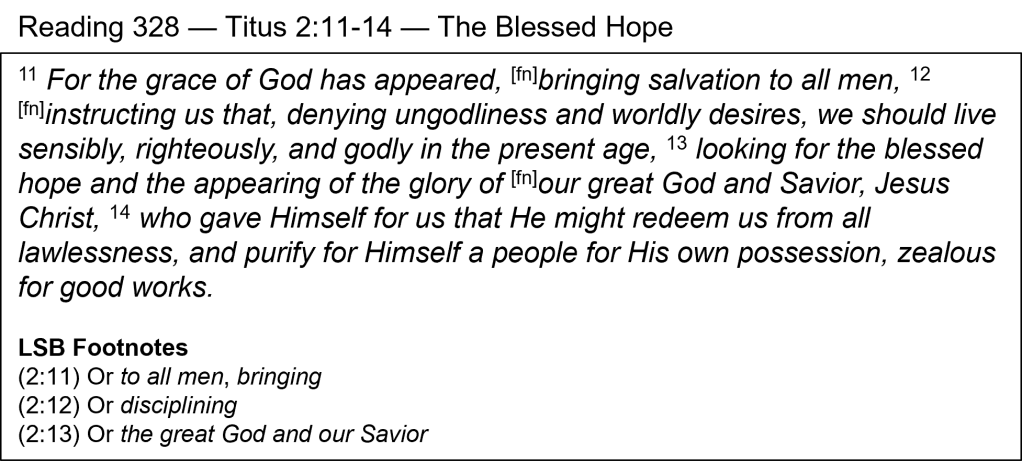
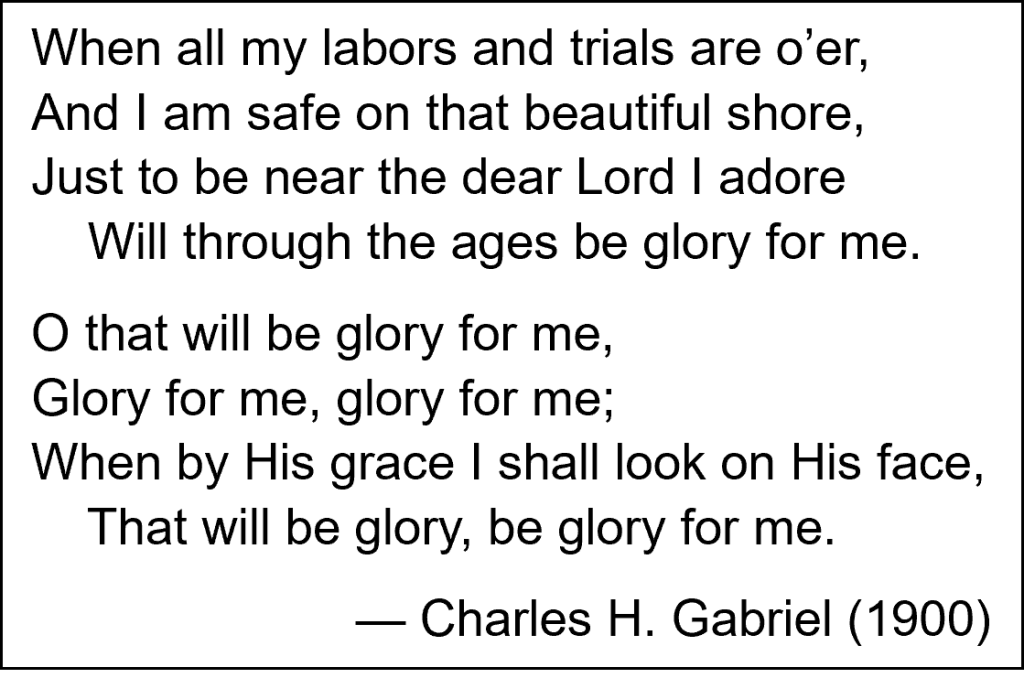
Grace and Glory — There are two divine appearances mentioned in today’s reading. The first was the appearance of grace: “…the grace of God has appeared” (v. 11). This refers to the incarnation of Christ when He came to earth in human form. His coming had two purposes mentioned here: to bring us salvation (v. 11) and to instruct us in godliness (v. 12); the former, erasing our past sins, and the latter, protecting us against present temptations by “instructing us” to deny ungodliness. Grace is not deserved, so He graciously came that sinners might be saved. The second divine appearance is that of glory.: “…the blessed hope and appearing of the glory” of Christ (v. 13). That is Jesus’ Second Coming, when He will come in great glory that will be obvious to all. People who are living ungodly lives should dread such an accountable judgment, but believers are “looking for,” or looking forward to, that expected appearance (v. 13). At that time, we will share in His glory because “God … called you to His eternal glory in Christ” (1 Pet. 5:10).
O That Will Be Glory – YouTube
Meditation: There is a very interesting and important phrase about Jesus in verse 13, where He is called, “our great God and Savior, Jesus Christ.” It magnifies His deity by calling Him God. This is only one of seven times in the New Testament that the Greek word for God (theos) is used in direct connection with Jesus (cf. John 1:1, 18; 20:28; Rom. 9:5; Heb. 1:8; 2 Pet. 1:1). It is like calling Jesus “Yahweh,” the name of God. The Father is Yahweh, but so is the Son and the Holy Spirit.
XXX
November 25, Saturday
An audio recording of the following reading is available below.
XXX
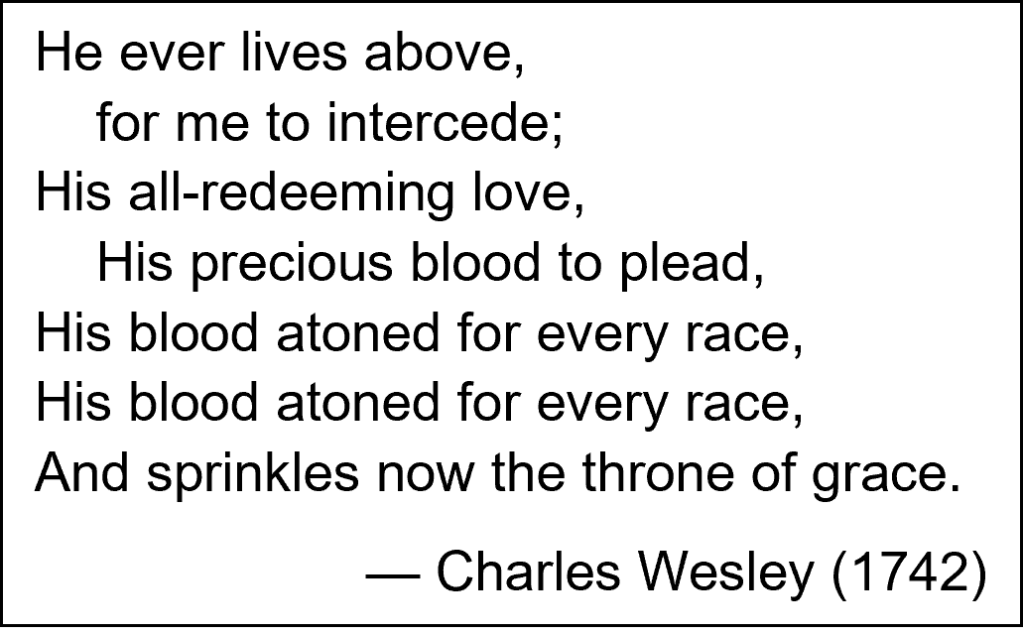
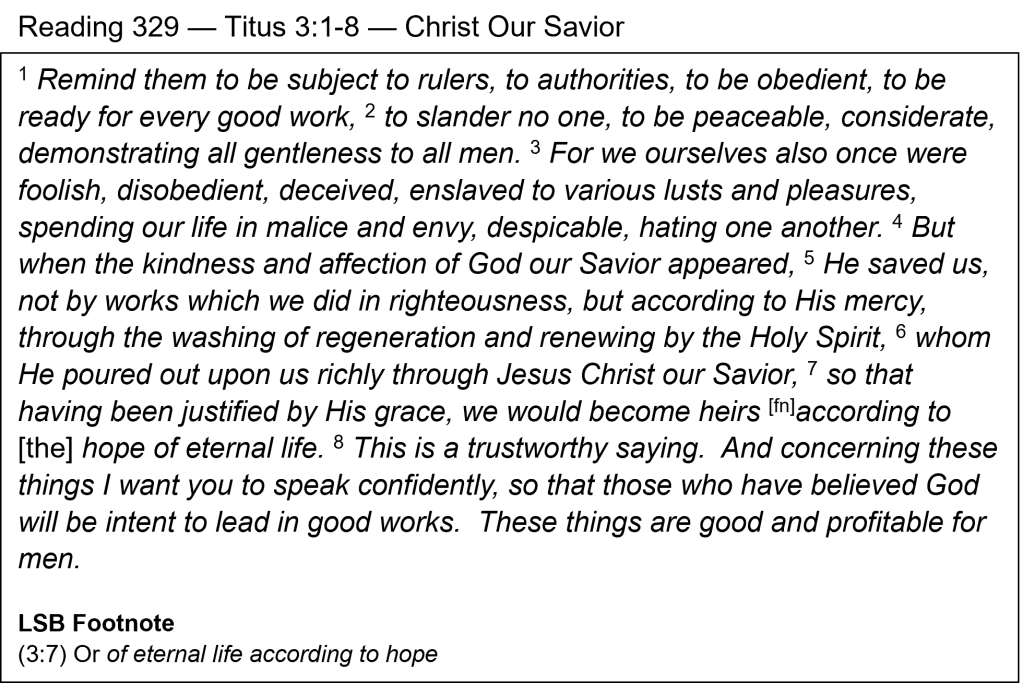
Justified by Jesus — In yesterday’s reading, we noticed that Jesus was called “our great God and Savior” (2:13). In today’s passage, we see the expressions, “God our Savior” (v. 4) and “Christ our Savior” (v. 6). The overall purpose of Jesus’ coming to earth was to provide salvation for mankind. It was directed by God the Father, who “saved us … according to His mercy” (v. 5). It was a mercy-driven mission, saving people from His future wrath. The Holy Spirit’s part of this mission was one of cleansing through “washing of regeneration and renewing” (v. 6). This is the new birth, being born again, or being regenerated. The Son, as a member of the Trinity, performed His mission of grace so that we are “justified by His grace” (v. 7). We are given something good that we didn’t deserve. What was that gift? It was justification — being made right (“just as if I’d never sinned”). He did that by giving us His righteousness. Although this passage emphasizes our responsibility as believers to “be ready for every good work” (v. 1) and to “lead in good works” (v. 8), we are not saved by good works. We are saved by being given Christ’s righteousness when we surrender our hearts and lives to Him, “Jesus Christ our Savior.”
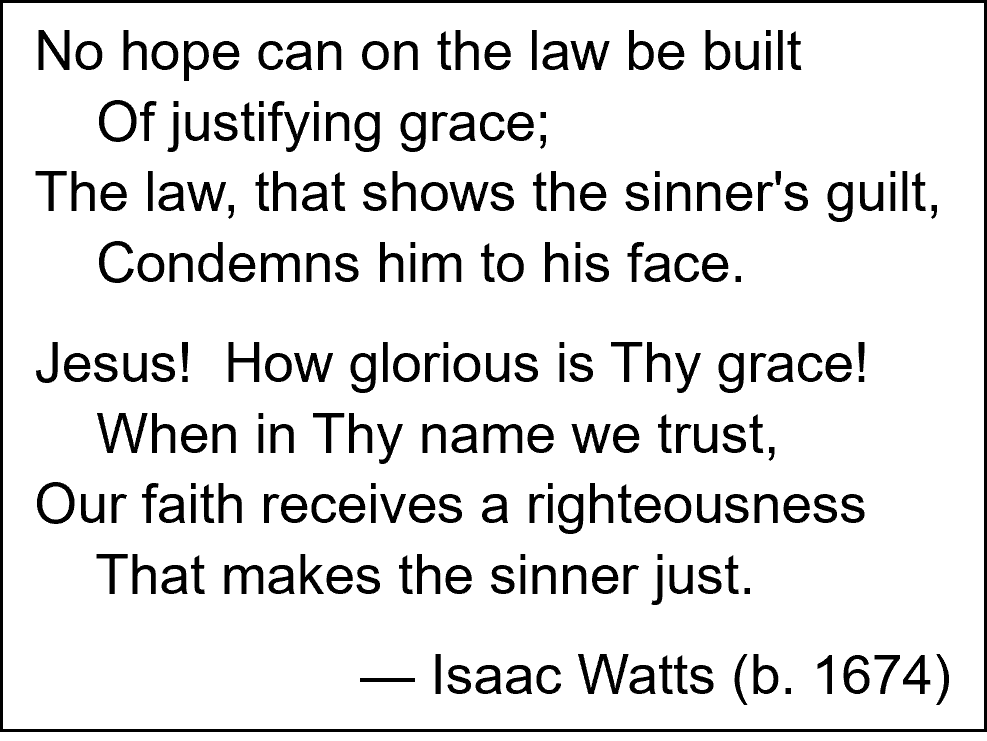
I could not find a suitable video for this hymn (“Vain Are the Hopes”), but
the words of these two verses are very appropriate for today’s reading:
 accbibleread.com