
Save or print this page by clicking on “Download” below:
August 13, Sunday
An audio recording of the following reading is available below.
xxx
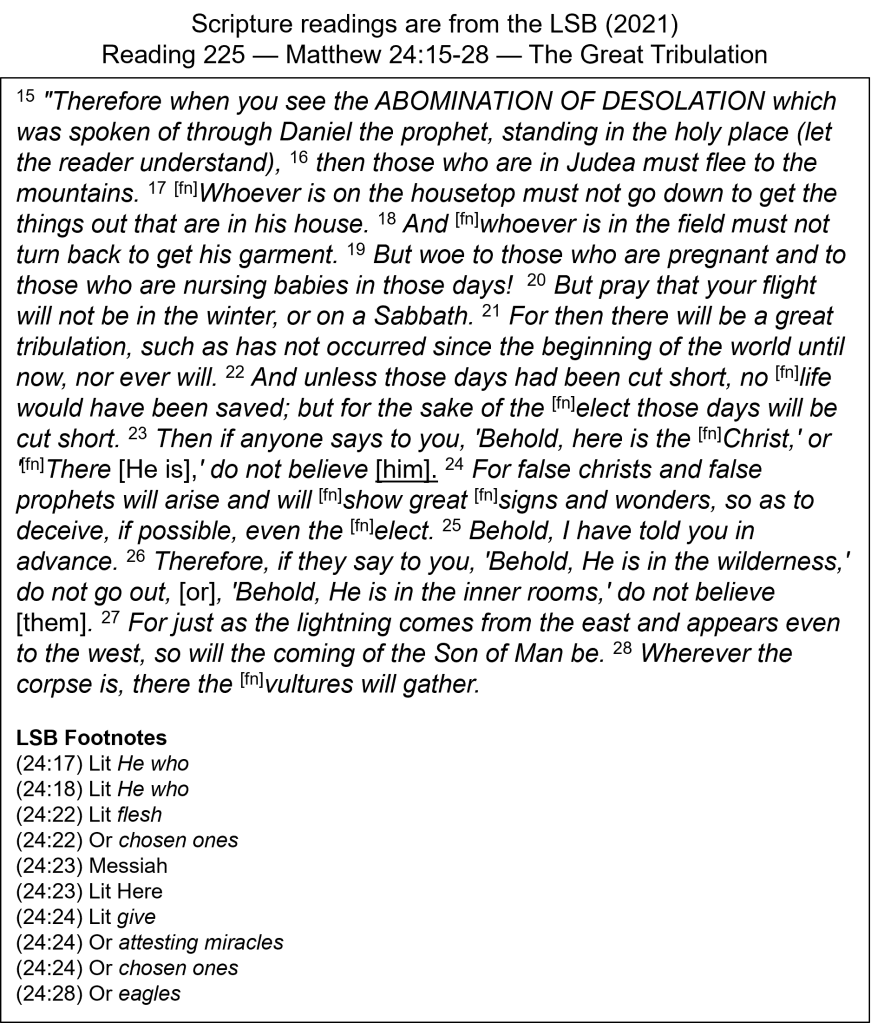
Cut Short — There were very hard times coming for believers, and Jesus showed His omniscience by giving details in advance so that His followers would not be deceived or surprised. His warning for the people in His time would be partially fulfilled in A.D. 70 when the Romans destroyed the temple and the city of Jerusalem. This event seems to be described in Jesus’ instruction about not going down from the rooftop or returning from the field (vv. 17-18). At that time, people should flee for safety. Still in our future, however, is the complete fulfillment of the Great Tribulation (v. 21) and the Second Coming (v. 27). Although widely argued, this passage seems to support what is known as the mid-tribulation rapture of the church. (We will consider a different view tomorrow.) The key statement here is that during this tribulation, “for the sake of the elect those days will be cut short” (v. 22). The “abomination of desolation” (v. 15) refers to Daniel’s prophecy that “in the middle of the week” (the seven-year reign of the evil “Prince” who “will destroy the city and the sanctuary”), complete destruction will come from God (Daniel 9:25-27). Just as the evil prince will be stopped “in the middle of the week,” so the Great Tribulation “will be cut short” for believers The midpoint of this seven-year period is also referred to in Daniel as “a time, times, and half a time” (Dan. 7:25; 12:7), and in Revelation as “forty-two months” (Rev. 11:2; 13:5) or “1,260 days” (Rev. 11:3), all of which equal 3.5 years. Then, said Jesus, will be “the coming of the Son of Man” (Matt. 24:27). It won’t be subtle or gradual but will be quick and obvious to all, like lightning that flashes from east to west (v. 27). Whether His coming will be before, during, or after the Great Tribulation, we believers need to be faithful to Jesus and ready to go.
xxx
August 14, Monday
An audio recording of the following reading is available below.

xxx
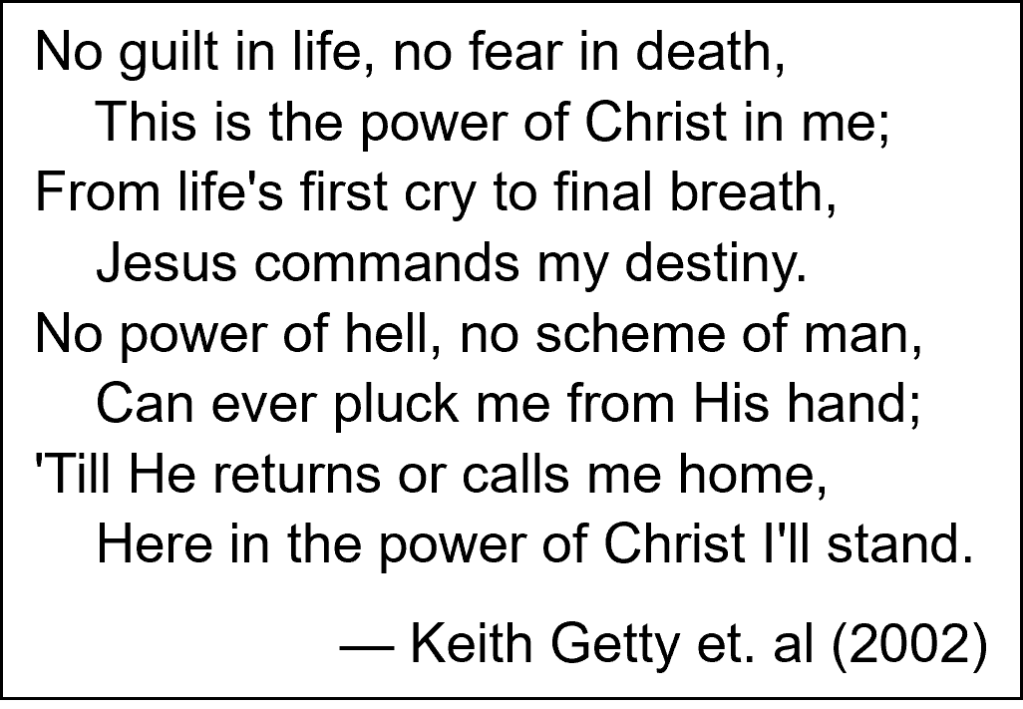
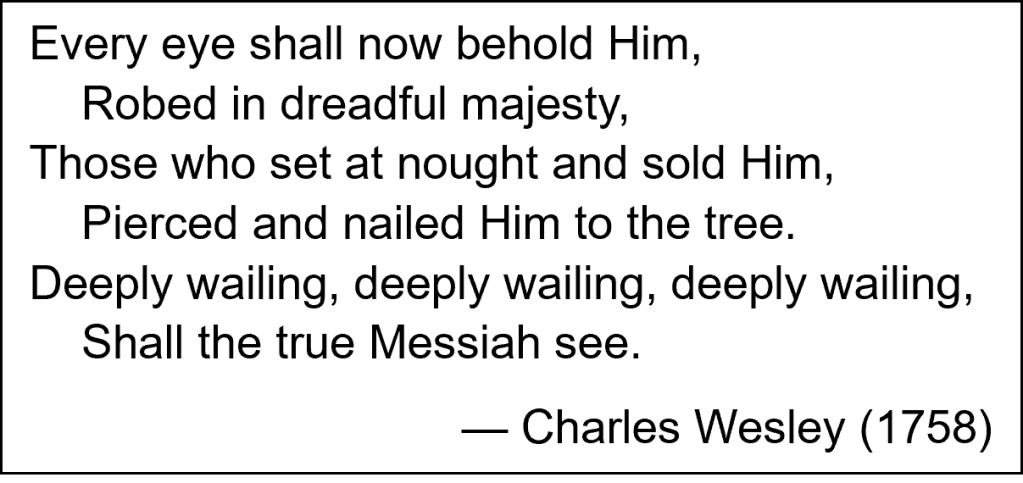
Immediately After — Whereas yesterday’s reading seemed to support the mid-tribulation rapture of the church, the passage that immediately follows appears to support a post-tribulation rapture: “…immediately after the tribulation…” (v. 29). The return of Christ is described in significant detail in today’s passage. It will be of cosmic proportions, affecting the sun, moon, and stars. Except for angels appearing to the shepherds and the guiding star to the magi, the first coming of Jesus was very common and quiet, with very few people knowing about it. His return, however, will be very dramatic and everyone will observe it. At Jesus’ ascension, the angel told His amazed disciples, “Men of Galilee, why do you stand looking toward heaven? This Jesus, who has been taken up from you into heaven, will come in just the same way as you have watched Him go into heaven” (Acts 1:11). His descent will be like His ascent, but it will include celestial fireworks. It will be “with power and great glory” (Matt. 24:30). Most people on earth will mourn, but believers who are alive at that time will be rejoicing as they are gathered to be with Christ forever.
Lo, He Comes with Clouds Descending – YouTube
xxx
August 15, Tuesday
An audio recording of the following reading is available below.
xxx
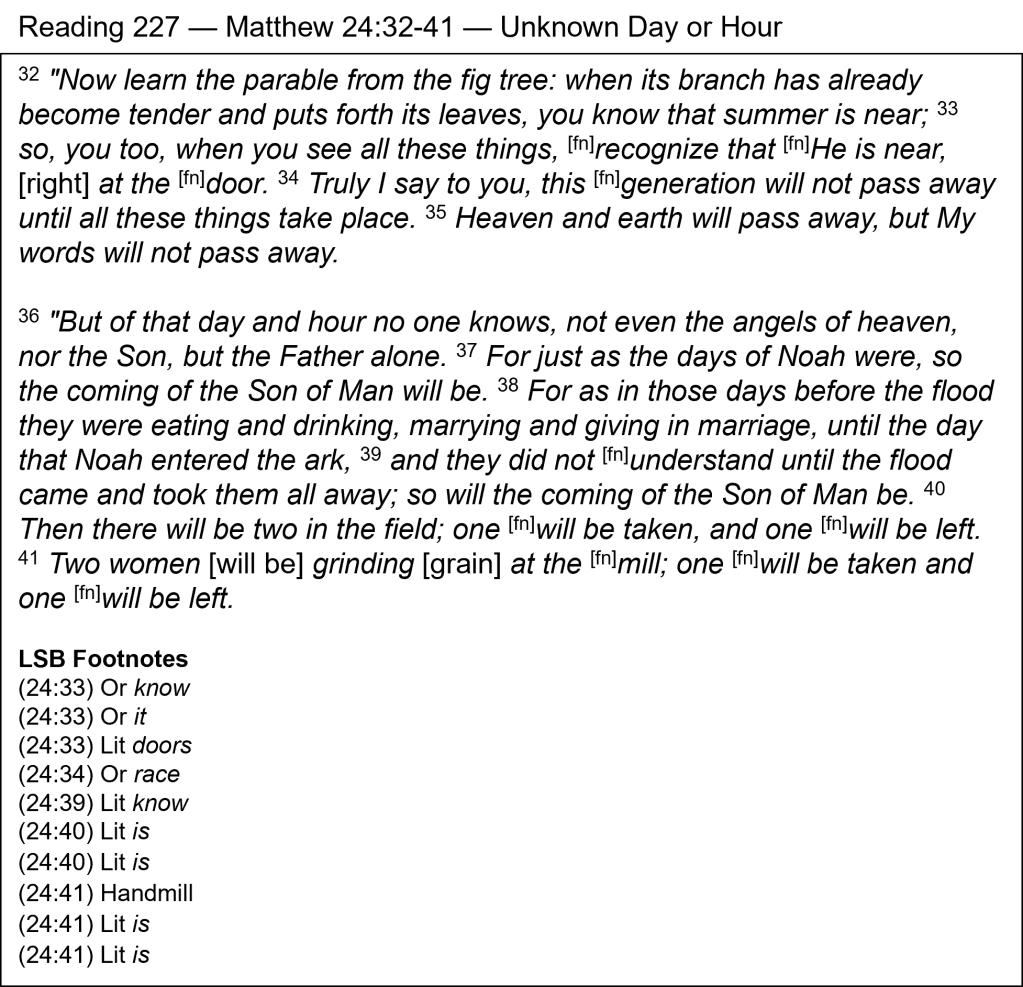
The Near and Certain Surprise — Three main themes seem to be primary in this passage. The first is nearness. As the first leaves of fig trees anticipate summer, so the events mentioned in the earlier verses of this chapter look forward to Jesus’ return—He is “at the door” (v. 32). The second theme is certainty. Jesus said that “all these things” will occur (vv. 33, 34) and “My words will not pass away” (v. 35). He is entirely truthful, and we can depend on what He said. The last theme is surprise. The statement, “of that day and hour no one knows … nor the Son, but the Father alone” (v. 36) is quite puzzling. How could omniscient Jesus not know the time of His return? Apparently, the Father was able to, and chose to, keep this element of information from the human knowledge of Jesus. It is a mystery! The other side of the surprise will be for the general population of the earth at the time of His return. As in the time of Noah, they will be going along as usual, eating, drinking, and getting married (v. 38). Suddenly, people will disappear from their workplaces. Jesus has come.

Meditation: Jesus made this statement that has caused a lot of confusion: “Truly I say to you, this generation will not pass away until all these things take place” (v. 34). Many attempts at interpretation have been offered to try to explain how Jesus could say that to His disciples, when His dramatic return is still in our future. One interpretation suggests that multiple fulfillments are involved here, so that the destruction of the temple in A.D. 70 (predicted in Mark 13:2) did take place in the lifetime of most of His disciples, but that the other predicted events would come to another generation. Others suggest that since the Greek word for “generation” can also mean “age” or “race,” it may be referring to the Jewish race or nation. Questions seem to remain for each interpretation.
xxx
August 16, Wednesday
An audio recording of the following reading is available below.

xxx
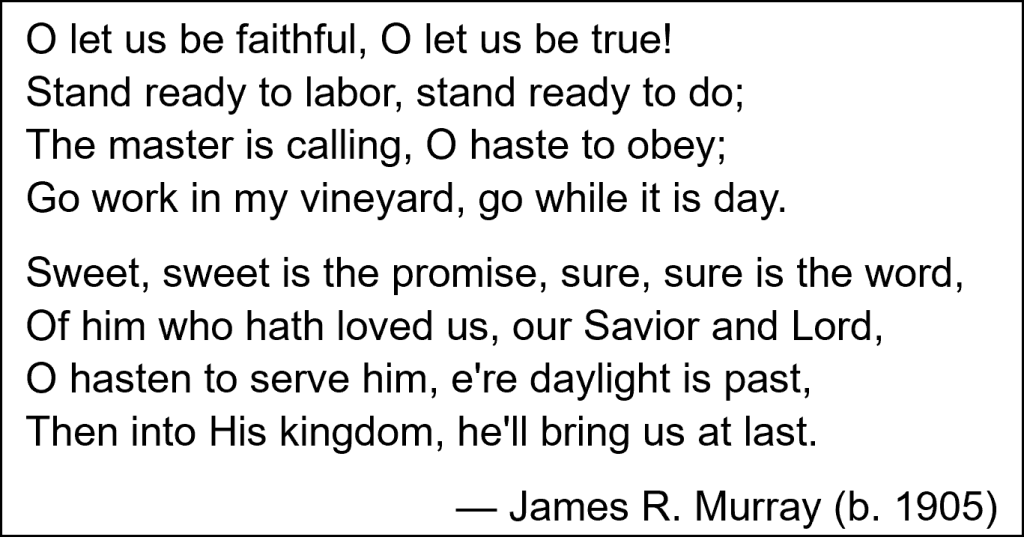
Awake and Doing — These are two of the four parables Jesus told in this Olivet Discourse regarding being ready for His return. The emphasis of the first one is on alertness (“stay awake … stayed awake … be ready”—vv. 42-44). Since that event is still in the future for us, we must continue to be alert, expecting and looking forward to His coming. The second parable focuses on doing—working while waiting. There are two slaves in this story, the “faithful and prudent slave” (v. 45) and the “evil slave” (v. 48). The faithful slave continues to fulfill his assignment while his master is gone, while the evil slave takes advantage of his master’s absence to beat fellow slaves and get drunk. The difference is that of faithfulness in fulfilling one’s responsibilities. There are consequences for their actions. The faithful slave is rewarded with greater responsibility and the evil slave is severely punished. It is clear to see that the master represents God in this parable and we people are under His charge. The faithful ones prove their quality by their actions, and the evil ones prove their unworthiness by their deeds. Heaven and hell are their respective destinations.
I couldn’t find a video for this song, but the
words are fitting for today’s reading.
xxx
August 17, Thursday
An audio recording of the following reading is available below.

xxx
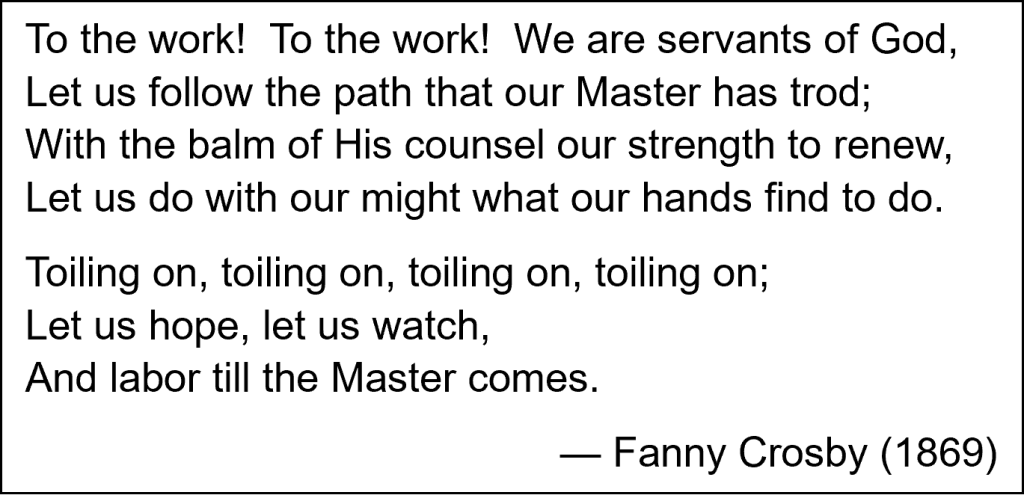
Using Your Gifts — We were all born with varying natural abilities. Some are smarter than others or more athletic. Some have a natural business sense, while others are talented in making music. In addition to those natural abilities, God has given all Christians at least one spiritual gift to empower them to minister in effective ways. The theme of this parable of the talents asks this basic question: “Are you using the gifts God gave you?” Like it was in yesterday’s reading, the main subject here is faithfulness. The five-talent slave was given the greatest responsibility because of his proven ability (v. 15), and he maintained this high level of excellence by doubling the money given to him. The two-talent slave performed even better in one sense because, although he was judged to have only two-fifths of the other’s ability, he also doubled his money. It is interesting that the master praised the achievements of both slaves with the exact same words: “‘Well done, good and faithful slave. You were faithful with a few things, I will put you in charge of many things; enter into the joy of your master.” Both were faithful. The two faithful slaves and the evil slave were all rewarded or punished according to their faithfulness. The evil slave flunked the course and was assigned to hell. The faithful slaves were rewarded with greater responsibility. If you are thinking that you would rather not be rewarded with more responsibility, notice how the master ends his statement: “…enter into the joy of your master.” It is a joyful responsibility. It is a reward.
To the Work! To the Work! – YouTube
xxx
August 18, Friday
An audio recording of the following reading is available below.

xxx
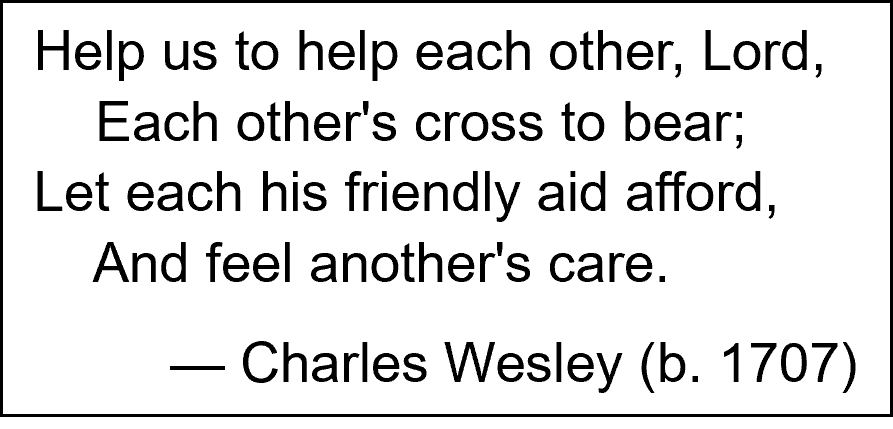
When Did We? — The same question was asked by both the wicked and the righteous: “When?” It was not that they didn’t know about their acts of mercy as much as it was that they didn’t know the recipients represented Jesus. It was like Jesus’ response to Saul on the road to Damascus: “I am Jesus whom you are persecuting” (Acts 9:5). Saul thought he was only persecuting the followers of Jesus. Although people are saved only by genuine faith in Jesus, the emphasis of this passage is on good works. The good works of the righteous were evidence of their true faith. If we are saved, we will show compassion to others. If you know you are lacking in that area, it should help to picture Jesus as the recipient of your love and kindness toward that needy person. Look for an opportunity to help someone in need today; make it anonymous if you can.
Help Us to Help Each Other, Lord – YouTube
xxx
August 19, Saturday
An audio recording of the following reading is available below.

xxx
The Guiding Plan — Jesus told His disciples that they already knew two things. The first one was the easy, historical fact that the annual Jewish festival of Passover was nearing, which celebrated the deliverance of the Hebrews from bondage in Egypt. The second thing they “knew” was that “the Son of Man is to be delivered over for crucifixion” (v. 2). This is the last of at least four times Jesus had predicted His death to them. The disciples were still struggling with the reality of how and why that would happen. There was a divine plan behind it all that they didn’t understand. Jesus had to die to satisfy the justice of God and to pay the penalty for the sin of all mankind. There is a contrast in this passage between the openness of Jesus’ prediction and the stealth of the Jewish leaders. These chief priests and elders were members of the Sanhedrin, the supreme leadership circle of the Jews. Their plot was clear: to secretly seize Jesus in a way that would avoid a riot from His supporters, and to kill Him before the Passover festival began. Which would win—the plan or the plot? Both, really, because the human plot was the means God had incorporated into His plan. We are often as dense as Jesus’ disciples, being confused about events in our lives, our nation, and our world. What is happening, and why? Sometimes God needs to use the evil of the world and the pain of His people to accomplish His grand and glorious plan.
 accbibleread.com