
Save or print this page by clicking on “Download” below:
July 2, Sunday
An audio recording of the following reading is available below.
xxx
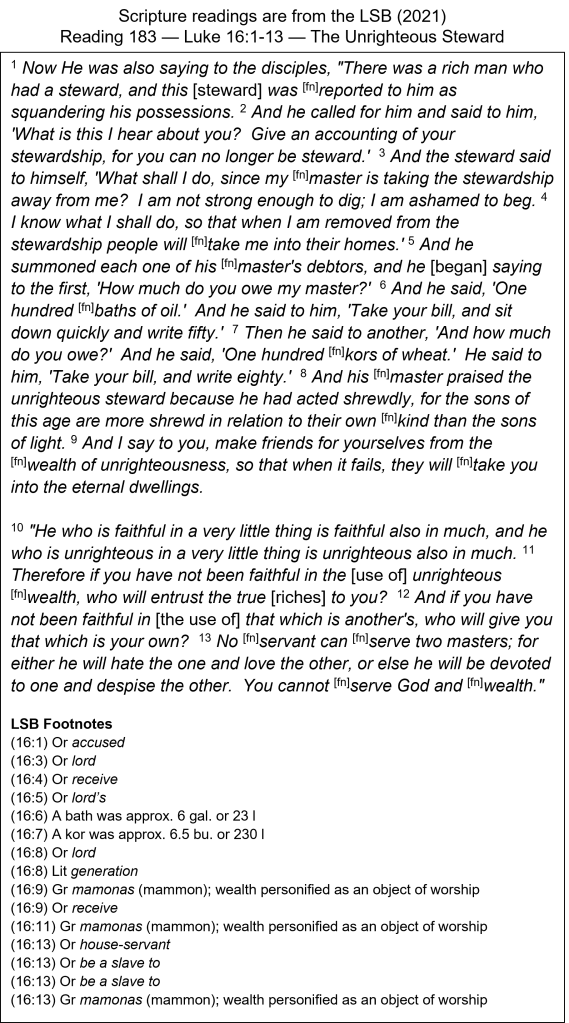
The Value of Money — Jesus told this parable for the benefit of His disciples who were committed to following Him. He gave them three central principles about what was important in handling material things. The first was to be honest. Certainly, the steward in this story was not honest. He had squandered his master’s possessions (v. 1) and he cheated his master out of money owed to him by others (vv. 5-7). As his master called him to give an accounting of his stewardship (v. 2b), so we will be held accountable for what we do, as Paul wrote later to the Romans: “So then each one of us will give an account of himself to God” (Rom. 14:12; cf. Heb. 4:13). The second important principle about money is to be faithful with its use. If we prove ourselves to be faithful and righteous with the material things God has given to us, He will be willing to entrust us with more (Luke 16:10), since if we are responsible in handling money entrusted to us, we can be trusted to manage more (v. 11). I worked part-time in a drug store when I was in high school. I often made deliveries of prescription drugs to older people and would collect the money given to me. The manager would always count out needed change for me before I left the store and would count it all when I returned. After several months, they decided to trust me to take the change I needed out of the register and return it when I came back. I soon decided that it would be easy to keep one dollar now and then for myself. I was not a faithful steward with what had been entrusted to me. The third important monetary principle is that of commitment, devotion, or loyalty. We cannot serve both God and wealth (v. 13). God must not only come first in comparison to our attention to money, but the value we place on wealth should be so far down on the list that it couldn’t even be seen as competing with God.

xxx
July 3, Monday
An audio recording of the following reading is available below.
xxx
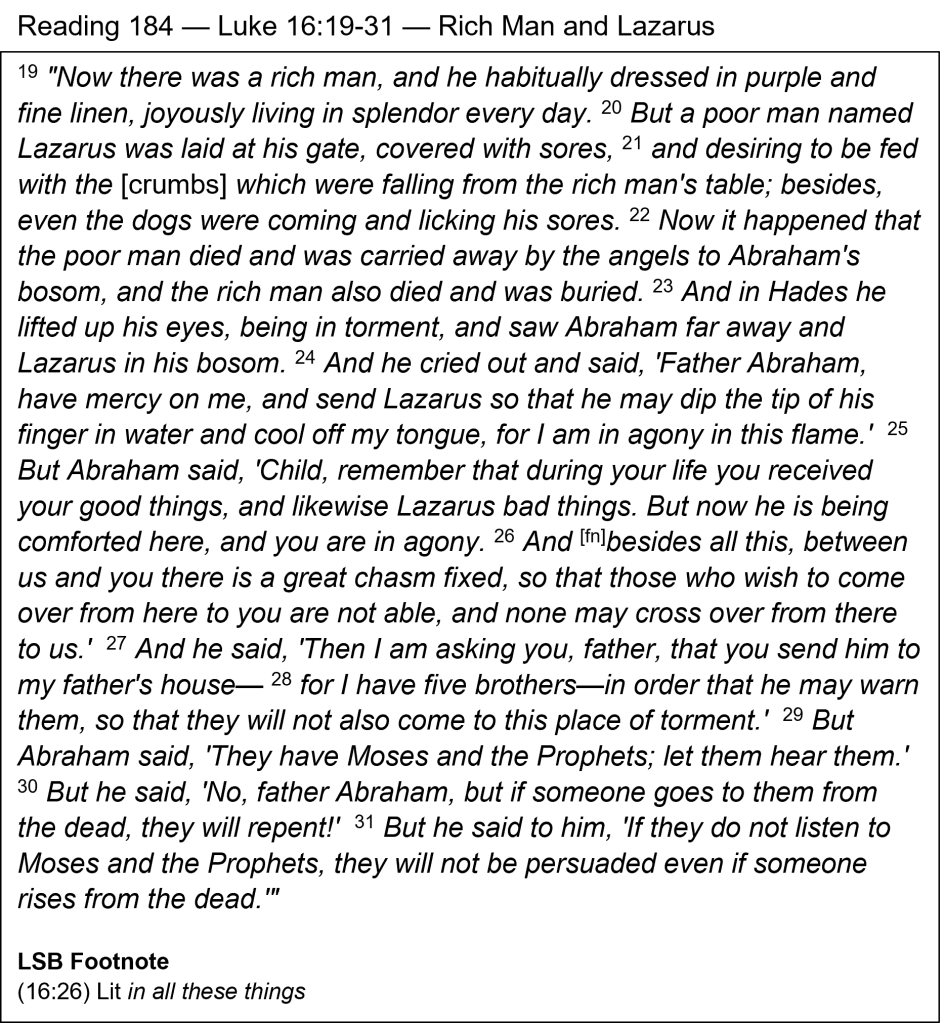
Scripture is Enough — In yesterday’s reading, the parable Jesus told to His disciples about the relative value of money was also heard by some “Pharisees, who were lovers of money” (v. 14). So, Jesus followed up with a second parable aimed at the Pharisees. Although this seems to be only a parable, it is the only one Jesus told that mentioned the name of one of its characters (Lazarus), and it is the only one containing communication between heaven and hell. The rich man (also a lover of money) lived in luxury, while poor Lazarus apparently lived at his gate by eating the garbage thrown out of the rich man’s house. This drastic contrast was reversed, however, after the death of both men. The rich man was in torment while Lazarus reclined at a feast with Abraham, leaning on his bosom as John did with Jesus at the Last Supper (John 13:23-25). It is interesting that the rich man knew Lazarus’ name, but he had only a garbage-level interest in him. He was consumed with self-satisfaction. This parable emphasizes two important truths. One is the finality of the drastic gap between heaven and hell, and the other is the adequacy of Scripture for guiding us to heaven. For the people in Jesus’ day, believing in the OT Scriptures was all they needed to find their way to heaven, if they were willing to follow it. The rich man was not, and his five brothers would probably have the same fate. We must reveal to unbelievers the completely adequate biblical message.
This hymn is sung by members of a church in the Philippines
who had heard the message of truth from others:
We’ve a Story to Tell to the Nations – YouTube

xxx
July 4, Tuesday
An audio recording of the following reading is available below.

xxx
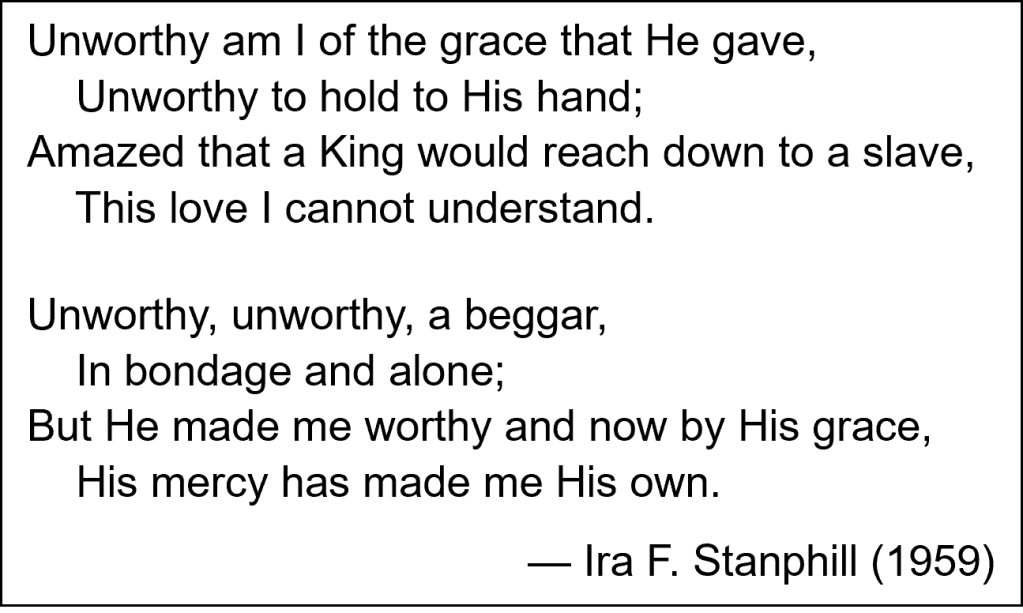
Teaching Truths — This chapter begins with Jesus teaching His disciples. First was the subject of sin — guarding against tempting others and being willing to forgive sin in others. Some Christians have a light attitude about sin, presuming God’s forgiving spirit. That is wrong, and it tends to influence others to also loosen up regarding the seriousness of sin. When someone sins against us, we need to confront it with them and be willing to forgive them if they repent. Jesus’ second teaching came from the disciples’ request: “Increase our faith!” (v. 5). At least six times, Jesus rebuked them for being of “little faith,” so it was a reasonable request. Jesus’ response, however, seemed to stress not the size of one’s faith but the quality of it. Like the disciples, we often struggle with the subject of faith. It seems so “unnatural” for most of us. The third teaching was about recognizing one’s position and doing one’s duty. God doesn’t owe us anything (“We are unworthy slaves”—v. 10a), and obedience to His commands is only “that which we should have done” (v. 10b). That concept conflicts with our cultural climate. The world constantly tells us, “You deserve it,” while only God is really deserving. He requires our obedience, and it is for our own good.
xxx
July 5, Wednesday
An audio recording of the following reading is available below.
xxx
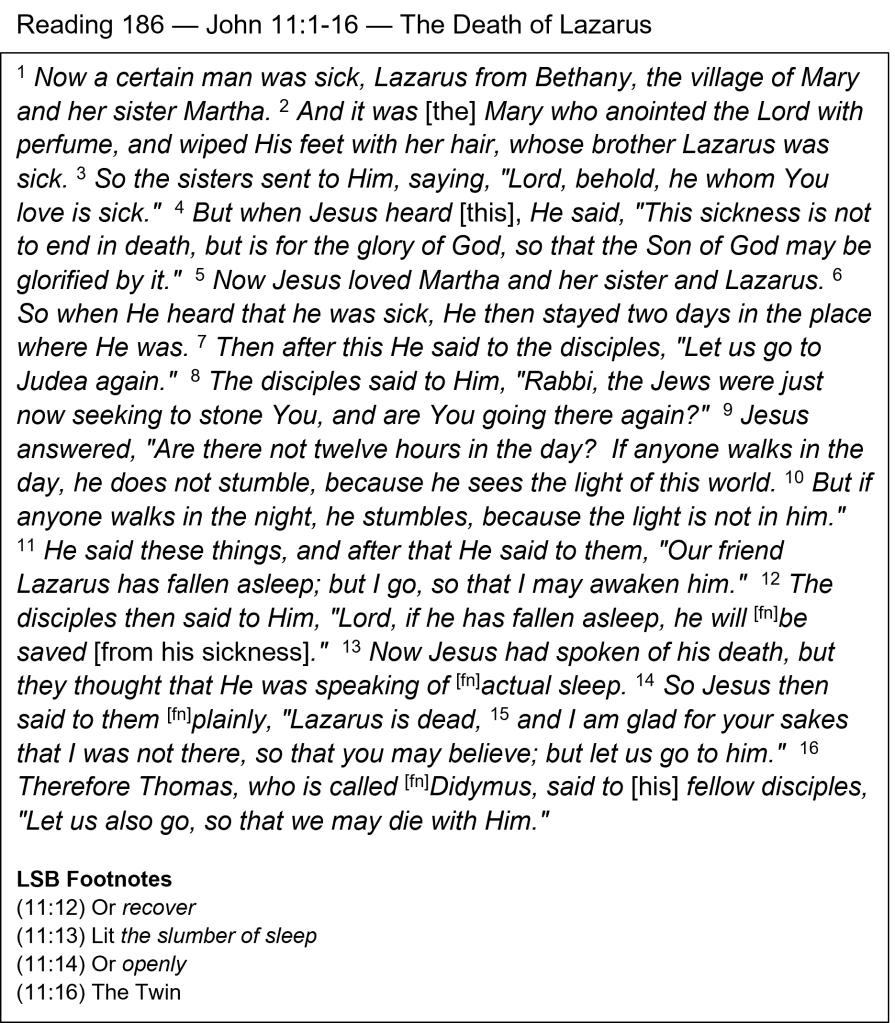
Why Suffering? — Martha said that Jesus loved Lazarus (v. 3), and John wrote that “Jesus loved Martha and her sister and Lazarus” (v. 5). If Jesus loved them, why would He intentionally delay in coming to help them in their time of need? Why would He let them go through this suffering if He loved them? Does that question sound familiar? It is the doubting question often brought up by unbelievers: “Why does God allow suffering?” Ironically, in this case, Jesus even orchestrated the pain with the purpose of generating belief. He said to His disciples, “I am glad for your sakes that I was not there, so that you may believe” (v. 15). Faith is more important than pain. The suffering of Mary and Martha was less significant than “the glory of God… [and] that the Son of God may be glorified” (v. 4). Are we willing to go through suffering of some kind so that God will be glorified? We need to look for God’s glory during and at the end of our pain.

xxx
July 6, Thursday
An audio recording of the following reading is available below.
xxx
xxx
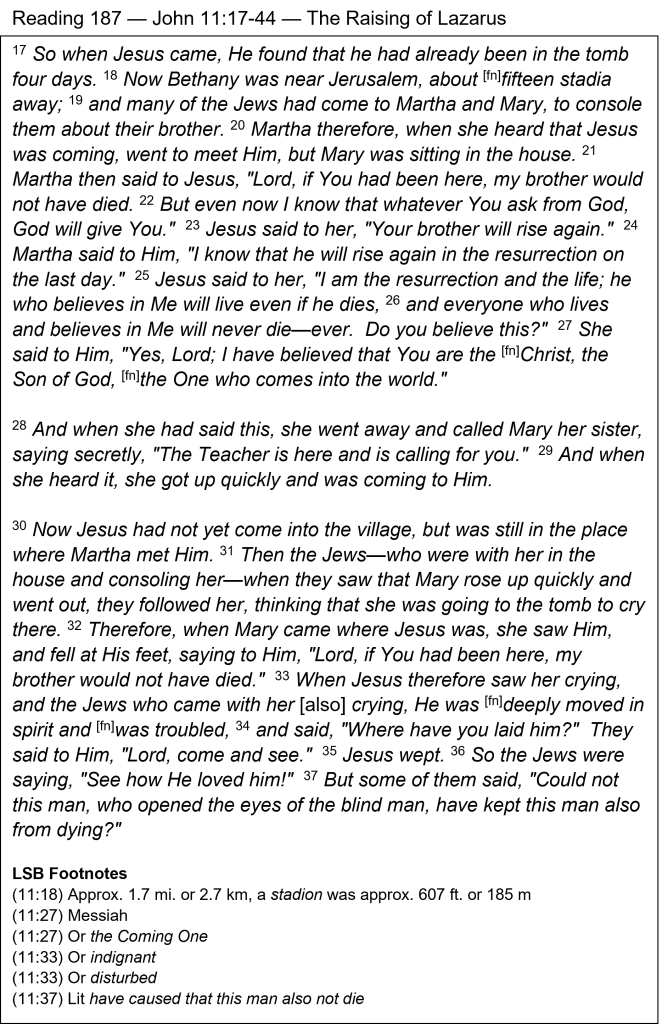
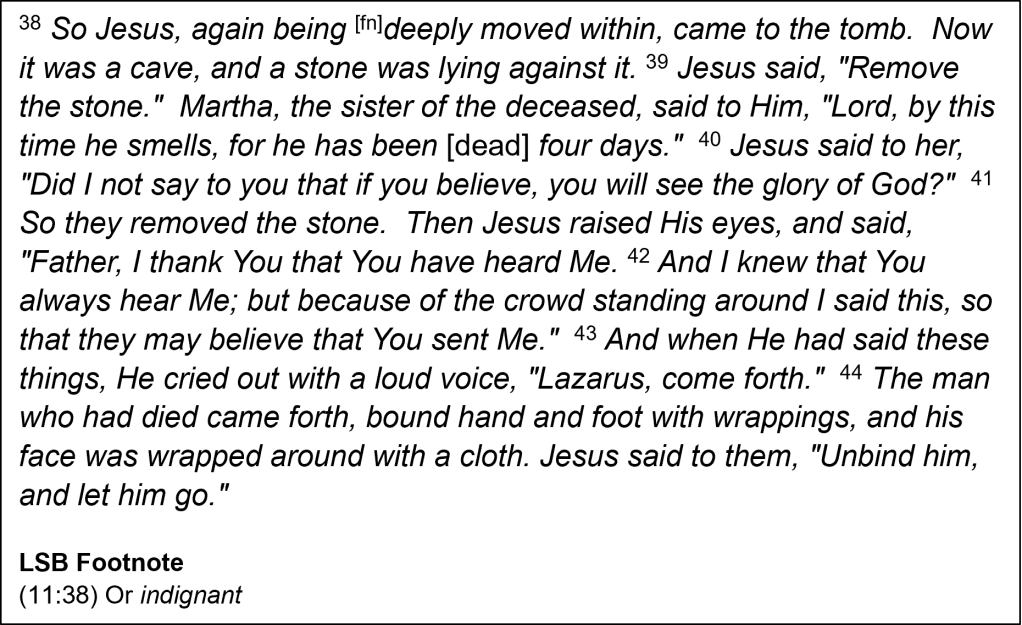
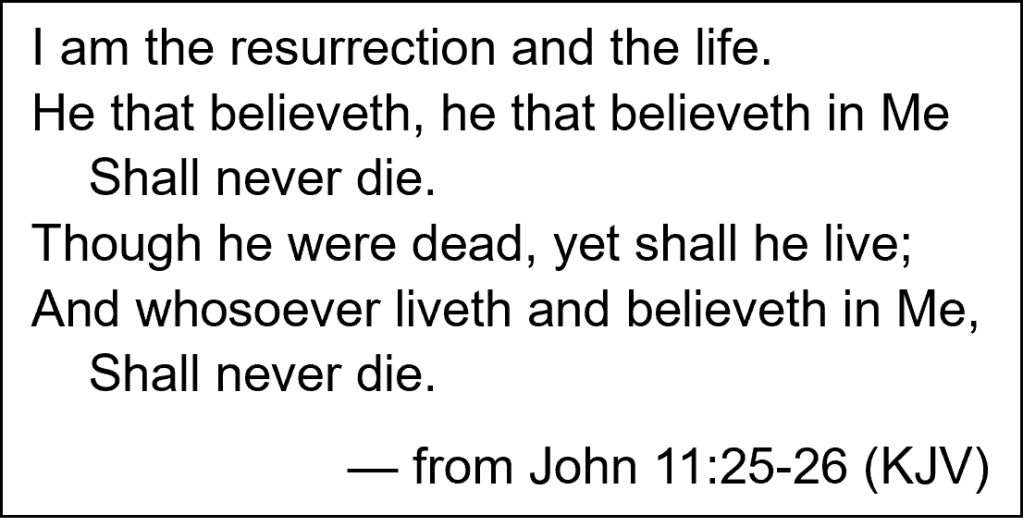
Sensitive Savior — There is a great deal about the person of Jesus in this passage. It is obvious that He had made a huge impression on this family in Bethany. Both Martha and Mary knew that if Jesus had been there earlier, He would have healed Lazarus (vv. 21, 32). Martha also had faith that “whatever You ask from God, God will give You” (v. 22). Was she anticipating that He might raise Lazarus from the dead? She was also convinced about the divine identity of Jesus: “You are the Christ, the Son of God, the One who comes into the world” (v. 27). Jesus confirmed her faith with another “I am” statement: “I am the resurrection and the life” (v. 25). It was not just that He could cause resurrection and give life, but that He embodied those things. He was God. Jesus was also a sensitive human. He cried in sympathy for Mary and the others who were grieving (v. 33, 35). We read yesterday that Jesus delayed coming, even though He knew it would bring heartache to Mary and Martha. It was not because He was insensitive to their feelings but that He would show them the glory of the Father. He had tender feelings, and He cried along with them. We also see Jesus’ evangelistic purpose here, too. When He prayed at the tomb, it was “because of the crowd … so that they may believe that You sent Me” (v. 42). He wanted them to know His connection to the Father so that, when they would see Lazarus shuffle out of that tomb, they would believe. The final thing we see here about Jesus is His incredible power. Loudly, He called out, “Lazarus, come forth!” (v. 43). At His word, it happened. It was the astonishing power of the infinite God.
I Am the Resurrection and the Life – YouTube
xxx
July 7, Friday
An audio recording of the following reading is available below.
xxx
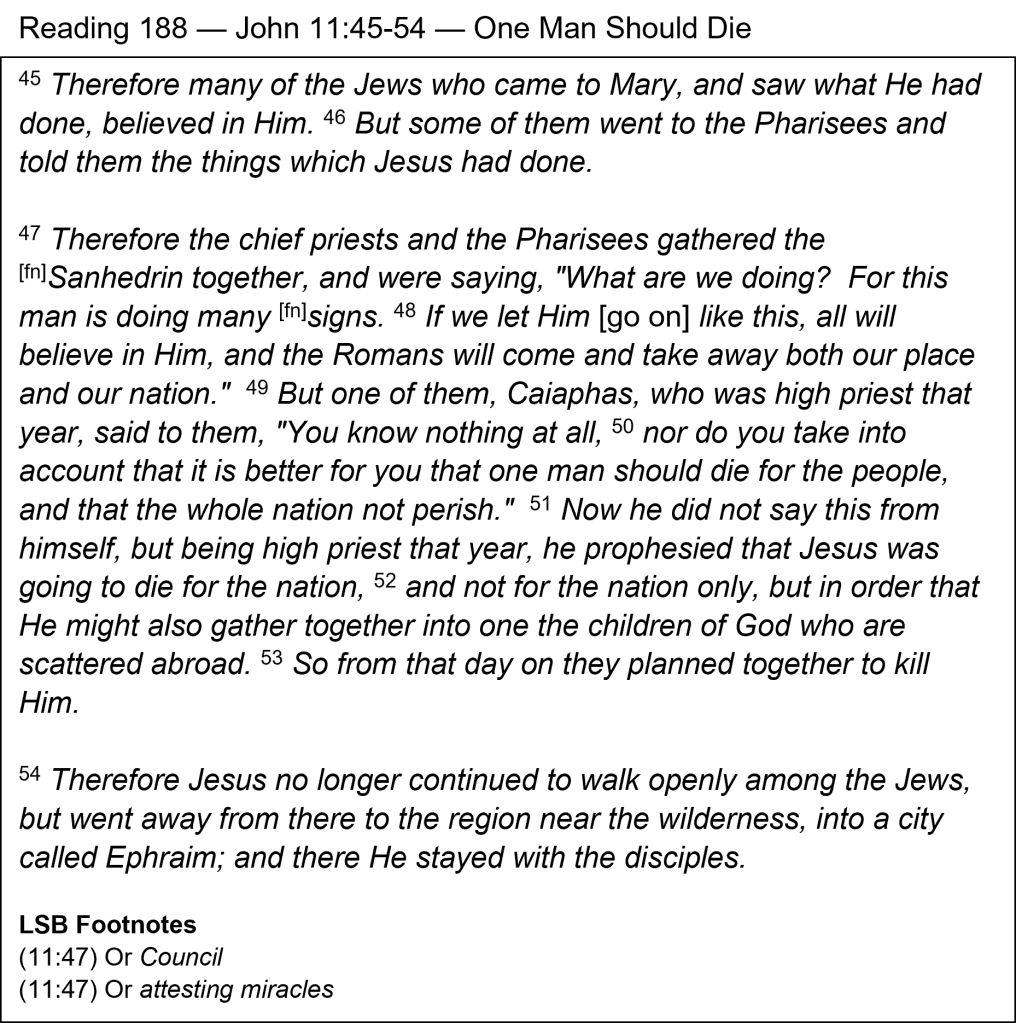
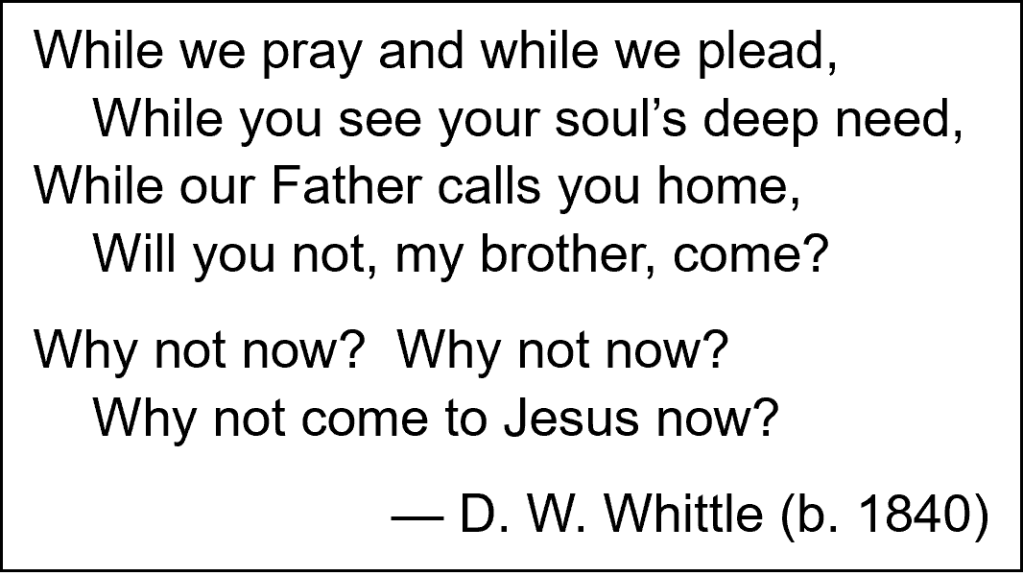
Signs for Believing — Many of those who saw the miracle Jesus performed in raising Lazarus from the dead “believed in Him” (v. 45). The sign (or attesting miracle) was evidence that Jesus was sent by the Father, and they responded positively. Some of the people who witnessed the same sign, however, did not believe in Him but reported Him to the Pharisees, knowing that they opposed Him. The news was serious enough to call the Sanhedrin together to discuss it. It is significant to note that they admitted Jesus was doing miracles: “For this man is doing many signs” (v. 47). These were some of the same people we read about earlier who came to Jesus, saying, “What then do You do for a sign so that we may see and believe You? What work do you perform?” (John 6:30). At another time, “they asked Him to show them a sign from heaven” (Matt. 16:1). They had seen some of His signs and now heard about the raising of Lazarus. Since they got what they asked for, would they now believe? No, they stubbornly refused and, instead, plotted to kill Him. The rejection of Jesus continues in our day. Although people in our culture have the Bible available to them and have witnessed the lives of people changed by the message of Christ, they still reject the message and the Savior. We should plead with them to turn to Jesus.
While We Pray and While We Plead – YouTube
xxx
July 8, Saturday
An audio recording of the following reading is available below.

xxx
More Than Master — We see more about Jesus in this paragraph. First, was his reputation. These ten lepers knew His name, even though they were required by the Law to remain isolated from other people (Num. 5:1-4). They also knew something about His power, calling Him “Master” (v. 13). A master is one in a position of power and authority. They also knew about His compassion, crying out, “have mercy on us!” (v. 13). They must have heard stories about how He had healed other hurting people. Those ten quarantined men somehow managed to learn all this about Jesus. We also see here that Jesus was obedient to God’s Law, which required people who had recovered from leprosy to have it confirmed by a priest. He said, “Go and show yourselves to the priests” (v. 14). The last picture of Jesus here is rather subtle. It suggests His divinity, equating Him with God. Giving glory to God is mentioned twice: When the single leper returned, he was “glorifying God with a loud voice” (v. 15), and Jesus responded that only one “turned back to give glory to God” (v. 18). Between these two statements, we read that this leper “fell on his face at His feet, giving thanks to Him” (v. 16). The Greek word for “giving thanks” is used almost exclusively in the New Testament for thanking God the Father, but here it is used of thanking Jesus, which is appropriate because Jesus is God.
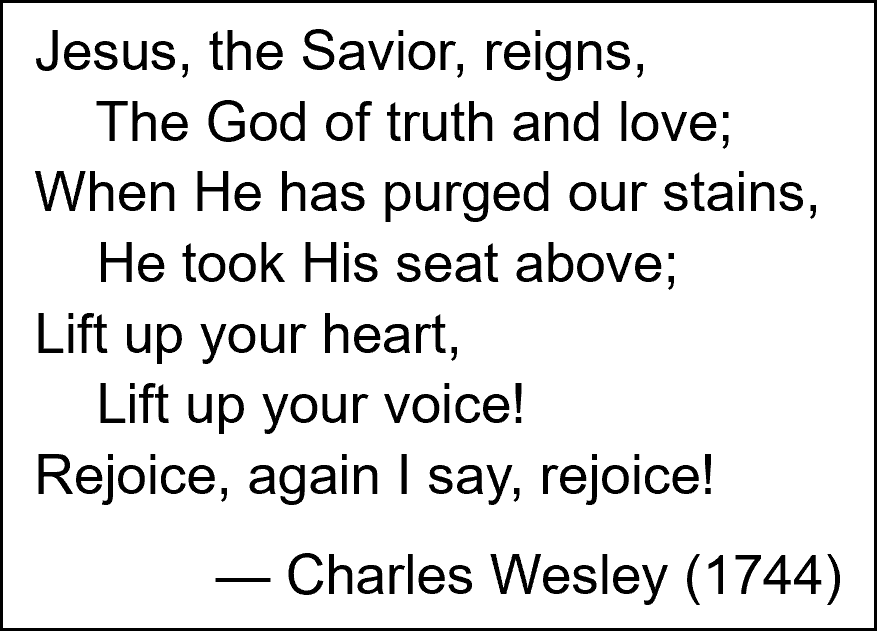
Rejoice, the Lord Is King – YouTube
 accbibleread.com