Save or print this page by clicking on “Download” below:
June 25, Sunday
An audio recording of the following reading is available below.
xxx
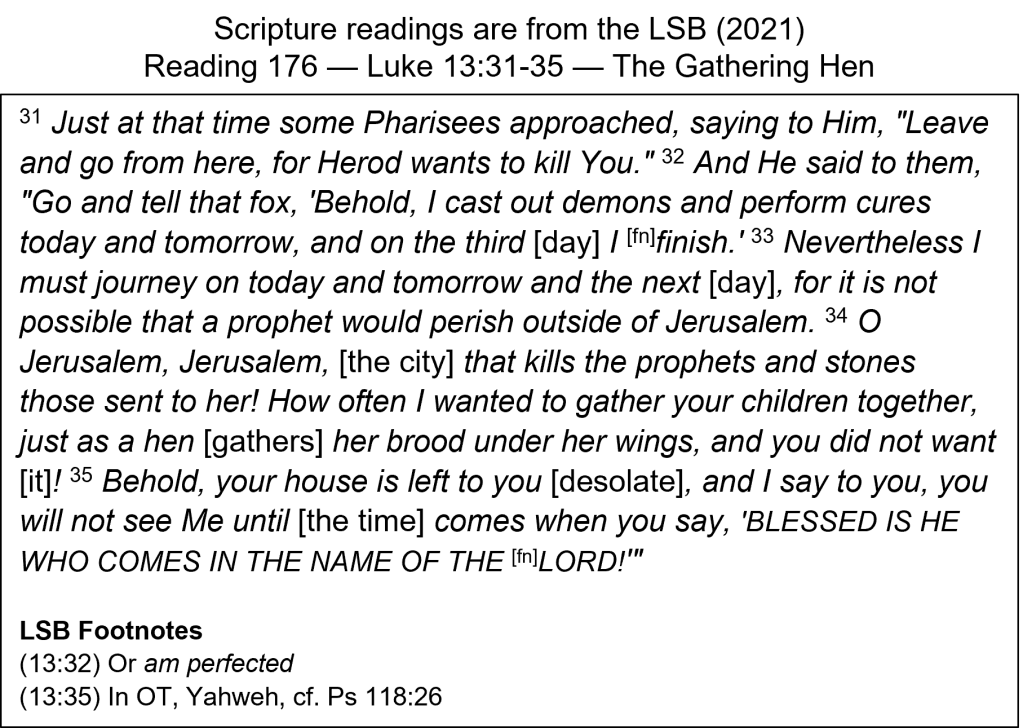
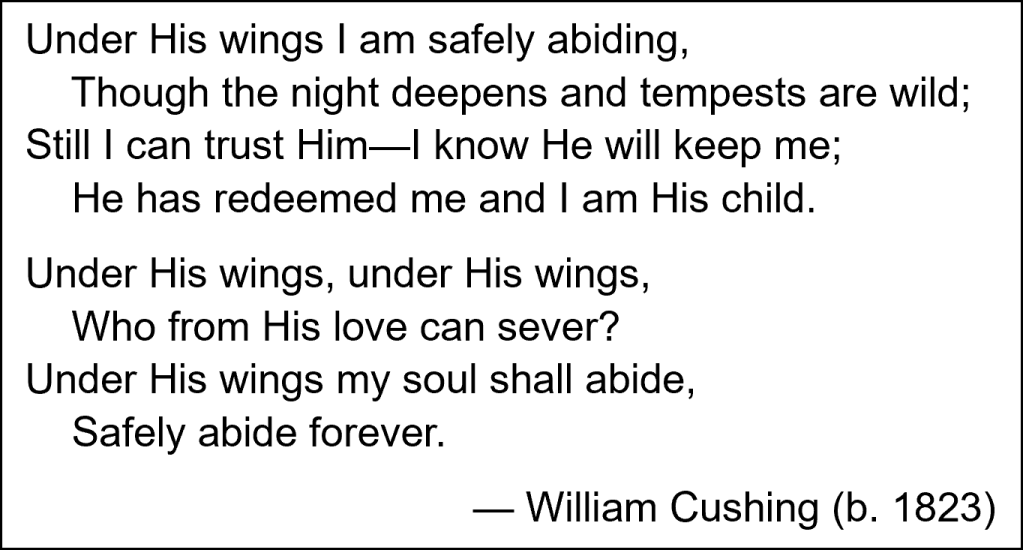
The Caring Wings of Jesus — Two animals are used in this passage, representing two very different attitudes. Jesus called Herod Antipas, “that fox” (v. 32), an animal characterized by cunning. A cunning person is able to achieve their own ends by deceiving others. What the Pharisees told Jesus about Herod’s intent to kill Him was probably not true. If so, they were also cunning. The other animal was the hen that gathers her chicks under her wings for protection in times of danger. That is what Jesus wanted to do for Jerusalem, the center of Jewish worship, but “you did not want it” (v. 34). The people rejected Jesus’ desire to caringly protect them. The threat of disaster would come at Jesus’ return in judgment. Many Jews will come to faith in Jesus before He returns, because of what they will say: “Blessed is He who comes…” (v. 35), which is an expression of praise and worship. Paul later quoted from Isaiah 59:20 to say, “…and so all Israel will be saved.” (Rom. 11:26). Some in the first century and more in the future will find safety under His caring wings.
xxx
June 26, Monday
An audio recording of the following reading is available below.
xxx
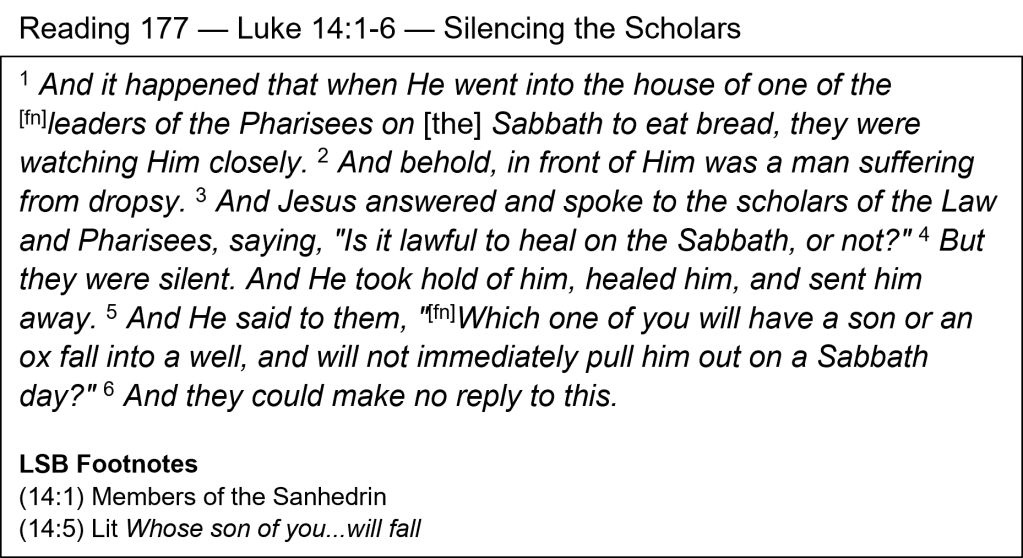
Under the Microscope — Would you agree to have dinner in the home of someone you knew who would be looking for ways to criticize you? Jesus didn’t have a problem with that because He was without fault and was the master of any challenge. The Jewish leaders had belittled Jesus because He wasn’t educated in their schools, yet they were stunned at His knowledge and wisdom. The Pharisees at this meal “were watching Him closely” (v. 1), looking for faults. When Jesus saw the man with dropsy (unusual water-retention), He didn’t just heal him, but He first challenged the religious detectives who were watching Him: “Is it lawful to heal on the Sabbath, or not?” It was a simple question to experts, requiring either a yes or no answer. It would be something like asking a policeman if it was lawful to drive through a red traffic light if there was only light traffic. “But they were silent” (v. 4). They thoroughly knew both Moses’ Law and their traditions, which they considered to be law. They didn’t answer because they had already learned that they could not successfully argue with Jesus; He stumped them every time. As if their silence suggested permission, Jesus healed the man and sent him away. Then Jesus moved from the subject of law to that of practice. Did these professional religious scholars practice what they preached? No. If their son fell into a well on the Sabbath, they would rescue him immediately. When Jesus challenged them with that second question, “they could make no reply” (v. 6). They were conquered again by Jesus’ vastly superior wisdom. This is the fourth time we know of where Jesus healed on the Sabbath, resulting in the irritation of Jewish leaders: the lame man at the pool of Bethesda (John 5:9), the man with the withered hand (Mark 3:2-3), and the bent-over woman (Luke 13:10-11). Jesus had a heart for people who were hurting, whatever day it was. He came to release people from bondage, and He is still doing it.

xxx
June 27, Tuesday
An audio recording of the following reading is available below.
xxx
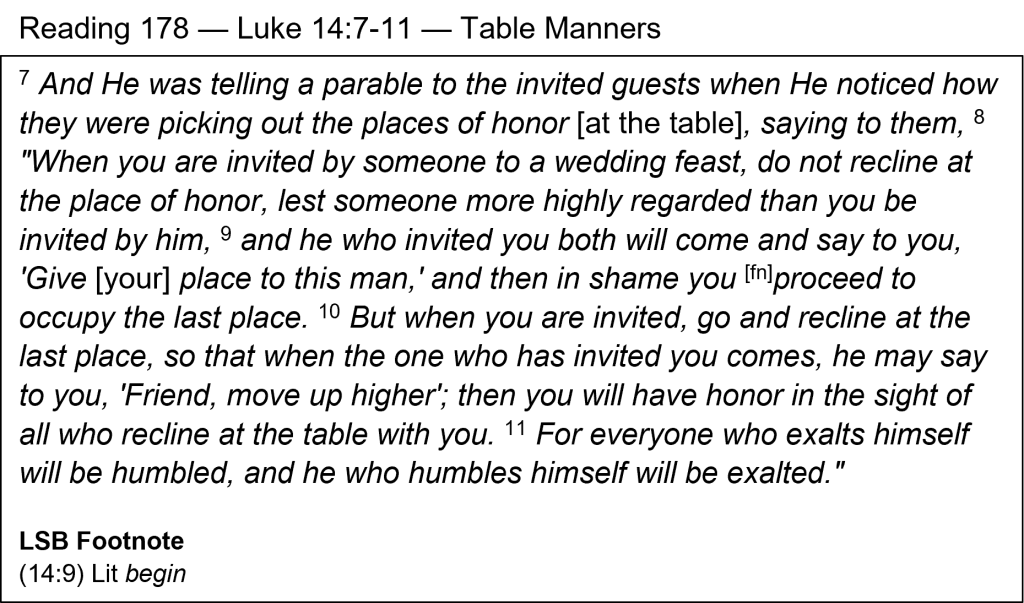
Better Humble Than Humiliated — We laugh when we see animals being selfish by stealing food or competing for attention from pet owners. When we see toddlers doing similar things, however, it is not quite so funny. It is even worse when we see evidence of selfishness and scrambling for recognition in the activity of adults. We are all sinfully selfish, but as we mature, we seem to develop an ability to hide that pride. The people at the dinner Jesus attended, however, were not being so subtle. They were jostling for better seats. Jesus’ instruction showed that there is a penalty for pride and a reward for humility: “…everyone who exalts himself will be humbled, and he who humbles himself will be exalted” (v. 11). It is better for us to be humble than to be humiliated because of our exposed pride. Although the Son of God was the most important person at that dinner, He was probably not given a high place of honor at the table, since He was under suspicion by His host and many of the other guests. In contrast to striving for honor, Jesus described Himself as being “gentle and humble in heart” (Matt. 11:29). That verse continues by saying that if you are also humble, “YOU WILL FIND REST FOR YOUR SOULS.” That is the peace of God that comes through voluntary humility.
Humble Thyself in the Sight of the Lord – Bing video

xxx
June 28, Wednesday—————————–ACCOUNTABILITY TIME!
An audio recording of the following reading is available below.
xxx
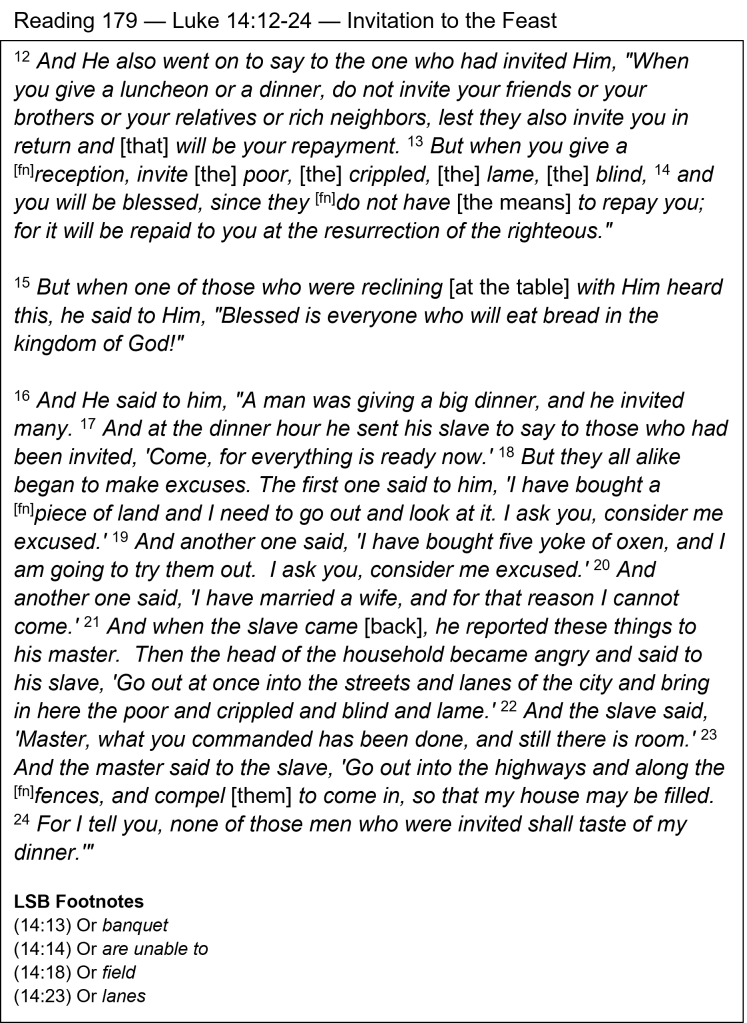
Filling the Kingdom — The host who invited Jesus to eat at his house certainly didn’t expect the reaction that he received from his guest. Earlier, we read that Jesus irritated the host and other guests by healing the man with dropsy on the Sabbath. He then instructed them all about how they ought to be seated at the table. Now, in this passage, Jesus told the host whom he should invite to a dinner. Instead of inviting his friends who can and will pay him back with their own later invitation, this Pharisee should invite people he would never have thought to invite, i.e., the poor, crippled, lame, and blind (v. 13). Why? Because they couldn’t return the favor. Are we doing that? We all have contact with people who fit in that category. Let’s reach out to them, just to show them love! God will reward us for it later. When one of the dinner guests made the statement about everyone eventually being blessed in the kingdom of God, Jesus told a parable that illustrates God’s invitation to His eternal banquet in heaven. First, there was the wide, formal invitation (“he invited many”—v. 16), but some didn’t want to come and made excuses. So, the invitation was broadened to the socially rejected people of Jewish cities, “the poor and crippled and blind and lame” (v. 21). When there was still room, those out on “the highways” (v. 23), probably referring to Gentiles, were not only invited, but compelled to come. After that came this tragic conclusion: “none of those men who were invited shall taste of my dinner” (v. 24). Those who had made excuses because they did not want to come had eliminated themselves from the joys of heaven. The kingdom of God is still not full; people around the world continue to be urged to come to Christ so that His house might be filled. When it is, Jesus will come to gather the last of His banquet guests for the Marriage Supper of the Lamb.

ACCOUNTABILITY TIME! If you are up to date in your reading as of today, please click here to leave your email address or let me know at accbibleread@gmail.com.
June 29, Thursday————————ACCOUNTABLILITY REMINDER
An audio recording of the following reading is available below.
xxx
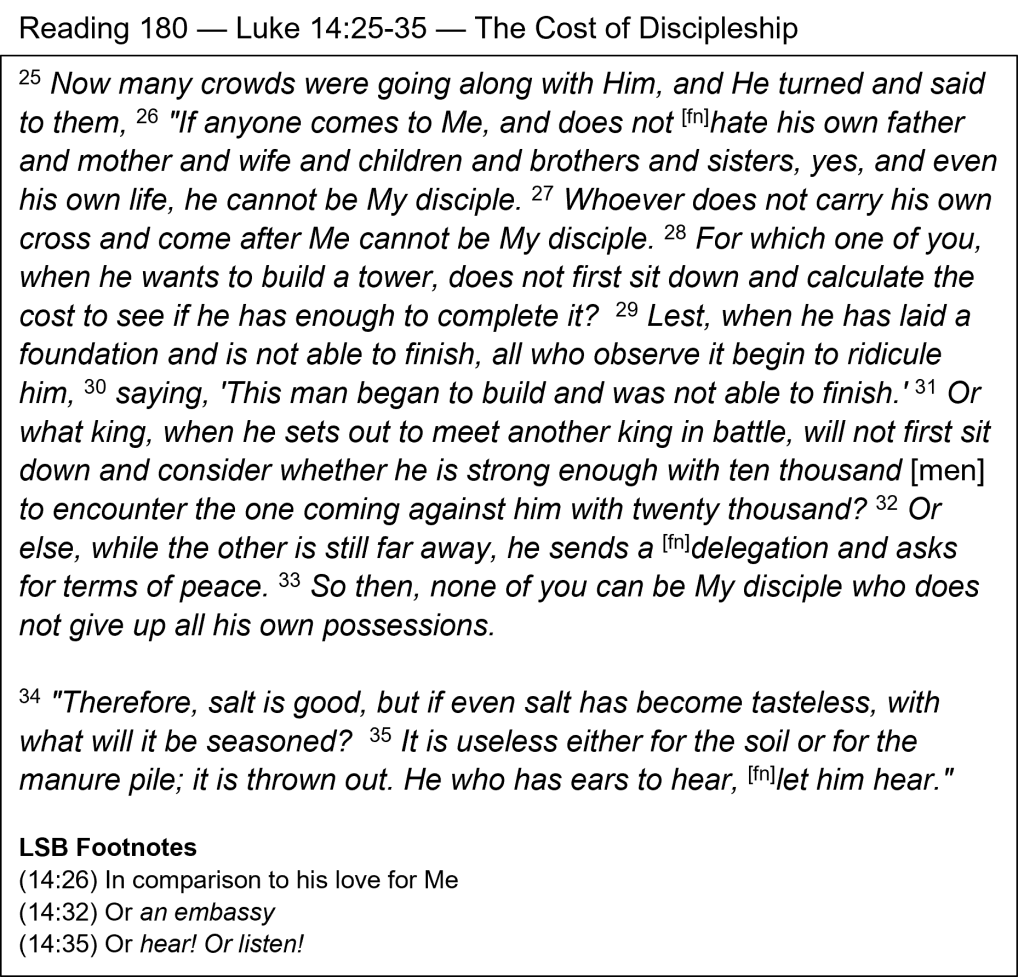
Full Commitment — Jesus, then and now, is much more concerned about commitment than He is about numbers. It was because “crowds were going along with Him [that He] turned and said to them…” (v. 25), presenting three conditions of discipleship. The first had to do with relative love. The word for “hate” was often used as an idiom in ancient Hebrew to mean “love less.” In fact, Jesus taught the same concept in another context without using that idiom: “He who loves father or mother more than Me is not worthy of Me…” (Matt. 10:37). It is a matter of love-priority, i.e., does one love Jesus more than family or self? If so, then we are putting Him first. The second condition involved perseverance: am I willing to stick with it to the end? Does the housebuilder have enough money to finish it? Does the king have enough men to win the war? No one can successfully come to Christ thinking, “Well, I will give it a try.” Rather it must be: “I’m all in!” The surprising discovery is that, after one surrenders to Jesus, God supplies the kind of strength to persevere that goes far beyond human willpower. The third condition is that a true disciple will “give up all his own possessions” (Luke 14:33). Now, that is a tough one! Many people in the early Church took this statement regarding personal possessions rather literally, so that “not one was saying that any of his possessions was his own, but … everything was common” (Acts 4:32). They still had possessions, but they were holding them loosely. Jesus warned earlier that “not even when one has an abundance does his life consist of his possessions” (Luke 12:15). A true disciple is not possession focused. Those who are only in the crowd as admirers are like worthless salt that will be thrown out. Let’s put Him first!
Take My Life and Let It Be – YouTube

ACCOUNTABILITY REMINDER — If you are up to date in your reading as of today,
but did not report yesterday, please click here to leave your email address
or let me know at accbibleread@gmail.com.
xxx
June 30, Friday—————————–ACCOUNTABILITY FINAL DAY
An audio recording of the following reading is available below.
xxx
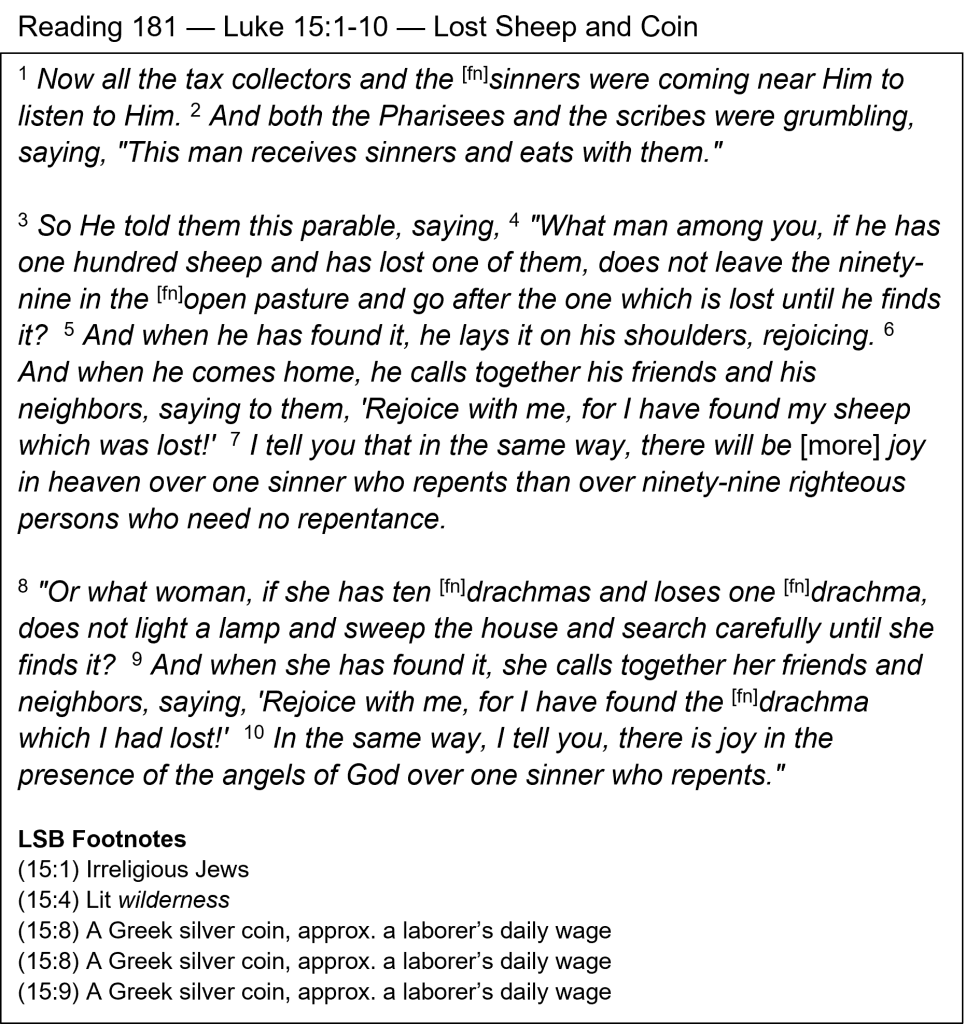
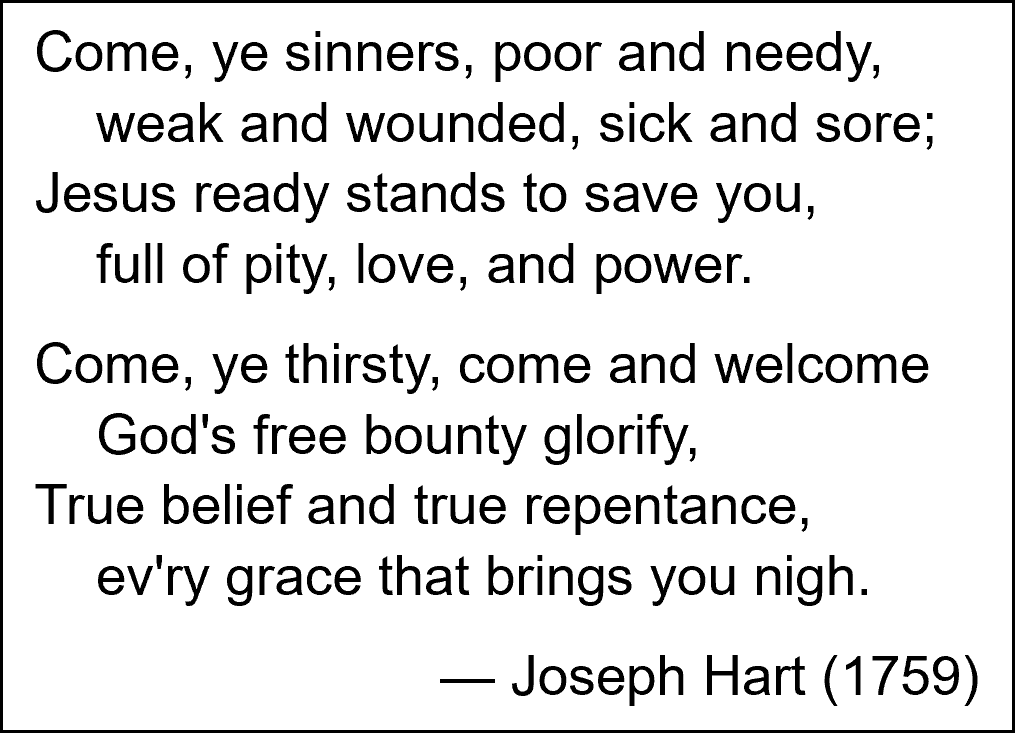
Seeking, Finding, and Rejoicing — Again, in this passage, we see the compassion of Jesus for the lost. Like the lost sheep and the lost coin, Jesus was seeking them out because they were valuable to Him. Both the tax collectors and the Pharisees were lost, but the tax collectors knew it and the Pharisees did not. The tax collectors were humbled, and the Pharisees were arrogantly indignant. Whereas the Pharisees grumbled about Jesus’ acceptance of the sinners, the characters in both of Jesus’ parables said to others, “Rejoice with me…!” (vv. 6, 9). Are the people around us today more like the tax collectors or the Pharisees? Are many people coming near to listen to you talk about Jesus? That may not be happening for several reasons. One reason is that most people don’t recognize or admit that they are lost. Like the Pharisees, they have their own developed systems of right and wrong. Sadly, another reason is that we tend to be more judgmental than loving, and even admitted sinners are not drawn to us. We need the compassion Jesus had for the lost, reaching out to them with loving, accepting arms. They are precious in His sight.
Come Ye Sinners, Poor and Needy – YouTube
ACCOUNTABILITY FINAL DAY! If you have not yet reported for this month,
please let me know your reading status today at accbibleread@gmail.com.
xxx
July 1, Saturday
An audio recording of the following reading is available below.

xxx
xxx
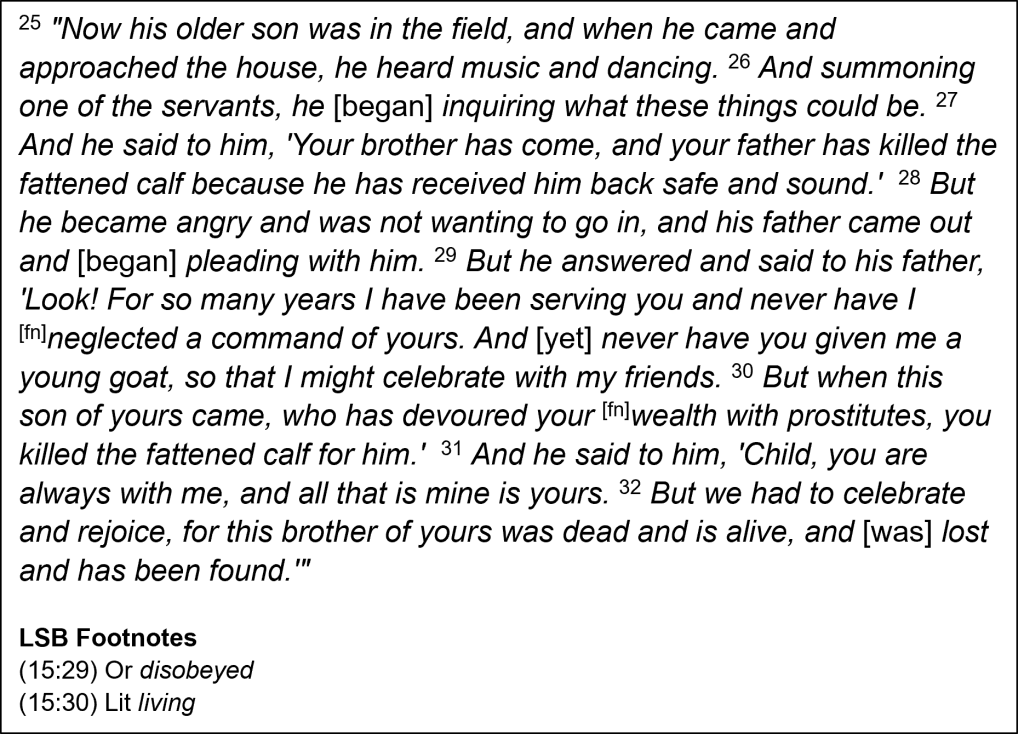
Repenting and Resenting — Jesus was still speaking to the Pharisees and scribes who had been complaining that He was eating with tax collectors and sinners (15:2). This parable of the two sons was intended to contrast the attitudes of the tax collectors with those of the Pharisees. There was no question that the younger son was wrong in demanding his portion of the inheritance before the death of his father. He was also wrong in squandering it in wild living. Both actions indicated his selfish attitude. When the true worthlessness of sin showed up at the end, “he came to himself” (v. 17). That was the beginning of repentance—realizing that he was wrong. The second step was to admit his need for grace: “I am no longer worthy…” (v. 19). The third step was to return to his loving father in humility and confession. That is what the tax collectors and sinners had done when they came to Jesus for spiritual healing. Like the father in the parable, Jesus welcomed them with open arms. Notice that the father had a God-like willingness to let his young son make foolish choices, but he was anxiously waiting for him to return. It is difficult to fathom the depth of the grace and love of God. I wonder how many of the Pharisees and scribes recognized themselves as being the older son, always considering themselves to be doing what was right, yet resenting those who turned from doing wrong. Jesus continues to let people make their own choices, but He lovingly waits for them to realize their wrong and turn to Him in repentance.
 accbibleread.com